This tour strings Rod Laver Arena, the MCG, and the Australian Sports Museum into one easy walking loop. I like the small-group feel (max 8) and the way you cover several major venues in one session without wasting time hopping around the city. One thing to consider: it’s weather-dependent, and the stops are short enough that you’ll mainly get highlights rather than a long, slow soak at each stadium.
Here’s the real value: you get the stadium sights and a built-in cultural finish at a museum. I especially appreciate that the route starts near Flinders Street and uses the city’s sports-scape along the Yarra River for quick context. If you’re the type who likes to read the signs and hear the stories behind the iconic grounds, you’ll get a lot out of the pacing.
Key Highlights That Make This Tour Worth Your Time

- Small group up to 8 keeps the walk conversational and the pace human
- Multiple stadium precincts in one circuit saves you hours of planning
- Included Australian Sports Museum entry turns the walk into more than photos
- Yarra River orientation helps you understand why Melbourne’s sport grew where it did
- Short stops at major venues means you see a lot without getting worn out
Why Melbourne’s Sports Precinct Works So Well on Foot
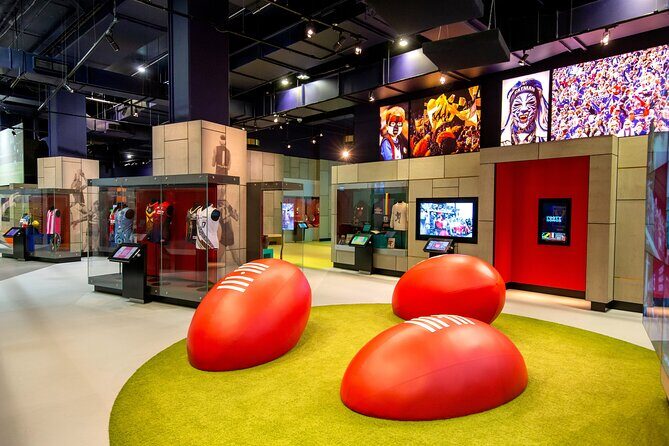
Melbourne’s sport isn’t one single landmark. It’s a whole cluster, stitched together by rivers, streets, and the legacy of big events. That’s why a walking tour here feels efficient: you get the layout in front of you, not just a list of famous names.
This experience is built around quick, focused stops. Each one is timed to give you orientation and a few key talking points, then move you along before the tour drags. If you’ve ever tried to self-tour stadiums and ended up walking circles, you’ll feel the difference right away.
And because the group stays small, you can ask the usual questions that pop up when you see a venue in person, like what it’s known for and how it became the place it is today. The tour’s approach is simple: see the spot, understand the story, then keep walking.
Fed Square Start: Fast Orientation in the Heart of the City
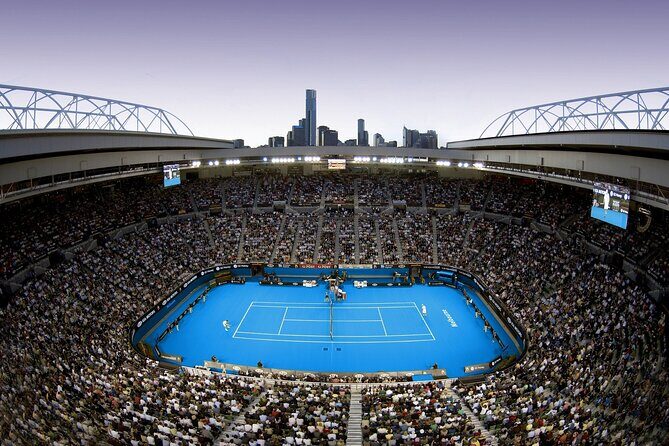
You meet at 1 Birrarung Marr Walk in Melbourne, which puts you close to the action from the start. The meeting point connects you to the wider central area near Flinders Street, so it’s easy to arrive without turning your day into a transit project.
From there, you begin with a brief orientation around the central area opposite the station precinct. It’s a smart opening move because it helps set the “why here?” context before you move into stadium country. You’ll get a sense for how Melbourne uses its central spaces to funnel crowds toward sport.
This first stop is only about 10 minutes, so don’t expect a long lecture. Instead, think of it as getting your bearings so the rest of the walk makes sense as a single story.
Along the Yarra River: The Sports Story Starts Before the Stadiums
Next comes the walk along the Yarra River, which matters more than people expect. The river is part of the logic of the city, and it also connects to the idea of Melbourne as a place where big public life gathers outdoors and then spills into major venues.
You spend about 10 minutes here, and the focus is on significance to Melbourne’s sporting past. You’re not walking for scenic bragging rights, although the river views are a bonus. You’re walking to understand the geography behind the fame.
Practical tip: if you’re coming in warm weather, the river stretch can be a real relief from traffic noise. If it’s cooler, it can feel breezy, so it’s worth having a light layer handy.
Rod Laver Arena and Melbourne Park: Tennis Precision, Up Close

The tour then heads to Rod Laver Arena inside the Melbourne Park complex. This is one of those places where the stadium name alone doesn’t fully explain the scale. When you’re standing near it, you can feel how the venue is designed for big moments.
Expect about 15 minutes here. That time is enough to learn the basics and point out what makes this tennis precinct so central to Melbourne’s identity. You’re also on a tennis complex route, which can be a fun moment if you catch any hints of event activity in the area.
This stop works best if you like sports details that don’t need stats. For example, I like how these talks often focus on what people experience during major matches: crowd energy, venue purpose, and why this precinct became the tennis heart of the city.
If you’re the sort of person who notices signage, seating shapes, and how buildings face crowds, you’ll enjoy this segment.
Olympic Park and Melbourne’s 1956 Legacy: How Big Events Shape a City
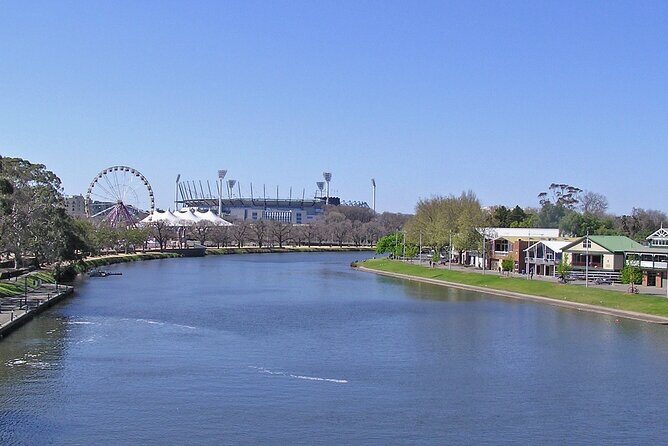
From Rod Laver, you move into Melbourne and Olympic Parks, with about 15 minutes devoted to the area’s role in the 1956 Olympic Games. This part is valuable because it connects sport to civic identity, not just to entertainment.
You’re walking through a precinct where international events helped lock in Melbourne’s reputation. Even if you only know a few Olympic facts, the guide’s explanation helps you see why the venues and surrounding areas mattered beyond the actual games.
Here’s what I like about this stop: it’s not just name-checking. You get a reasoned link between past global events and the modern sporting landscape around you. That context makes the later venues, especially the MCG, feel more connected rather than like separate tourist stops.
Time-wise, you won’t linger long. But in 15 minutes, you can get the “big picture” and still keep the walk moving at a comfortable tempo.
AAMI Park: Where Rugby and Soccer Fans Feel at Home
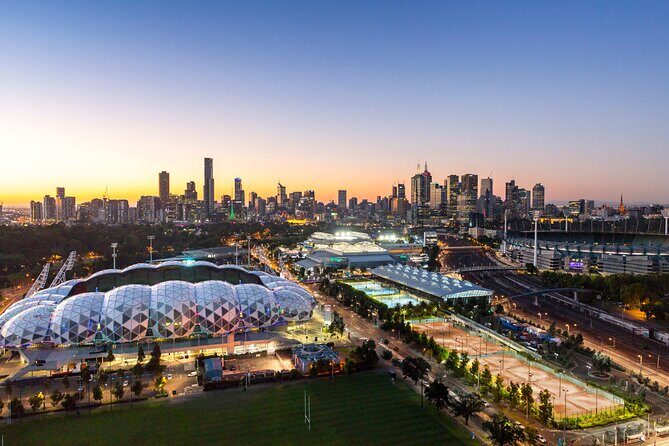
Next is AAMI Park, Melbourne’s main soccer and rugby stadium. This is another 15-minute stop, and it’s designed to broaden your perspective beyond one sport. The stadium precinct isn’t a single-purpose zone, and AAMI Park shows that clearly.
This segment is a good reminder that Melbourne’s sports culture isn’t only about cricket or tennis. If you enjoy comparing how venues feel for different sports, AAMI Park is a nice contrast. Even from outside, you can notice how stadium design supports matchday atmosphere.
The practical value here is pacing. You cover tennis, then Olympics legacy, then soccer/rugby, then the MCG. By the time you arrive at the oval, you’re primed to understand why the city treats sport like a year-round identity.
Melbourne Cricket Ground (MCG): The Big One, With Context
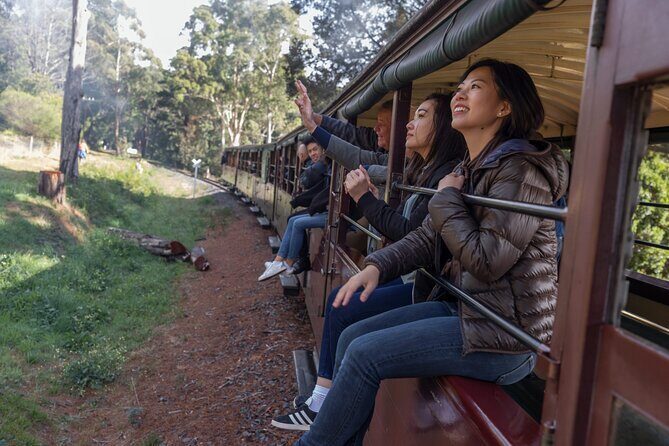
Finally, you reach the Melbourne Cricket Ground (MCG), home of Australian sport. This stop is also about 15 minutes. The MCG can feel overwhelming at first because it’s so famous, so the guide’s role here is to give you a framework for looking.
Don’t worry about expecting a full inside-the-venue tour. This experience is about walking the precinct and building meaning. You’ll get the key takeaways that help the MCG click as more than a picture in a history book.
There’s also an element of luck that makes sports precincts fun. One story I heard from the tour’s orbit involved a local sports-star moment at the MCG during a matchday scene, and it’s a reminder that you’re moving through an active part of Melbourne’s sporting life, not a dead museum set.
When you’re done with the MCG segment, you finish at the sports museum nearby at MCG Gate 3 Brunton Ave.
Australian Sports Museum: The Included Ending That Actually Adds Depth
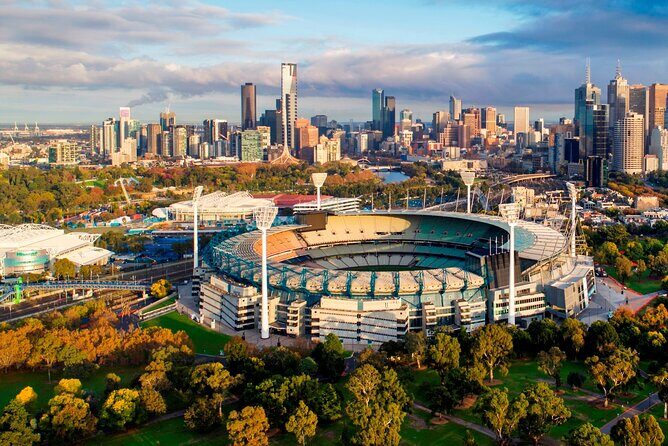
The best “value add” here is that admission to the Australian Sports Museum is included. Finishing at a museum is smart because it gives your brain somewhere to land after the walk.
A walking tour can leave you with a pile of names. The museum helps you turn those names into a bigger picture of Australian sports culture. You’ll spend time looking at exhibits that connect sports to identity, community, and moments that shaped the way people see sport in this country.
Even better: the museum doesn’t ask you to start from scratch. You’ve just walked past the major stadium context, so the museum feels like the natural “next page,” not a random detour.
If you’re even partly into sporting stories, this is the part that makes the ticket feel like more than a sightseeing circuit.
Price and Value: Is $86.07 a Good Deal?
At $86.07 per person, this tour isn’t a bargain in the cheapest sense. But it does have real structure and included value.
Here’s what you’re paying for:
- A 3.5-hour guided walk covering multiple stadium precincts
- Small-group size (max 8), which usually means less waiting and more chances to ask questions
- Free Australian Sports Museum entry, which you wouldn’t want to pay for separately if you’re already planning to visit
Also, the fact that it’s often booked about 29 days in advance tells you something: this is a popular format. If you wait too long, you may end up choosing a different date than you want.
The trade-off is time. Each venue gets a snapshot, not a long, deep visit. If you want hours inside stadiums, you’ll likely need another plan. But if you want to learn how Melbourne’s sporting world fits together and you like walking with a guide, the pricing feels fair.
Who Should Book This Tour (and Who Might Want Something Else)
This is ideal for:
- sports fans who want an organized way to see the big sites without stitching together public transport
- first-time Melbourne visitors who want a theme day focused on one subject
- people who enjoy learning the story behind landmarks, not just taking photos
You might skip or look for a longer stadium-focused tour if:
- you hate walking and prefer slow, sit-down sightseeing
- you want a full inside look at each stadium rather than short, guided stops
Because the tour is marked as suitable for most travelers and allows service animals, it’s also a practical choice for many people who want an active day without going extreme.
Weather, Walking Comfort, and How to Get the Most Out of 3.5 Hours
This experience requires good weather. That doesn’t mean you can’t go on a cloudy day, but it does mean you should plan your expectations around the day’s conditions. If conditions are poor, you’ll be offered another date or a refund.
Comfort matters here because you’re on your feet for about 3 hours 30 minutes total. Wear shoes you trust on city sidewalks. Bring a light layer if it turns breezy near the river. And if you’re carrying a drink or small snack, keep it easy so you’re not digging through a bag every few minutes.
Also, use the mobile ticket. Having it ready makes your start smoother and helps the group keep moving.
Should You Book the Melbourne Sports Experience?
Yes, if you want a theme-focused day that feels organized, not random. I like how it blends the big stadium names with an included museum, so you leave with more than a photo set.
If you’re a sports fan and you enjoy short, well-paced segments, this small-group format (max 8) is the sweet spot. It’s also a good pick if you’re short on time in Melbourne but still want a real sense of the sporting precinct layout.
If your travel style is slow and you want to spend hours inside venues, you may find the stops a bit brief. But for a clean, efficient introduction to Melbourne’s sport, this one earns a spot on your calendar.
FAQ
How long is the Melbourne Sports Experience tour?
It runs for approximately 3 hours 30 minutes.
What is the tour price?
The price is $86.07 per person.
Is Australian Sports Museum entry included?
Yes. Free entry to the Australian Sports Museum is included.
How many people are in the group?
This tour has a maximum of 8 travelers.
Where do I meet and where does it end?
You start at 1 Birrarung Marr Walk, Melbourne VIC 3000. You end at the Australian Sports Museum at Melbourne Cricket Ground, Gate 3 Brunton Ave, East Melbourne VIC 3002.
Do I need the ticket printed?
No. It’s a mobile ticket.
What if the weather is poor?
This experience requires good weather. If it’s canceled due to poor weather, you’ll be offered a different date or a full refund.
Are children charged?
Infants are free (0–4 years).
]]>You’ll focus on roughly 30 favorite paintings, with context that connects the dots from Byzantine through Impressionism. The tour covers big names like Rembrandt, El Greco, Monet, Pissarro, Dali, and Picasso, plus French painters such as François Boucher and artists like Jan Brueghel and Tiepolo. I like how the pacing stays practical: you’re learning what to look for as you go, then you get a quick quiz at the end to check what stuck. The only real drawback is that you’re not doing a free-form gallery stroll, so if you want to linger on every single wall label, you’ll need a follow-up visit.
Key Highlights At a Glance
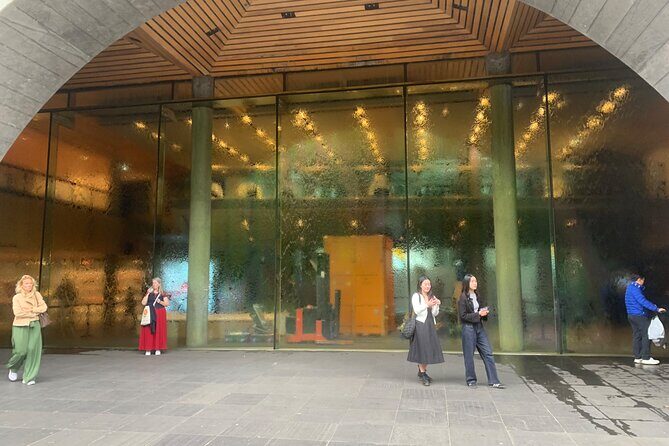
- Guide Sandy’s clear, calm teaching style makes art feel less intimidating fast
- About 30 paintings chosen for learning, not for speed
- A laminated checklist you keep for future galleries
- Coverage of major Western art movements from Byzantine to Impressionism
- A quiz at the end to lock in the key ideas
- Small group (maximum 6) so you can ask questions
National Gallery of Victoria, But Make It Learn-How-to-Look

If you’ve ever stood in front of a painting and thought, I know I should get something from this… but I’m not sure what, you’re exactly the target audience. This NGV guided tour is built for beginners. Not in a watered-down way. In a guided way.
Instead of asking you to “just appreciate art,” the guide gives you tools. You’re taught how to analyze what’s in front of you and how to notice details that change the meaning. And because you’re not spending hours trying to find the good stuff on your own, the whole visit feels efficient.
The vibe is also friendly. The guide’s approach helps you feel at ease, and the Q&A time is real. In a room full of big, expensive paintings, that matters. It keeps you focused on learning instead of pretending you’re an expert.
Meeting Sandy and Getting Oriented at NGV
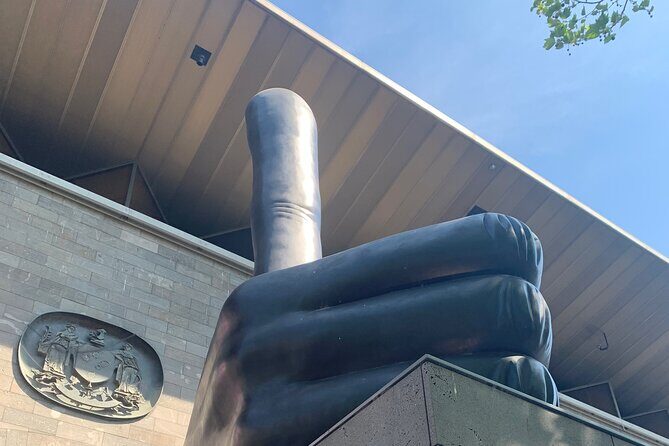
You meet at 200 St Kilda Rd, Southbank VIC 3006, and the tour starts at 10:00 am. It ends back at the meeting point. The duration is about 3 hours 30 minutes, so you’re planning a solid morning chunk (and yes, you’ll want to eat first).
This is a mobile-ticket tour, which is handy if you’re bouncing between Melbourne stops. It also means you can keep things simple on the day. Another practical plus: the meeting area is near public transportation, so you’re not forced into a car-based plan.
The group size is capped at 6 travelers. That small number changes the experience. You’re less likely to get swallowed by a crowd and more likely to have your questions heard. There’s also a required minimum of 4 guests (including your booking and others) to run the tour, so if you’re booking last-minute, just keep that in mind.
What You Actually Learn: Movements, Masterpieces, and How to Look
This tour isn’t just a list of famous art. You’re guided through major Western art movements and shown how they show up in real paintings.
You’ll cover movements including Byzantine, Renaissance, Mannerism, Baroque, Rococo, Romanticism, Realism and Impressionism. That spread is useful because it gives you a framework. When you understand the “why” behind a style, you start seeing patterns instead of isolated images.
Then the guide anchors those movements with paintings by well-known artists. Based on the tour description, you’ll get to admire works by Rembrandt, François Boucher, El Greco, Jan Brueghel, Tiepolo, Monet, Pissarro, Dali, and Picasso. Even if you’ve heard only half those names, the point is that the tour gives context while you’re looking.
Here’s the practical benefit for you: you won’t leave with vague impressions like pretty / weird / old. You’ll leave with a checklist of what to notice. Then, when you see another painting later, you’ll know where to start.
The Laminated Checklist: Small Object, Big Payoff
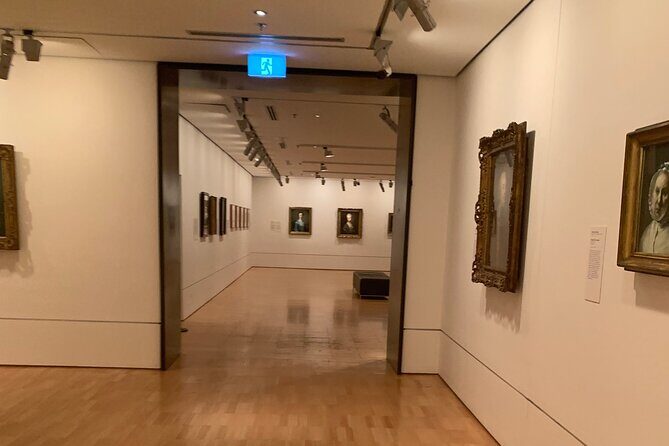
One of the standout inclusions is the laminated guide sheet on how to view and analyze paintings. You keep it.
Why I think this is a big deal: most museum tours end when you walk away. This one hands you a tool that continues working after the tour. It’s meant to help you keep improving your looking skills at NGV and other galleries later.
The sheet is described as a succinct summary of early Western arts and what to look for in a piece. That kind of structure is gold when you’re trying to remember what mattered. Instead of relying on a blur of facts you might forget, you get a physical reminder.
If you like “learn it once, use it forever” travel value, this is exactly that.
The Tour Flow: How the 3.5 Hours Feels
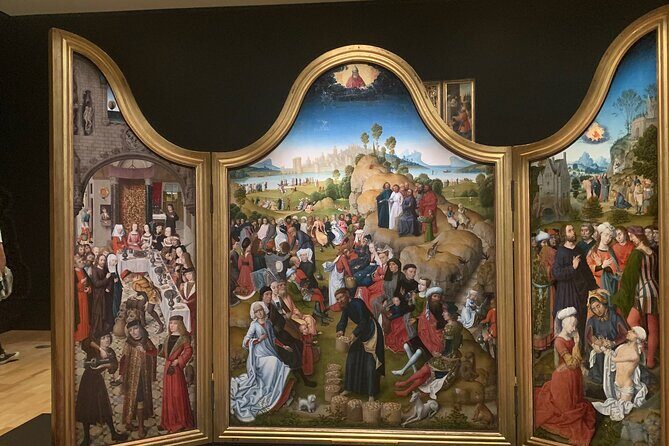
The itinerary is straightforward: there’s one main stop at the National Gallery of Victoria. The guide brings you through the museum experience in a focused way rather than sending you off on your own.
You’ll be shown and explained about 30 favorite Western art paintings. That number matters because it strikes a balance. It’s enough time to cover different eras and styles. It’s not so many paintings that you glaze over or lose track.
You’ll learn:
- insights about the artists
- historical context that frames what you’re seeing
- tips for how to appreciate paintings more effectively
That structure helps you build a mental model while you’re still in the galleries. You’re not watching a slideshow in your head later. You’re understanding what’s in front of you, right now.
The End of the Tour: A Quiz That’s Actually Helpful

At the end, you take part in a fun quiz. The goal isn’t to trick you. It’s to test and reinforce what you’ve learned during the tour.
This is one of those simple tricks that makes learning stick. After a focused 3.5-hour museum session, it’s easy to absorb information and forget it later. A quiz creates a reason to pay attention all the way through. It also gives you immediate feedback on what clicked.
If you like a little playful structure, you’ll probably enjoy this part. If you don’t love quizzes, you’ll still find it useful. It’s basically a recap in another format.
Price and Value: What $107.59 Gets You

At $107.59 per person for about 3 hours 30 minutes, this tour isn’t the cheapest way to see the NGV. But it can still be good value, depending on your goal.
You’re paying for:
- guided selection of about 30 works (so you don’t need to spend hours choosing and hunting)
- explanation of major Western art movements as you go
- a takeaway laminated guide sheet you keep
- a group format capped at 6, with a chance to ask questions
- an end-of-tour quiz that reinforces learning
If your plan is simply to walk the museum, you can do that independently. But if your plan is to learn how to look, guidance makes a big difference. This tour is designed so beginners get real insight without needing to become art experts first.
Also, because the tour is limited to a maximum of 6 travelers, you’re not paying for a huge crowd experience. You’re paying for attention.
Who This Tour Fits Best (And Who Might Want Something Else)

This NGV guided tour is a strong match if you:
- are new to Western art and want a clear path
- prefer structure over aimless wandering
- like practical tips you can use later
- want a small-group feel rather than a big bus tour
- are traveling with family and want something that can hold kids’ interest
It also makes sense for locals. Not everyone thinks to book a museum tour for a place they can reach easily. But having a guide turn art into something you can understand quickly is worth it even when you live nearby.
Who might not love it: if you want total freedom to linger on every painting for as long as you like, a planned walkthrough focused on about 30 works may feel a bit structured. You can still come back for a longer independent explore after.
Practical Tips Before You Go
A few things to think about so your visit is smooth:
- Eat before you arrive. Snacks aren’t provided, and the tour runs about 3 hours 30 minutes.
- Wear comfortable shoes. Even with guidance, you’ll be moving around galleries.
- Bring questions. This kind of tour works best when you’re curious, and the guide is meant to answer them patiently.
- Use the laminated checklist during your visit. Don’t wait until the end if you can help it.
Should You Book This NGV Guided Tour?
Yes, if your goal is to learn how to appreciate art in a focused, beginner-friendly way. The standout reasons to book are the combination of Sandy’s teaching style and the laminated checklist you keep. Add in the coverage of major art movements, the selection of about 30 paintings, and the end quiz, and you get a tour that feels like a skill-building session, not just a museum walk.
I’d say it’s especially worth it if you’re worried you won’t understand what you’re seeing. This tour is designed to make that worry shrink fast.
If you’re mostly looking for free time and lots of solo wandering, then you might prefer a self-guided NGV plan. But if you want the quickest route from confused to capable looking, this guided format is a smart call.
FAQ
How long is the National Gallery of Victoria guided tour?
It runs for approximately 3 hours 30 minutes.
How much does the tour cost?
The price is $107.59 per person.
Where do I meet for the tour?
The meeting point is 200 St Kilda Rd, Southbank VIC 3006, Australia.
What’s included in the price?
You receive a reusable laminated guide sheet on how to view and analyse paintings.
Are snacks provided during the tour?
No, snacks are not provided.
How many paintings are covered?
The guide shows and explains about 30 of his favorite Western art paintings at NGV.
Is there a quiz or any activity besides viewing art?
Yes. You take part in a fun quiz at the end of the experience.
What group size should I expect?
The tour has a maximum of 6 travelers. There is also a required minimum number of 4 guests, including your booking and others.
]]>One thing to plan for: the ticket covers entry only. Food and drinks aren’t included, so you’ll want to budget time and money for a break between galleries.
Key highlights at a glance
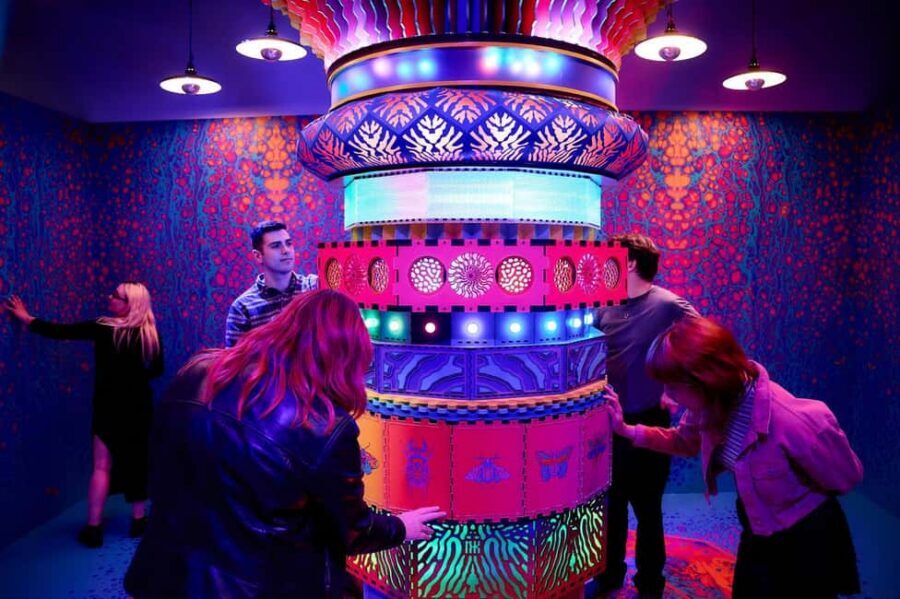
- Historic setting inside the Old Customs House (big for atmosphere and context)
- Temporary exhibition Joy included, available until 29 August 2025
- Permanent exhibitions that connect migration to identity and belonging
- Discovery Centre + Community Gallery designed for learning and reflection
- First-floor library resources, including immigration history books organized by country
Entering Melbourne’s Old Customs House (and why the building matters)

You can treat the Immigration Museum like a standard museum ticket, but I think it’s stronger when you treat the building like part of the story. The Immigration Museum sits in Melbourne’s Old Customs House, a location that naturally fits the theme of movement, paperwork, arrivals, and entry—without needing extra explanation.
As soon as you’re inside, the setting helps you slow down. Migration is emotional, and the museum doesn’t rush you toward a single lesson. Instead, you’re guided through ideas of identity, migration, community, and belonging in a way that feels human rather than academic. Even if you only have a day, it’s the kind of place where you’ll remember details because they’re tied to real journeys.
If you’re pairing this with other Melbourne sights, I’d put it somewhere in the middle of your day—not right after a long walking stretch. This museum works best when you can sit with what you’re reading and looking at.
What you get for $10: value in a single museum day

At $10 per person, this entry ticket is priced like a bargain compared with many big-city museum add-ons. The real value isn’t just the price—it’s what the ticket unlocks.
Your admission includes access to:
- Permanent exhibitions
- The Discovery Centre
- The Community Gallery
- The temporary exhibition Joy (available through 29 August 2025)
That combination matters. If you go, you’re not stuck in one “type” of exhibit. You’ll have personal stories (good for empathy), interactive learning spaces (good for kids and curious adults), and areas designed for reflection and community context.
The other value point: it’s one day. You don’t need a complicated schedule. You just need enough time to move at a comfortable pace and return to the parts that grab you.
Just keep your expectations honest. This isn’t a fast, checklist-style stop. It’s more of a thoughtful hour-by-hour experience.
The temporary exhibition Joy (timed perfectly for planning)
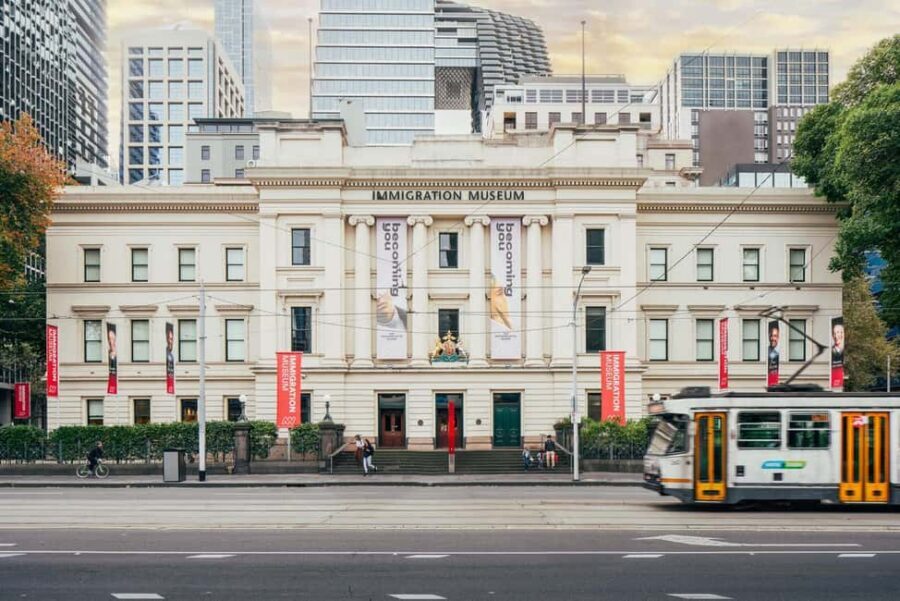
Temporary exhibitions are often hit-or-miss, but Joy is worth centering your visit around because it’s included in your ticket and scheduled until 29 August 2025.
Here’s what I’d focus on while you’re there: joy as something more than a mood. In a museum like this, joy usually comes attached to family, hope, rebuilding, and the daily work of making a life in a new place. Even if you’re not in the headspace at first, the way the museum connects emotions to migration and community can shift your perspective.
Practical tip: give Joy a dedicated chunk of time. Don’t treat it as a quick detour. If you do, you’ll skim. If you slow down, you’ll notice the little connections between objects, stories, and themes.
Permanent exhibitions: how the museum tells migration without flattening it
The core of your visit is the permanent collection, which weaves together migration and identity. The museum’s approach is built for understanding, not shock for shock’s sake.
You’ll find thoughtfully arranged galleries designed to connect:
- Individual journeys
- Community resilience
- The feeling of finding a place to call home
This is where you’ll likely spend the most time. The key is to move in loops: read, look, then come back. Museums often have you reading from wall text to the next wall text, but here it’s easier to absorb when you don’t sprint.
Also, pay attention to how the museum frames “belonging.” It’s not one simple story. It’s the experience of becoming part of a community while also keeping pieces of your origin.
If you like museums that make you think but still give you something concrete to hold onto, this is a good match.
The Discovery Centre and Community Gallery (learning that doesn’t feel like homework)
One of the smartest parts of the ticket is that it includes spaces beyond the main galleries. The Discovery Centre and Community Gallery are set up to help you engage with cultural diversity through activities and interpretation.
For you, that usually means two benefits:
- You’ll understand the themes without relying only on reading.
- The experience becomes easier to share with different ages.
And yes, this kind of museum also works well if you’re traveling with kids. In the wider mix of exhibitions, there are interactive elements—like the iPads used in exhibitions such as Notre-Dame—that help younger visitors stay engaged while still learning.
When you’re in these areas, don’t just “pass through.” Pause at the interactive or reflective components. This is where you’ll often get a clearer personal takeaway because you’re doing something, not only observing.
A special stop: the first-floor library for country-by-country context
There’s a small but powerful detail that can upgrade your whole visit: the library space on the first floor with immigration history books organized by country.
If you already have an ancestral link—family from a specific country, or you’re just curious about a region—this is the section you’ll wish you gave more time. Even a quick scan can help you connect the museum stories to broader historical context.
I like using this as a strategy:
- Spend your first pass through the galleries getting the big themes.
- Then come to the library and choose one or two countries to explore.
- After that, return to the exhibits with sharper questions.
It turns the museum from a general experience into a more personal one.
Timing your visit for a calm pace (and no food stress)
You’ve got a 1-day ticket, and the museum schedules starting times based on availability. So build your visit around a time when you can concentrate.
I suggest planning for a full museum stretch rather than a rushed sprint. You’ll want time for:
- Permanent galleries
- The Discovery Centre and Community Gallery
- Joy
- Extra reading time in the library area if you’re curious about specific countries
And remember: food and drinks aren’t included. That doesn’t mean you can’t eat well nearby, but it does mean you should plan a break instead of hoping the museum covers it. If you go hungry, you’ll skim. If you take a short break, you’ll actually absorb what you’re seeing.
Who this experience is best for
This museum is a strong fit if you care about human stories, community, and how people build belonging after migration. It’s also a good choice if you want culture and history without feeling like you’re stuck with only dates and timelines.
You’ll especially enjoy it if:
- You like museums that mix emotion with context
- You want to understand migration through real individual journeys
- You’re traveling with children and want interactive learning options
- You’re curious about immigration history and specific countries (the library helps)
If you prefer only light, upbeat entertainment, the museum themes may feel heavy. But if you’re open to thoughtful reflection, it’s likely to land well.
Practical info you’ll want before you go
You’ll find the museum at Immigration Museum (Museums Victoria). That’s your meeting point, so it’s the one thing to double-check before you set out.
The experience is offered in English, and there’s an English host or greeter. The site is wheelchair accessible, which is important if you need step-free movement and comfortable pacing.
Should you book the Immigration Museum Entry Ticket?
I’d book it if you want a meaningful Melbourne stop that goes beyond surface sightseeing. For $10, you get a lot: permanent exhibitions, interactive learning spaces, and the temporary Joy exhibition through 29 August 2025. The price-to-content ratio is strong, and the historic Old Customs House setting gives the whole visit extra weight.
Skip it only if you’re short on time and want something purely upbeat and quick. Otherwise, this is the kind of museum that rewards your attention. Even if you start with general curiosity, you’ll likely leave with a more personal understanding of migration, identity, and community.
FAQ
How much does the Immigration Museum entry ticket cost?
The price is $10 per person.
Where do I go for the meeting point?
Go to Immigration Museum (Museums Victoria).
What does the ticket include?
Your ticket includes entry to the Melbourne Immigration Museum.
Is the temporary exhibition Joy included?
Yes. The temporary exhibition Joy is included, and it runs until 29 August 2025.
How long is the experience?
The ticket is valid for 1 day.
Do I get food or drinks with the ticket?
No. Food and drinks aren’t included.
Is there free cancellation?
Yes. You can cancel up to 24 hours in advance for a full refund.
Is the museum wheelchair accessible?
Yes, the experience is wheelchair accessible.
]]>The best part for me is the balance between big, impressive displays and repeatable activities you can actually do. You’ll spend time looking closely at the brickwork, then shift into making your own Star Wars-style creations and trying out interactive elements that let you face off with friends.
One drawback to plan for: this is a ticketed exhibition with a valid 1-day entry window and starting times, so if you arrive late, you may lose time for the hands-on stations.
Key takeaways before you go

- 8 million LEGO bricks power the exhibition’s iconic battles and ships.
- Hands-on stations let you build starfighters and create LEGO lightsabers.
- Ryan Brickman McNaught (LEGO Certified Professional) is the creative lead at the controls.
- Digital face-offs turn your builds into interactive, playable moments.
- Massive shared build areas invite you to add brick by brick to big Star Wars scenes.
Why Melbourne Museum is a smart home for LEGO Star Wars

Melbourne Museum is the right kind of setting for a build-heavy show. It’s a museum, not a pop-up, so the experience is designed to move you through zones at a comfortable pace. That matters with something like this, because you want time to look, then time to play.
You also benefit from being in Museums Victoria territory, where the venue is built for visitors who want more than one quick photo. If you already like science, design, or big-scale model making, this exhibition slots neatly into that mindset instead of feeling like a separate themed attraction.
And if you’re coming with kids or a mixed-interest group, this setup gives everyone a job. Star Wars fans get characters and scenes in LEGO form. LEGO fans get technique, scale, and the chance to build. Even if you only half care about one franchise, the hands-on angle makes the day work.
8 million bricks: what you’ll actually see inside

This exhibition is built around scale you can’t fully grasp until you’re standing near it. The show uses over 8 million LEGO bricks and took more than 25,000 hours to complete. That’s not just trivia—it’s why the display feels detailed, not sketchy. When something is this time-intensive, the brick choices and scene composition tend to show up in the real world.
You can expect the exhibition to focus on the kinds of Star Wars moments people recognize instantly. Think epic battles, gargantuan spaceships, and iconic landscapes/scenes from the galaxy far, far away. The key is that the famous shapes are translated into LEGO logic: studs, color blocking, and layered textures that look sharp at close range.
What I like about this is the clarity of the storytelling. The exhibition is designed to be laid out in a way that supports understanding, with descriptions that help you connect what you’re seeing to the broader Star Wars world. You’re not left to guess which ship or moment you’re looking at.
If you’re a detail person, you’ll likely spend extra time here. The brick-by-brick look is the point. If you’re more of a fast “see it, snap it, move on” visitor, you’ll still get your fill, but you’ll want to manage your pace so you don’t run out of time for the interactive stations.
Hands-on builds: starfighters and LEGO lightsabers

The big win with this ticket is that it’s not only about viewing. The exhibition invites you to join in with hands-on build activities where you can create things like starfighters and custom lightsabers using LEGO bricks.
This matters because it changes how you experience the show. You go from passive watching to active making, which is where LEGO shines. When you build, you notice how designs are engineered—how shapes are supported, how colors are layered, and how a “movie object” becomes a physical model.
The lightsaber angle is especially good for families and casual fans. You don’t need to be a hardcore Star Wars person to enjoy putting together something that looks like it belongs on a character’s belt or in a saber duel. It’s simple enough to enjoy right away, and it still feels like part of the Star Wars world.
One practical tip: if your group includes both LEGO lovers and Star Wars lovers, you’ll probably find the activity stations are the meeting point. People who might not care about one franchise usually still enjoy making something that looks cool and feels personal.
The Brickman connection: Ryan Brickman McNaught at the controls
A major credibility boost here is the involvement of Ryan ‘Brickman’ McNaught, described as a LEGO Certified Professional. He’s at the controls of this world-first exhibition, and that leadership shows in the way the show balances craft and fun.
Why you should care: this isn’t random fan art. A professional LEGO builder is likely to think about structure, stability, and how real visitors move through the space. You feel that in the presentation—especially in how the exhibition organizes complex scenes into something you can navigate without getting overwhelmed.
The exhibition also has a homegrown story: the display was built in Melbourne at The Brickman headquarters. That local detail adds a layer of authenticity for visitors from Australia. It’s not just “LEGO brought in from somewhere else.” This one has roots in the city you’re standing in.
If you’re interested in how big models are made, this is the part of the day that gives you context. You’re looking at an output of thousands of hours of work, guided by someone who treats LEGO like a serious craft.
Shared brick-by-brick scenes and digital face-offs
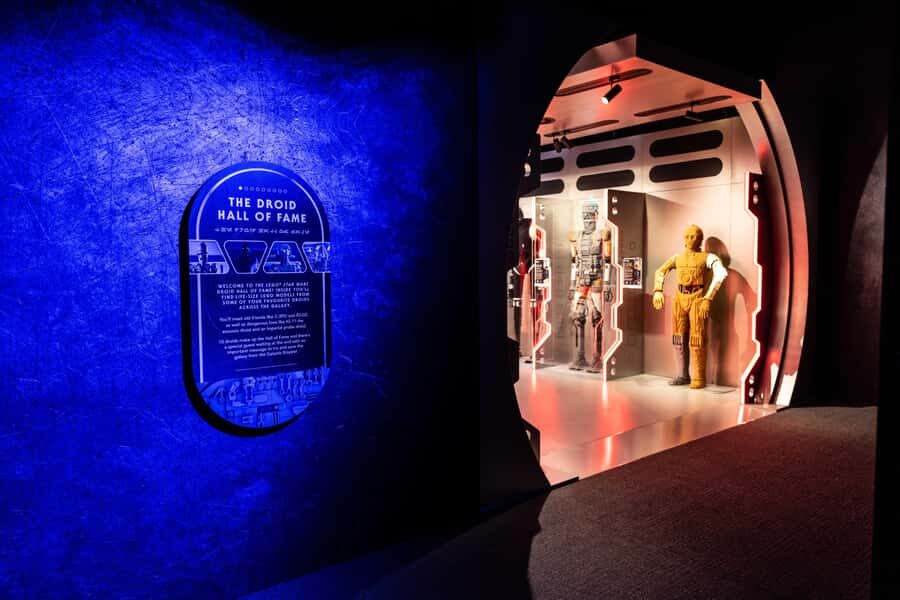
After you’ve looked and built a little, the exhibition shifts toward participation in bigger ways. Visitors are invited to help build massive LEGO Star Wars scene backdrops brick by brick. This is a neat change of pace: instead of building only your own piece, you add to something that belongs to the crowd in a visible way.
Then comes the fun part: you can see builds come to life digitally. The exhibition includes interactive elements where you choose your allegiance and then face off against friends. That combination—physical build now, digital action later—fits how kids and teens play today, but it also works for adults who still like the thrill of competition.
The value here is the payoff. You don’t just create an object and leave it behind. You build something, then you get a moment where it connects to the wider story and to other people.
For planning, think of this as your “energy segment.” If your group tends to get restless, save a bit of stamina for these interactive moments. It’s where the day can turn from viewing to doing in a way that feels like a real event.
Ticket entry time and how to plan your one-day visit
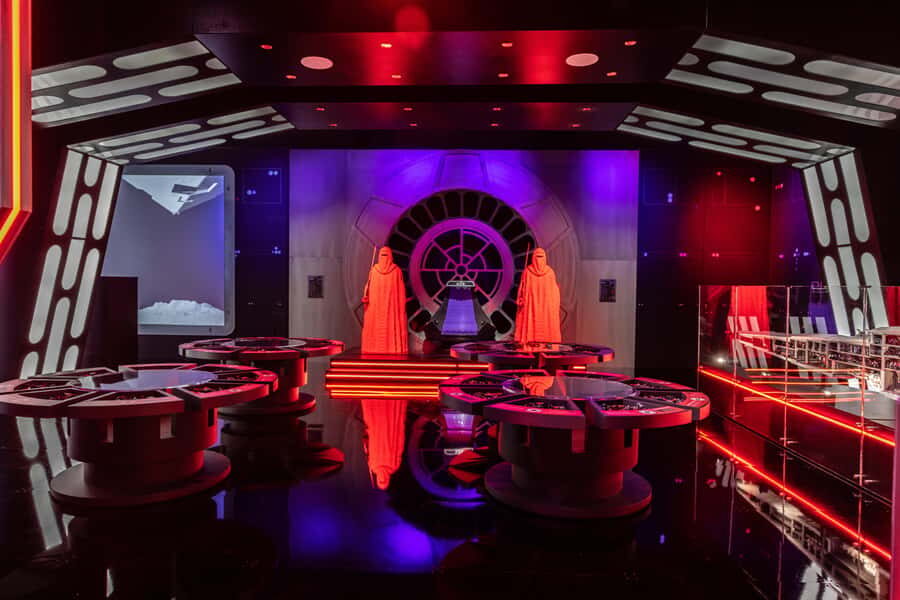
This is listed as a valid 1 day experience, and you’ll check availability to see starting times. That means you should treat it less like a drop-in gallery and more like a timed visit with a rhythm. If you pick a late slot, you might rush the hands-on parts.
A smart strategy is simple: plan to do the viewing first, then build, then interactive. The exhibition’s structure is built for that flow, moving from big scenes to activities. If you try to do everything in the wrong order, you’ll feel pressure instead of enjoying the transitions.
Also keep in mind the museum setting. If you’re combining this with other Melbourne Museum areas, give yourself enough time that you’re not sprinting across the building. This exhibition works best when you have room to pause and look closely at the brickwork, especially if you enjoy seeing how LEGO translates details.
If you’re visiting with kids, the hands-on stations will likely become the anchor. Plan on repeat interest—once kids enjoy one build task, they often want to try again or linger for “one more.” Build that flexibility into your schedule.
Value check: who this exhibition is best for
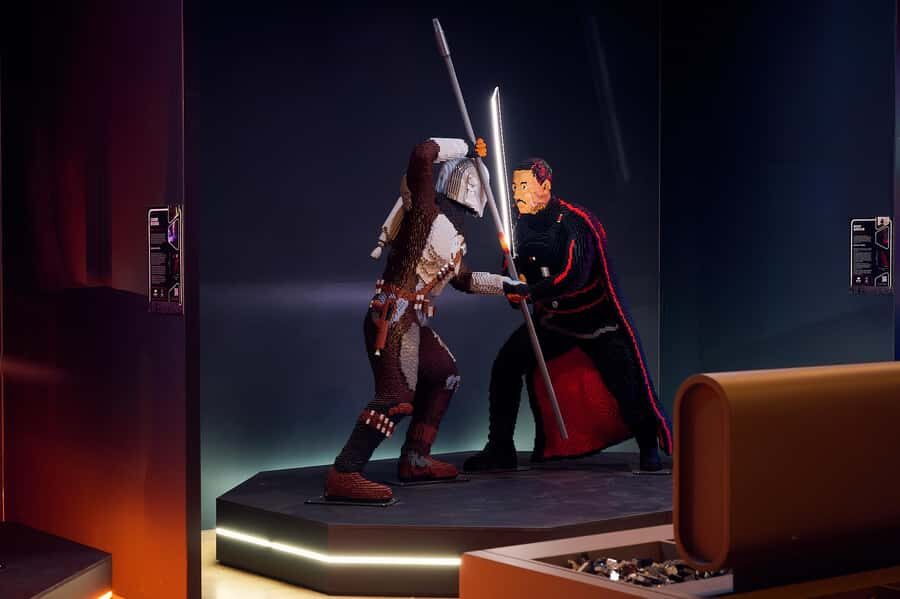
I’d put LEGO® Star Wars: The Exhibition in the sweet spot for mixed groups—families, couples, and anyone who likes making things. It’s also one of those rare experiences where you can be a fan of both LEGO and Star Wars, or only one, and still have a great time.
If you’re a Star Wars fan, the big scenes, characters, and battle moments are the hook. You get iconic references translated into LEGO brick form, which is the core reason this feels special instead of generic.
If you’re a LEGO fan, the scale is the main story. The 8 million brick figure and the 25,000-hour build time are the big signals that you’re looking at a serious build, not a quick display. And the hands-on builds let you try the craft in a tangible way.
If you’re neither, you’ll still enjoy it if you like museum activities and don’t mind a playful, show-like atmosphere. The good news is that the activities help you stay engaged even if you’re not deep into the fandom.
Only consider booking if you genuinely want interaction. If your ideal museum day is quiet, slow, and strictly observation-based, the hands-on and digital face-off elements might feel a little louder and more “activity-first” than you expect.
Should you book LEGO Star Wars at Melbourne Museum?
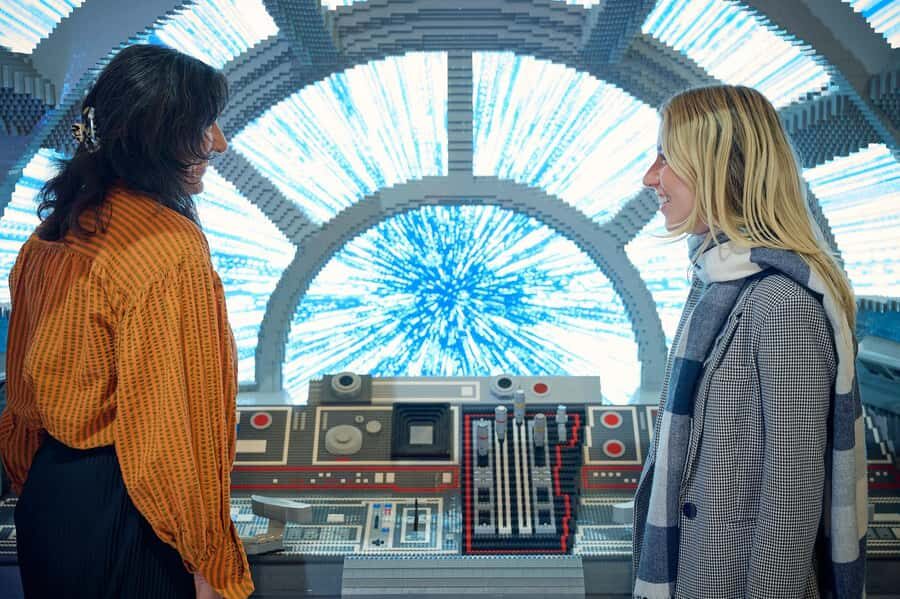
Book this if you want a day that mixes big visual impact with real participation. It’s a good match for families because it’s built to keep kids moving from looking to building to playing. It’s also a solid choice for adults who enjoy design, craft, and seeing how a professional LEGO effort translates a famous universe into something you can physically engage with.
Skip it only if you prefer quiet galleries and you’re not interested in the build-and-play side. Otherwise, this ticket gives you a lot for one day: a massive brick display, hands-on making (including lightsaber-style builds), and interactive digital moments tied to allegiance and friend-to-friend face-offs.
FAQ

Where is LEGO® Star Wars: The Exhibition located?
It takes place at Melbourne Museum in Victoria, Australia.
How long is the experience valid?
Your ticket is valid for 1 day.
When does the exhibition debut?
The galaxy-first debut is set for May 4th, 2025.
Who is involved in creating the exhibition?
Ryan ‘Brickman’ McNaught, a LEGO Certified Professional, is at the controls of the exhibition.
About how many LEGO bricks are used?
The exhibition uses over 8 million LEGO bricks.
How long did it take to build?
It took more than 25,000 hours to complete.
Are there hands-on build activities?
Yes. There are interactive builds, including starfighters and custom lightsabers, plus larger shared building activities.
Is there a digital interactive component?
Yes. Your LEGO Star Wars builds can come to life digitally, where you choose allegiance and face off against friends.
Is the venue wheelchair accessible?
Yes, it is wheelchair accessible.
What do you need to know about entry times?
The ticket is valid for 1 day, and you should check availability to see starting times.
Who provides the activity?
Museums Victoria provides the experience.
What rating does it have?
It has a rating of 4.7 based on 40 reviews.
]]>If you’re traveling with kids, you’ll like that the museum is built for busy minds—games, memorabilia, and interactive stops that don’t feel like homework. The time window is also flexible, with a visit that’s listed around 1–2 hours, but you can take your time once inside. The best drawback to plan around is simple: you’ll want a bit of walking stamina to enjoy the full route comfortably.
Key Highlights You’ll Care About

- Gate 3 entry at the MCG means you’re starting in a landmark, not a random side street
- Self-guided with unlimited time inside so you can slow down or speed up
- Interactive zones that include challenges like goal-kicking against AFL players
- Shane Warne: Treasures of a Legend included on select dates in 2025–2026
- Mobile ticket for an easier day-of check-in
- A family-friendly stop that works well when Melbourne weather doesn’t cooperate
Where You’ll Start: Australian Sports Museum at MCG Gate 3
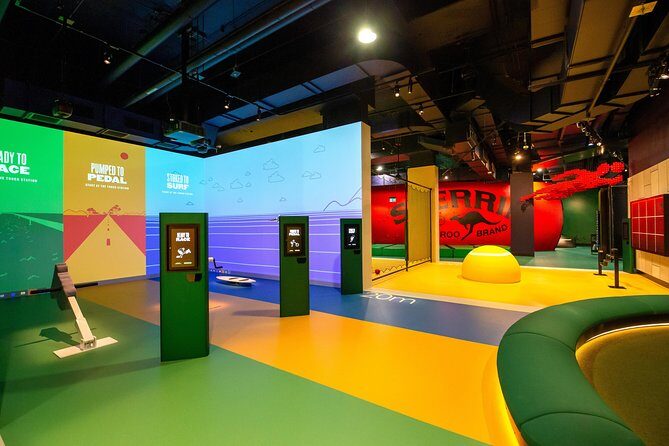
You’re not just going to a museum. You’re walking into Australian sport’s main stage, the Melbourne Cricket Ground (MCG), then heading to the Australian Sports Museum at Gate 3. That matters because you get a smoother arrival day: you don’t need to hunt for a separate location far from the stadium.
For planning, I recommend you build a little buffer before your arrival time. The museum is designed for an easy wander, but your first few minutes set the tone—find Gate 3, verify you’re at the right entry point, and exchange your voucher for general admission.
Also note this detail: entry for MCG Tours and Australian Sports Museum is at Gate 3. If your itinerary includes any stadium tour option, double-check the ticket you purchased so you don’t end up at the right gate but the wrong line.
Self-Guided Admission: Freedom to Spend It Your Way
This is a self-guided experience. That means there’s no group clock telling you when to move on, and you don’t have to match your pace to anyone else’s. The attraction is built for browsing: you can spend 15 minutes on one sport, then bounce to another exhibit when your interest changes.
The ticket setup is also practical. You’re getting a mobile ticket, and you’ll exchange your voucher for general entry at the museum. If you’re the type who likes to look first and decide later, self-guided is a good fit.
Time is flexible. You’ll see the visit described as about 1–2 hours, but the experience is listed as unlimited time inside the museum. In real terms, that means you can do a quick lap if you’re pressed for time, or turn it into a more relaxed stop if you’re traveling with kids or you’re a serious sports nerd.
Inside the Museum: Memorabilia, Historic Moments, and the Warne Experience
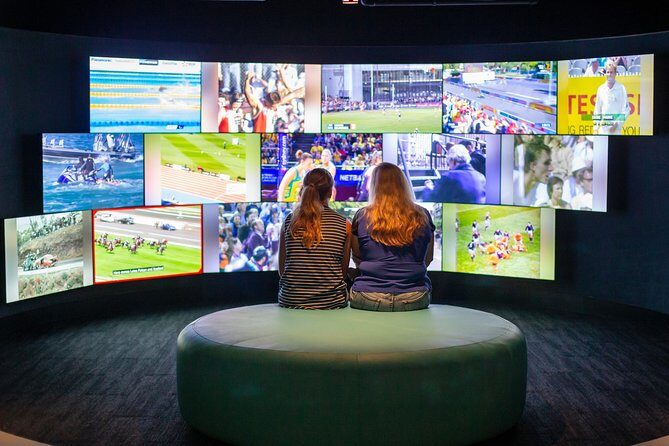
The museum experience is built around sports you likely recognize—and sports you might not have explored deeply yet. Expect memorabilia from Australia’s sporting heroes and moments that shaped the country’s sports story. You’ll see exhibits that help connect athletes, events, and eras without feeling like you’re reading a textbook.
One standout is the Warne: Treasures of a Legend experience. The ticket information says this exhibit is included if you’re visiting between Dec 16, 2025 – Aug 9, 2026. If you’re in that date window, you should treat this as a core reason to go, not an extra.
You’ll also find a realistic hologram of Shane Warne sharing stories from his career. Even if you’re not a cricket die-hard, Warne’s persona lands because it’s still about the human side of sport—what it takes, the moments that stick, and why his career became part of Australia’s cultural sports memory.
If you’re traveling outside those dates, the information provided explains a different approach. There’s a way to request an arranged time to attend Warne: Treasures of a Legend by emailing [email protected] with your booking confirmation number. If you want to decide on the day instead, there’s a risk it may already be booked out because numbers are limited.
Interactive Stops Like Game On! for Goal-Kicking Fun
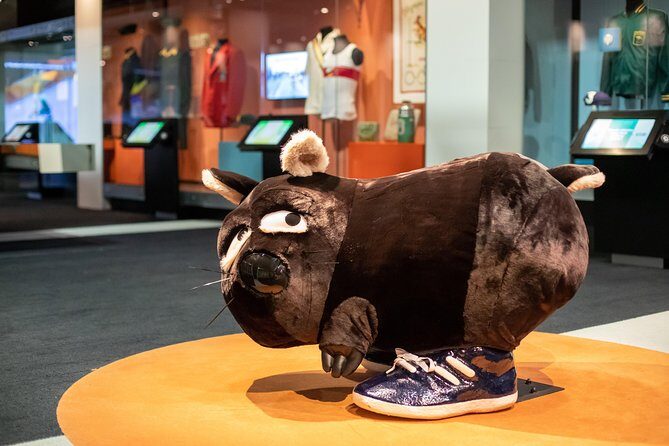
The museum isn’t only about looking. You’ll likely spend time at the more physical, playful exhibits—and the big one named in the details is Game On!, where you can test your goal-kicking skills against Australian Football League players.
This is one of those attractions where the value comes from participation. You get instant feedback, it breaks up the museum browsing, and it’s a great equalizer: kids can feel confident fast, and adults can enjoy a friendly challenge even if they’re terrible at it. That “try once, laugh, try again” loop is exactly what makes a sports museum work as a family or rainy-day activity.
If you’re traveling with kids, this kind of interactive zone keeps energy levels steadier. If you’re traveling solo or with another adult, it gives you a change of pace from reading about history and helps you remember what you saw afterward.
How Long You’ll Need (and How to Use Unlimited Time)
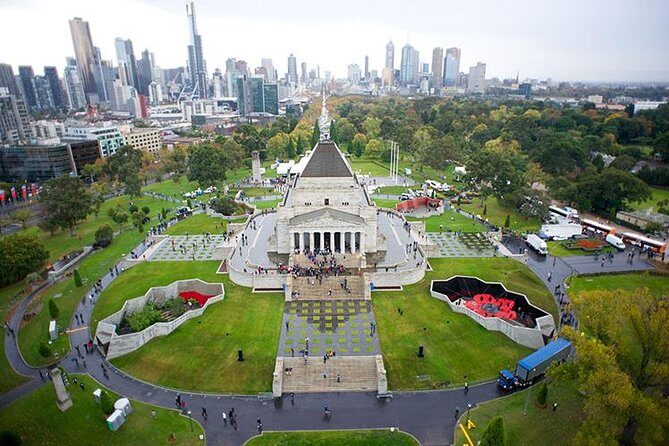
The experience is described as about 1–2 hours, but the ticket includes unlimited time inside the museum. That combination is ideal because it supports multiple styles of visiting.
Here’s how I’d plan your timing:
- If you want the highlights only, aim for around 60–90 minutes. Focus on the major themed areas, then circle back to anything interactive you really liked.
- If you’re traveling with children or you’re interested in more than one sport, expect closer to the longer end. You’ll have time to take photos, re-read labels, and repeat the hands-on activities without feeling rushed.
One more practical note: the listing mentions moderate physical fitness level. You don’t need to be an athlete, but you should assume some walking and standing as you move through exhibits.
Price and Value: Is $26.54 Worth It at the MCG?
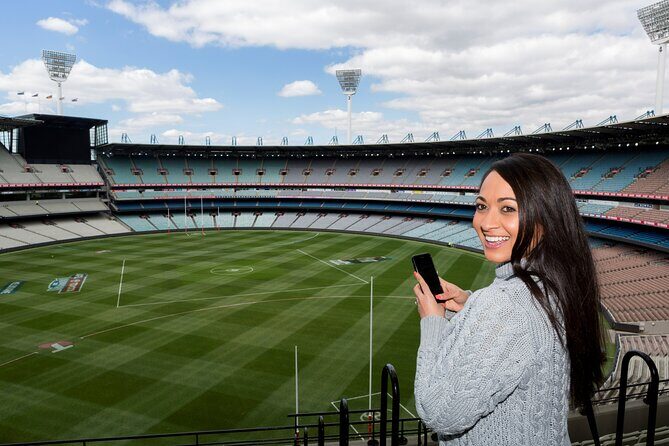
At $26.54 per person, this ticket sits in the “reasonable day out” category for central Melbourne. You’re paying for three big value drivers:
- Prime location at the MCG—getting into a major sports landmark helps make the day feel special.
- Self-guided format with unlimited time, so you’re not paying for a rushed checklist.
- Included exhibit entry depending on dates—specifically Warne: Treasures of a Legend is included if you visit between Dec 16, 2025 and Aug 9, 2026.
So the value is strongest if:
- You’re traveling during the Warne exhibit period, or
- You genuinely like interactive sports learning, not just museum browsing.
If you’re only interested in one tiny corner of the museum and you hate interactive stuff, the price might feel less compelling. But for most sports fans and families, the combination of memorabilia plus hands-on exhibits makes it feel like more than just “a ticket to pass through.”
Best For: Families, Sports Fans, and Rainy-Day Days in Melbourne
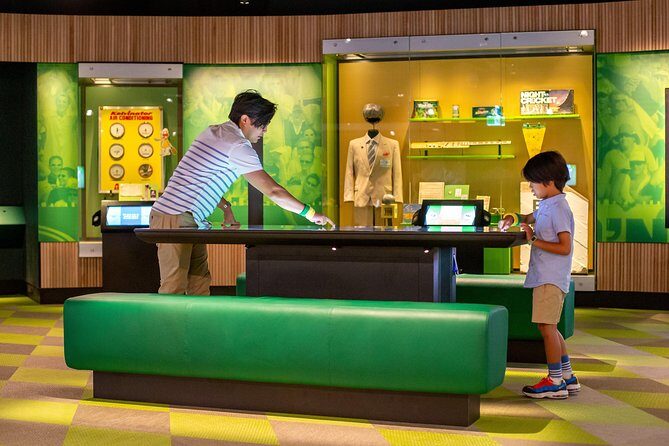
This is an easy win as a family-friendly option, especially when the weather turns. The museum is explicitly positioned as an ideal rainy-day destination, and the structure supports that. Kids can burn energy on interactive parts, while adults can slow down and take in the stories and memorabilia.
It’s also a solid choice if you’re a fan of multiple sports. The experience description points to cricket, rugby, athletics, and other sports Australia does well in. Even if you’re not a specialist, the exhibits are designed to help you understand what matters and why those moments became national sports reference points.
If you’re traveling with a group and nobody agrees on what to do, the museum tends to work because it’s self-paced. One person can geek out over a sport you don’t care about, and you can still enjoy your own route without waiting for someone else.
The Main Gotgotcha: Museum Entry vs MCG Tour Confusion

The low rating review you shared is the clearest warning sign: there was a mix-up where someone booked expecting the museum experience but ended up getting a ground tour instead, and it was too late to correct it. While that’s not your likely outcome, it’s the kind of problem that happens when tickets look similar.
Here’s how you avoid it:
- Confirm your voucher clearly says Australian Sports Museum (not a stadium tour product).
- Plan to enter at Gate 3, then follow the museum-entry process for your ticket.
- Don’t assume Gate 3 automatically means you’re going to the museum. Gate 3 serves multiple experiences.
If you want to include both a stadium tour and the museum, treat the museum ticket as its own timed plan, even though the museum itself is self-guided.
Should You Book This Australian Sports Museum Ticket?
Book it if you want a low-stress Melbourne activity with high sports energy. The self-guided format and interactive exhibits make it work for kids and adults, and the MCG location gives it that “this is the real deal” feeling even if you’re just passing through.
Skip or rethink if you’re expecting a guided tour that tells a strict story end-to-end. This isn’t that style. It’s a browse-and-play museum, and it shines when you enjoy exploring at your own pace.
If you’re within Dec 16, 2025 – Aug 9, 2026, the extra pull is Warne: Treasures of a Legend being included, plus the realistic hologram element. That’s where the ticket can become an easy yes, even for people who claim they’re not that into museums.
FAQ
Where do I enter for the Australian Sports Museum?
Entry is at Gate 3 of the MCG.
Is this experience self-guided?
Yes. It’s described as a self-guided museum visit, and you can explore at your own pace.
How long can I stay inside the museum?
You can take your time, and it’s listed as unlimited time inside the museum. The overall visit duration is typically about 1–2 hours.
Do I get the Warne: Treasures of a Legend exhibit with this ticket?
It’s included if you’re visiting between Dec 16, 2025 and Aug 9, 2026.
What if I want the Warne exhibit but I’m outside those dates?
The information provided says you should email [email protected] with your booking confirmation number to arrange a suitable time. Trying to decide on the day has a risk of it already being booked out.
Is the ticket mobile?
Yes, the ticket is mobile.
Is food included with the admission?
No. Food and drinks are not included.
Is public transportation nearby?
Yes. It’s stated to be near public transportation.
Are service animals allowed?
Yes. Service animals are allowed.
Should I worry about walking?
The listing says travelers should have a moderate physical fitness level, so expect some walking and standing through exhibits.
]]>What makes the museum especially satisfying is the mix: science that you can actually picture, plus cultural context that isn’t tacked on at the end. You’ll move through permanent galleries, temporary exhibitions, and dedicated spaces like the Children’s Gallery and the Bunjilaka Aboriginal Cultural Centre.
If you’re the type who likes to “just do the highlights,” you can still have a great visit. But if you want the full experience, the museum’s size means you’ll likely keep walking longer than you planned.
Key things I’d circle before you go
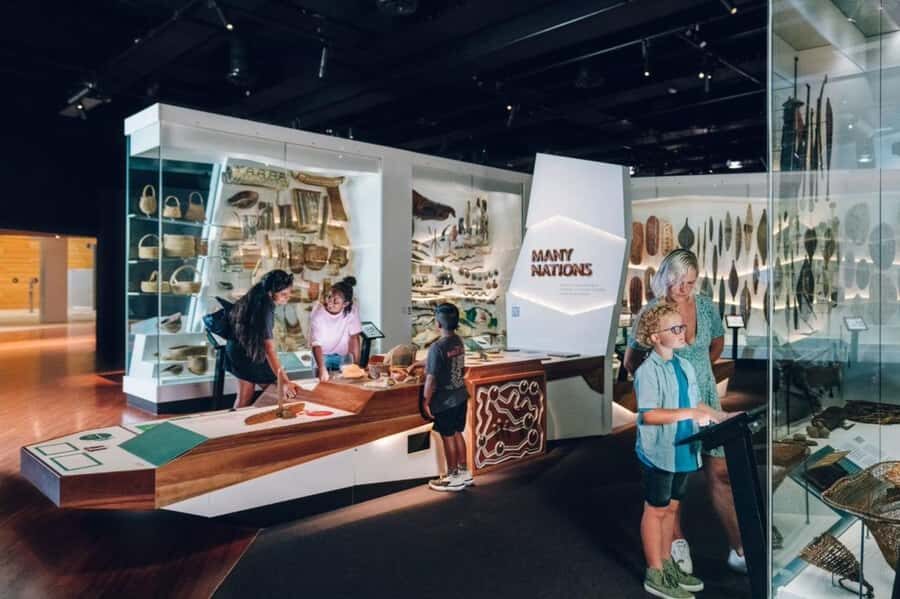
- Triceratops fossil over 1,000 kilos from the late Cretaceous, discovered in Montana, USA
- Horridus dinosaur fossil with 87% real bones, described as the most complete real dinosaur fossil in Australasia
- Forest Gallery with tall trees and wildlife-themed displays that set the pace of the visit
- Science and Life Gallery covering bugs, dinosaurs, fossils, animals, and human biology
- Bunjilaka Aboriginal Cultural Centre with living Koori traditions and knowledge, plus other Australian cultural perspectives
- Phar Lap stable connected to one of the most famous racehorses from Australia’s sporting history
Melbourne Museum: why this $12 ticket feels like a bargain
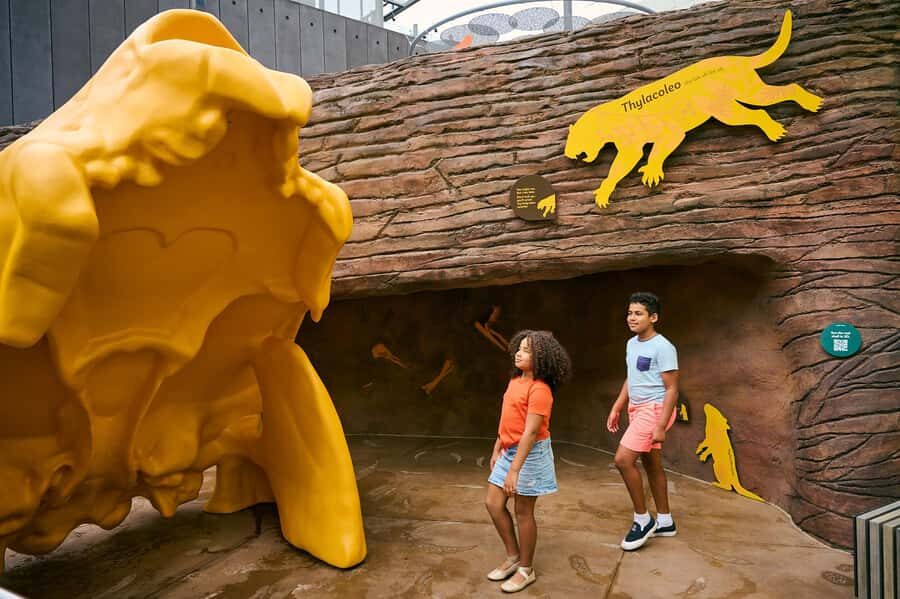
For $12 per person, you’re buying entry to one of Melbourne’s most practical “all-in-one” museum days. You’re not stuck choosing between science or culture, because the museum is designed so you can bounce between them without feeling like you’re switching brands.
This ticket is for 1 day, and you’ll want to check starting times based on availability. It’s a good fit if your schedule is flexible, since the museum experience is naturally self-paced once you’re inside.
The sweet spot here is time. The museum suggests at least 3 hours for a full experience, and I can see why: it’s not just a corridor of displays. You’ll likely keep changing directions as the galleries pull you in different ways.
And yes, you can still add more if you want. IMAX Melbourne tickets aren’t included, so if an IMAX session is on your wish list, plan to grab that separately.
Walking in: Forest Gallery sets the tone fast
Start in the Forest Gallery, and you’ll understand why it’s the museum’s living heart. This is where the museum shifts from “here’s a fact” to “here’s a place,” with tall trees and wildlife-focused storytelling that makes the science feel grounded.
If you’re traveling with kids, this gallery often works as your warm-up lap. The Children’s Gallery is its own stop later, but the Forest Gallery helps set the museum mood: less lecture, more noticing.
Even if you’re an adult who thinks they already know how museums work, this one helps you get oriented. It’s a good first zone because it slows you down just enough to read.
Science and Life Gallery: science for people who don’t want a textbook
At the west end, the Science and Life Gallery is where the museum goes broad and hands you variety. You can walk through sections on bugs, dinosaurs, fossils, animals, and human biology without feeling like the content is one-note.
What I like about this gallery is the way it connects. You’ll see natural history alongside living systems, and you start picking up the museum’s big theme: Victoria isn’t just a location on a map. It’s an environment, shaped by geology, climate, wildlife, and people.
This is also the part of the museum where you can choose your pace. If you’re strongest on fossils, you can spend extra time where the dinosaurs and fossils are. If biology grabs you more, you can shift attention to the human body displays and keep moving.
Horridus and the triceratops: the fossil moments you’ll remember
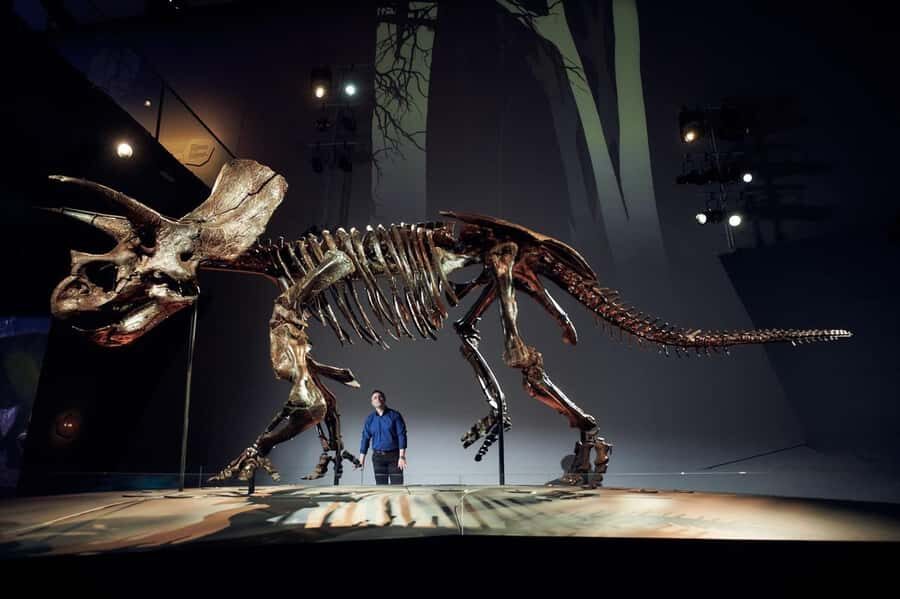
If you like dinosaurs, you’re going to notice that the museum really goes for “show-stopping” here.
First, there’s the triceratops fossil weighing more than 1,000 kilos. The museum tells the story of a globally significant discovery from the late Cretaceous, unearthed in Montana, USA. It was buried under 3.5 meters of sandstone. That detail matters because it gives you scale: the fossil didn’t just appear. It was hidden, preserved, and recovered through serious work.
Then there’s Horridus, a dinosaur skeleton noted for 87% real bones. The museum frames it as the most complete real dinosaur fossil anywhere in Australasia. Even if you’re not a fossil expert, it’s hard not to feel the difference between a full specimen and a partial one. The completeness changes how you see the animal, because you can actually visualize the whole form.
I’d plan your time so you’re not sprinting through these displays. Stand, look, read the labels, and then look again. It’s the kind of stop where a few extra minutes can turn random admiration into real understanding.
Melbourne Gallery and Phar Lap stable: city history with personality

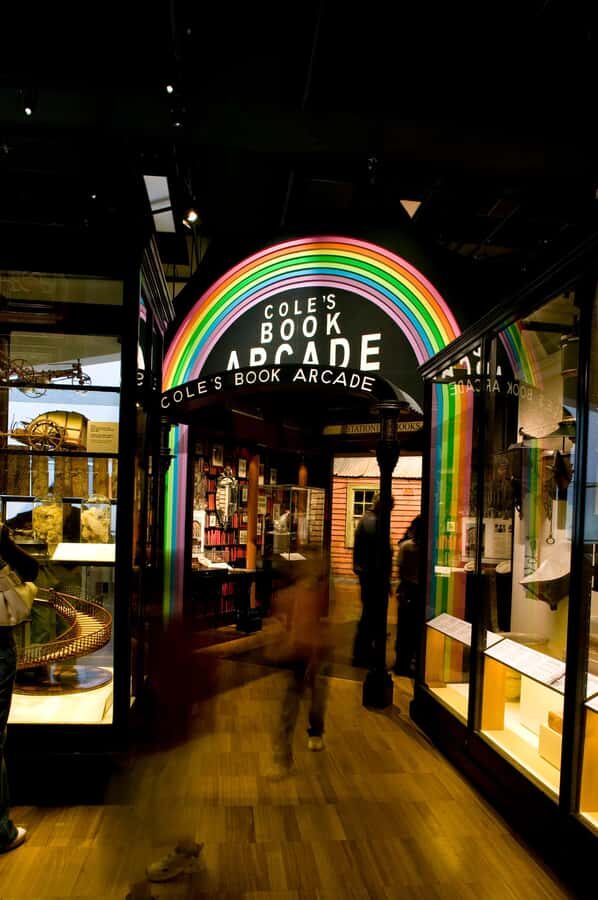
Head to the east end for the Melbourne Gallery, where you shift from nature to city story. This is where the museum helps you connect what you’re seeing outside (urban life) with what’s been happening in the region over time.
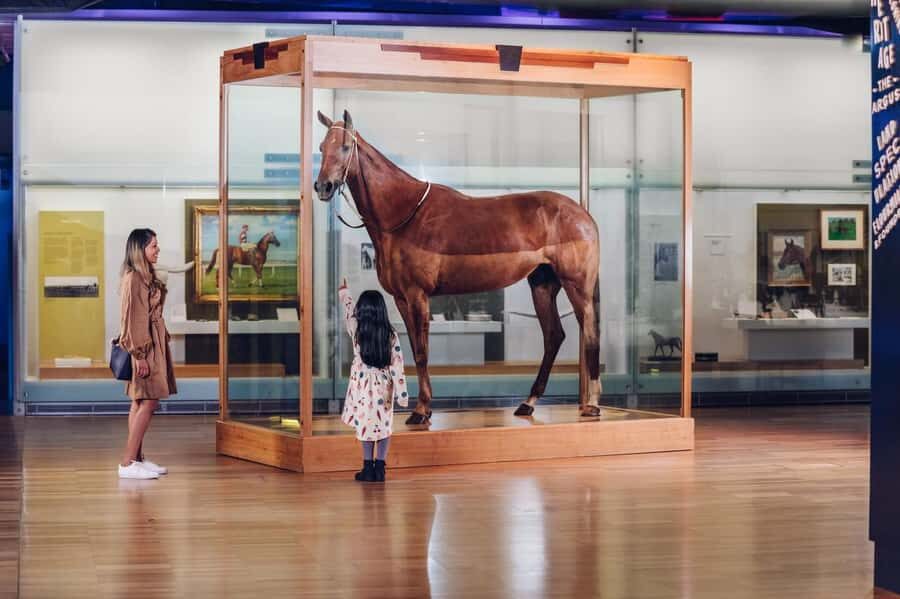
One standout in this area is the stable of Phar Lap, the famous racehorse. If you know the name, you’ll appreciate the museum linking that cultural moment to Victoria’s larger history. If you don’t, it’s still a strong point of entry because sports history can be more relatable than you’d expect in a museum setting.
This section is a good “reset” after fossils. You go from millions of years back to human timescales, and that contrast keeps the day from blending together.
Bunjilaka Aboriginal Cultural Centre: where culture is part of the museum, not an add-on
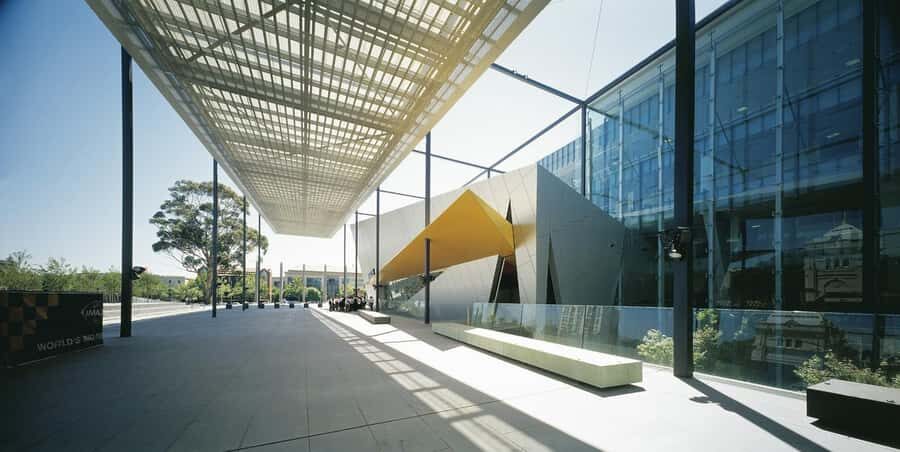
The Bunjilaka Aboriginal Cultural Centre is one of the most important stops. It’s described as imbued with the living traditions and knowledge of Koori people, with cultural perspectives from other communities around Australia.
What I like about this kind of museum space is that it doesn’t feel like a separate attraction. It feels like the museum’s meaning is broader than natural history alone. You’re learning about Victoria’s environment and also about the people who understand that environment through knowledge handed down through generations.
Spend time here rather than treating it like a quick photo stop. Read carefully, and let the exhibits do the work. If you rush, you’ll miss the point.
Children’s Gallery: a fun learning break that still works for adults
The Children’s Gallery is designed so little kids can explore and learn in a fun way. That’s exactly what you’d want if you’re traveling with family and you’re trying to keep the day from turning into an adult-only museum slog.
Even if you’re not traveling with kids, this area can be a relief valve. It’s a different style of learning, and it gives your brain a break from heavy reading after the fossil displays and gallery labels.
The best way to use it: don’t expect it to replace the rest of the museum. Use it as a reset, then head back to the galleries when your group is ready.
How to structure your day inside the museum
You can absolutely do this as a single long visit. But to keep it enjoyable, I suggest you don’t try to do everything in a straight line.
Here’s a practical rhythm that works well:
- Start with the Forest Gallery to get your bearings and set the tone.
- Move into Science and Life for broad coverage and choose one or two deeper interests.
- Add the big fossils next, when you can slow down for reading and looking.
- Finish with the Melbourne Gallery and Phar Lap stable, then move to Bunjilaka for meaning and perspective.
- If you have kids (or just want a break), slot in the Children’s Gallery when you feel the group needs energy.
Also remember: the museum has permanent collections plus temporary exhibitions from near and far. Temporary exhibition schedules and possible closures are something you should check on the museum’s website before you go, so your day doesn’t end with a surprise missing piece.
Price and value: what $12 buys you (and what it doesn’t)
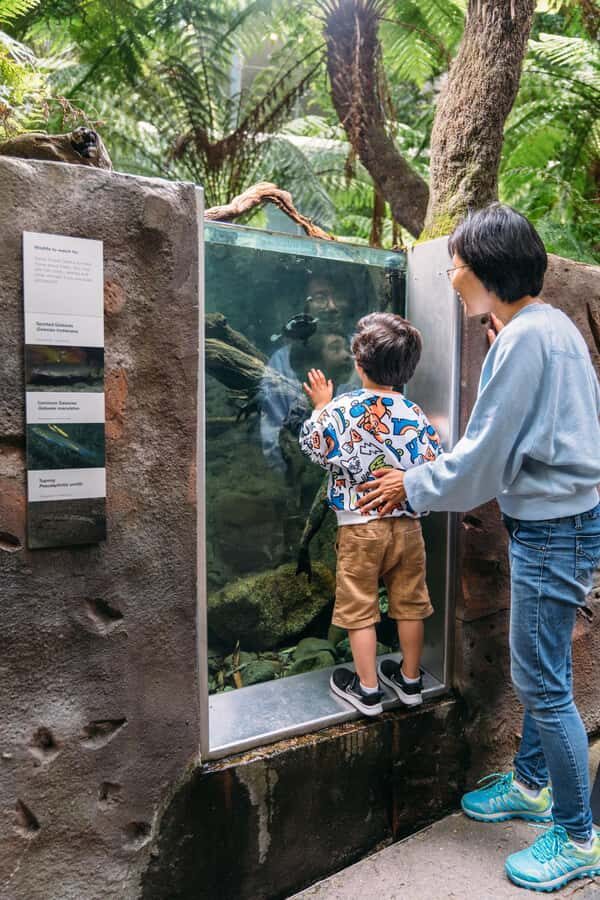
At $12 per person, you’re paying for entry to the Melbourne Museum, full stop. That’s the big value: you’re not nickel-and-diming yourself into feeling like you can’t afford the museum.
The only noted “not included” item is IMAX Melbourne tickets. If IMAX is important to your group, factor it into your budget. Otherwise, you can still build a full museum day without it.
I like this pricing model because you can make the day match your interests. If you’re fossil-focused, spend longer at the fossil-heavy areas. If culture is your priority, you can give Bunjilaka and Melbourne Gallery more attention. The ticket supports you either way.
Who should book this museum entry ticket?
This is a strong choice if you like museums that mix science with culture and don’t force you to choose one theme.
It’s especially good for:
- Families who want a meaningful day plus kid-friendly activities
- Fossil fans who want major displays like the triceratops and Horridus skeleton
- Travelers who want a better understanding of Victoria through both environment and Aboriginal cultural storytelling
- Anyone who likes to spend a half day to a full day wandering and reading at their own pace
If you only have 60 to 90 minutes, you’ll still find highlights, but you won’t get the full payoff. This is a “stay awhile” kind of museum.
Should you book the Melbourne Museum entry ticket?
I’d book it if you want a flexible, self-paced day with real wow-factor fossils and a cultural centre that takes its role seriously. The $12 entry price makes it easy to justify a long visit, and the museum layout lets you build a day around what interests you most.
I’d pause only if your time is very tight or you’re the type who dislikes museum reading. In that case, you might feel rushed and end up skipping the very exhibits that make this place worth more than the admission cost.
If you can give it at least 3 hours, you’ll likely leave with a stack of new connections in your head—dinosaurs, city history, and living culture all in one day.
FAQ
How much is the Melbourne Museum entry ticket?
The price is $12 per person.
What’s included with the ticket?
Admission to Melbourne Museum is included.
How long should I plan to spend at the museum?
The museum experience is suggested to take at least 3 hours for a full experience.
Is IMAX Melbourne included?
No. IMAX Melbourne tickets are not included.
Where do I go when I arrive?
Arrive directly at Melbourne Museum.
Is the museum wheelchair accessible?
Yes, the experience is wheelchair accessible.
]]>I love the behind-the-scenes access: pitch-level walking and entry into changing rooms used across cricket’s big eras. I also love that the museum part gives you room to roam instead of forcing you through a tight script.
One thing to consider: changing-room access can vary depending on what’s happening on the day, since some areas may be in use for athletes preparing for events.
Key points to know before you go
- Meet at Gate 3 of the MCG, where your tour starts
- Walk on the pitch and see player-only spaces like changing rooms
- Guides bring real stories, with examples like Bryan Kenneally and Phil
- Australian Sports Museum entry is included, with unlimited time to explore
- Warne: Treasures of a Legend can be added, but timing is limited and needs planning
MCG Off-Limits Access: Pitch and Changing Rooms You Can Actually See

There’s a noticeable difference between watching sport from the stands and standing in the places where the game gets made. This experience leans hard into that idea. You’ll get access to areas at the MCG that are usually kept for players, including walking onto the pitch and stepping into changing rooms that have hosted cricket legends over the years.
What makes this feel special is that it’s not just a photo stop. The guided element adds context: why the spaces are arranged the way they are, how match-day rhythms work, and what the ground has meant for Australian sport across generations. Several guides highlighted in real-world feedback (including Bryan Kenneally, Phil, David, and Ben) were praised for keeping the stories entertaining and grounded in firsthand involvement with the venue and the sporting world around it.
The big trade-off is that some areas may be affected by day-to-day operations. If a game day prep is underway, certain downstairs or changing-room sections might be harder to access than you’d hope.
What $34.43 Buys: Stadium Tour Plus Australian Sports Museum
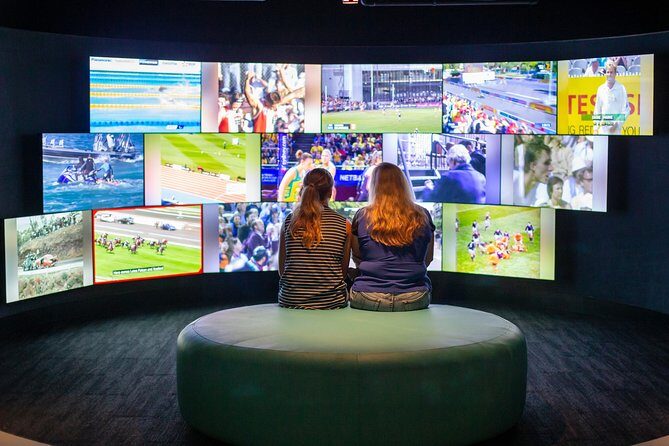
At $34.43 per person, the value is the pairing. You’re paying for two experiences that normally would cost separate tickets: an MCG stadium tour and entry to the Australian Sports Museum.
If you’re the type who likes your travel to include both place and story, this combination works well. The stadium part gives you the physical reality, and the museum fills in the background. One review-style takeaway I keep coming back to: people felt the tour plus museum was a “complete loop,” especially if they later catch a cricket or AFL match while you’re in Melbourne.
The other value angle is time flexibility. You can pick a time slot that fits your schedule, and the museum time is described as unlimited, which matters if you actually want to linger instead of speed-walking through exhibits.
Just remember: the tour portion is structured. If you’re hoping for a long, slow stadium wander with zero pacing, the best move is to plan extra time at the museum afterward (or around your day), since the tour is built to keep momentum.
Gate 3 Logistics and Timing So You Don’t Lose Minutes
I’ll be honest: meeting-point confusion can ruin a good day. Your instructions say entry to MCG Tours and the Australian Sports Museum is at Gate 3. That’s your anchor.
Plan to arrive a bit early so you can get your bearings fast and settle into your group. A common snag mentioned in feedback is that the meeting location details can be easy to mix up, with people expecting a different starting point than Gate 3. Avoid the stress by treating Gate 3 as the rule, not the suggestion.
You’ll also use a mobile ticket, which is convenient, but it means you’ll want your phone charged. This is also described as being near public transportation, so you can build it into a day of sightseeing without locking yourself into a car schedule.
The experience also says confirmation is received at booking, so take a moment to review your confirmation right when you book. That helps you match the time slot to what you see on arrival.
Inside the MCG: What Stops You’ll Make and Why They Matter
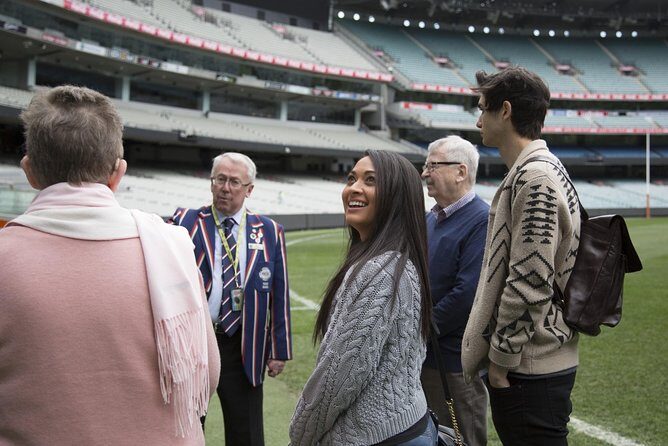
The experience runs about 2 to 3 hours total, with time allocated to both the stadium and the museum. The stadium portion is where the “off-limits” feeling really lands.
You can expect a guided route through key areas tied to how cricket unfolds on match days. The standout parts are:
- Pitch-level access, where you see the ground from the perspective athletes normally take for granted
- Changing rooms, which are described as spaces connected to cricket legends over time
- Additional player-side areas such as places associated with match operations (feedback includes mentions of press boxes and VIP areas)
Guides vary in style, but the consistent praise is for storytelling. People singled out guides like Bryan Kenneally (noted as an ex Melbourne Football Club and VFL State player from the 1960s) and Phil for being entertaining and full of practical details. Another recurring theme was the pace: people felt it moved along comfortably, not with a frantic sprint, but with enough momentum that you see a lot without waiting around.
One caution: if players are using changing rooms on the day you go, you might find certain downstairs access limited. That’s not a dealbreaker, but it is the main reason this tour won’t always look identical from one date to another.
Australian Sports Museum Time: Explore at Your Pace
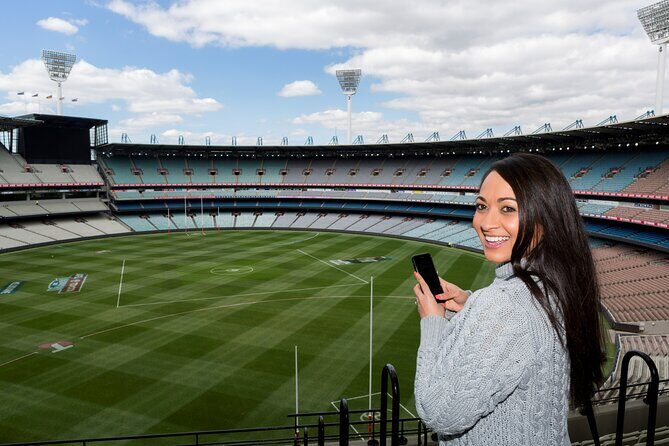
The Australian Sports Museum is where the tour transitions from “you’re standing here” to “here’s what this place has meant.” Your ticket includes entry to the museum, and you’re given unlimited time to explore it.
In real terms, unlimited time is a big deal. A lot of tours give you 20 minutes and call it done. Here, the museum block is long enough to slow down, scan the artifacts, and actually read things that catch your eye. Feedback also stressed that 30 minutes wouldn’t be enough for sports fans, which is a helpful clue: if you love the details, you’ll likely want the full museum stretch.
The museum is also a smart fit even if you’re not a die-hard cricket expert. Some people in feedback said they enjoyed learning even with limited cricket knowledge, because the museum supports broader Australian sporting culture, and the tour guide context helps you connect the dots.
If you want the museum experience to feel satisfying, plan to do the stadium first and the museum right after, so you’re not trying to remember match-day details later.
Warne: Treasures of a Legend Exhibit Planning
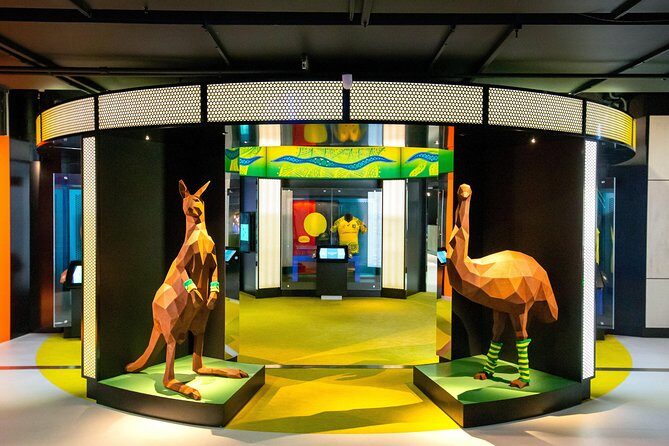
If you’re interested in the Warne: Treasures of a Legend exhibit, it runs from December 16, 2025 to August 9, 2026. The key point is that it may not be automatically timed to your visit in a way that guarantees entry.
The good news: if you want to attend, you can email [email protected] with your booking confirmation number, and the team will arrange a suitable time. The instruction also warns that if you decide on the day, there’s a risk it may be booked out already since numbers are limited.
So here’s the practical move: if Warne is a must-see for you, plan early and send your confirmation number ahead of time. If you’re flexible, you can still check on the day, but don’t build your schedule around it.
Also, because this is time-sensitive and capacity-limited, I’d treat it like a separate “planning layer” rather than an automatic add-on.
Comfort Tips: Shoes, Stairs, and Photo Stops

This is one of those tours where comfort matters because you’ll be moving. Reviews repeatedly mention comfortable shoes and note there are lots of stairs. That’s exactly what you should expect in a stadium and museum environment: access routes, viewing levels, and exhibits don’t always live on the same floor.
Wear footwear that you’d actually trust for a whole day of walking. If you have mobility concerns, you might want to ask ahead what areas are accessible on your specific date, since changing-room access can vary with match-day activity.
Bring your camera habits with intention, too. Multiple feedback comments emphasized taking photos and soaking up the heritage and fun facts. The pitch and player-side areas are the kind of places where pictures help you remember details later, especially when the museum connects artifacts back to what you saw in the stadium.
Finally, treat this as a guided experience that moves at a pace. Some people felt it didn’t feel rushed, but there’s still a lot to see. If you try to pause every two minutes to read every sign, you might feel like you’re playing catch-up.
Who Should Book This MCG + Museum Combo
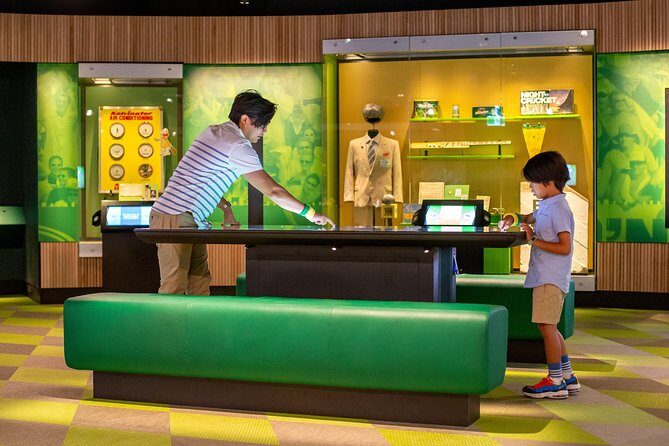
This tour is a strong match for three types of people.
First, sports lovers who want more than casual stadium sightseeing. Seeing the pitch and player-only spaces changes your perspective fast, and the guided context helps you understand why the ground is built the way it is.
Second, AFL or cricket fans who like crossovers. The museum adds breadth, so you’re not trapped in one sport’s story. One review highlighted a guide with deep connections to Melbourne football, which shows the tour isn’t only about cricket trivia.
Third, travelers who enjoy a guided story even if they’re not an expert. Several comments described enjoying the experience even with limited cricket knowledge, because the guide narration carries the weight.
I’d be cautious if you’re the type who wants a long, unscheduled museum day with zero structure. This is a guided stadium experience plus museum time, and it works best when you’re happy to follow the route and then expand in the museum afterward.
If you’re visiting Melbourne and want a “proper” sporting day, this is a smart anchor activity because the MCG is a Melbourne icon, and the museum adds meaning beyond the photos.
Should You Book the MCG Tour and Australian Sports Museum?
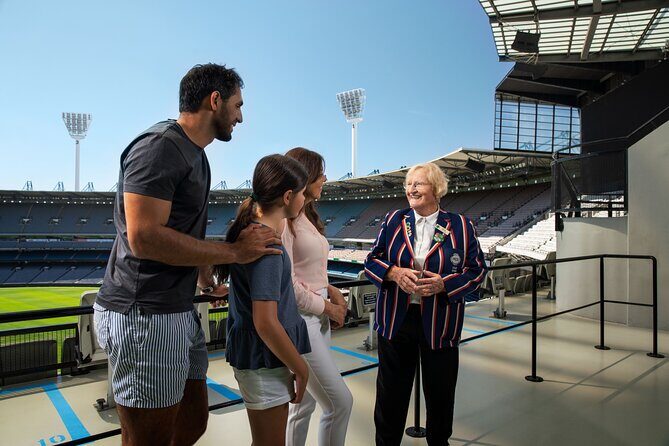
I think you should book if you want real player-side access at the MCG and you also want the museum to round out the story. The pricing looks fair for the two-part format, and the guide feedback is consistently positive, with names like Bryan Kenneally, Phil, David, Ben, and Graeme showing up as standout voices.
You might skip it (or at least adjust expectations) if you mainly want a museum-only visit or you’re going on a day where you’re very sensitive to changes in changing-room access. That can happen when spaces are actively being used.
If you do book, do it with one simple mindset: stadium first, then museum time. Plan for stairs, arrive at Gate 3, and if Warne matters to you, handle the exhibit timing ahead of your visit.
FAQ
How long is the MCG Tour and Australian Sports Museum experience?
It runs about 2 to 3 hours total. The stadium portion is described at around 2 hours, and the museum time is also listed as 2 hours.
Where do I enter and meet for the tour?
Entry for the MCG tour and the Australian Sports Museum is at Gate 3 of the MCG.
What is included with the ticket for $34.43?
Your ticket includes the MCG tour experience and admission to the Australian Sports Museum.
Do I get time on my own in the Australian Sports Museum?
Yes. You have unlimited time to explore the Australian Sports Museum.
Can I see the Warne: Treasures of a Legend exhibit?
The exhibit runs from December 16, 2025 to August 9, 2026. If you want to attend, you need to reach out to [email protected] with your booking confirmation number so they can arrange a suitable time. On-the-day attendance may be limited.
Will I receive confirmation when I book?
Yes. Confirmation will be received at the time of booking.
Are service animals allowed?
Yes. Service animals are allowed.
Can I cancel and get a refund?
Yes. Cancellation is free up to 24 hours in advance for a full refund. If you cancel less than 24 hours before the start time, the amount paid is not refunded.
]]>ArtVo is a relaxed, hands-on interactive gallery built for fun photos, not a quiet museum mood. I like that it covers 100+ paintings across 11 themed zones, so there’s always another scene to try. The tradeoff: it is very selfie-driven, so if you want a slow, contemplative art walk, you may feel like you are rushing through set-ups.
You’ll get a short intro talk in English and then explore at your own pace, typically 1–2 hours. The staff hang around to give pose ideas, and the rooms are designed so you can get creative without needing fancy gear. One practical consideration: it gets busy, and some photo spots limit bag space, so bring light and charge your phone.
ArtVo is in The District Docklands, a short hop from central Melbourne, and tickets cost $21.52 per person. At that price, you are paying mostly for the experience and photo moments, not for rare, museum-grade artwork. If you go expecting a playful afternoon and you pack smart, it’s easy to see why the experience scores well (4.6 out of 5 from 423 reviews).
Key things to know before you go

- 11 themed zones across a maze of optical-illusion paintings
- No time limit, but plan on about 1–2 hours to see everything
- Staff pose help so you do not waste time figuring out angles
- Photo-first design, including step-in scenes like angel wings, Venice gondola, and Taj Mahal backdrops
- Bring a charged phone, because you will take a lot of pictures
- Entrance can be tricky since it is in/near a shopping centre area, often toward the back
ArtVo in Melbourne: a playful, interactive gallery setup

ArtVo feels like a photo attraction pretending to be an art gallery, in the best way. You walk through themed rooms of realistic, fantasy-style paintings where the trick is to become part of the picture. Instead of standing back behind ropes, you are encouraged to touch and interact with the displays, which is why the whole place has that loosened-up, laughing energy.
The biggest win is that you can spend time where you want. Some art venues rush you through with a fixed route. Here, you can linger in your favorite zones and skip the ones that do not grab you. That flexibility is great if you travel with kids, or if you have one person who loves posing and another who just wants to enjoy the colors.
Getting to ArtVo near Docklands: find it without extra stress

ArtVo is set in The District Docklands, not far from Melbourne’s CBD. That’s an easy starting point for a day that also includes cafés or a quick stroll around the river area. It is also near public transportation, so you can plan a simple, car-free outing.
One detail worth taking seriously: the entrance can be a bit hard to find because it sits toward the back area of a shopping centre. Give yourself a little buffer time, especially if you are arriving right at opening or after lunch crowds. If you are meeting family members, confirm the exact meeting point on arrival rather than assuming everyone finds the same door.
Your first steps inside: the intro talk and how to use it
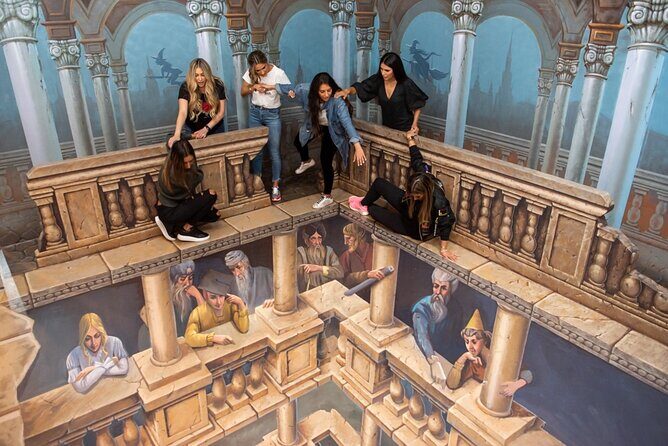
When you arrive, your ticket is ready to go, and you get a short introductory talk in English. This matters more than it sounds. The rooms are set up for specific camera angles, and the staff guidance helps you avoid the common mistake of standing where you cannot get the illusion to line up.
After that, you are free to explore. Most visitors end up moving room to room in a loop, using the staff prompts when they want inspiration. You are not forced to follow a rigid script, which is handy if your group has different photo styles. Want quick highlights? You can do that. Want to remake the same scene five ways? You can also do that.
The 11 themed zones: what you’ll actually do in each room

ArtVo is built around 11 themed zones, with 100+ paintings you can step into. The rooms range from whimsical, fantasy-like scenes to travel-themed backdrops that look ready-made for social media. The walls are full of detailed artwork, and the trick is interaction: you position yourself to match the perspective, then the “3D” effect does its thing.
A useful way to think about it is like this: each zone is a mini photo set. Your job is to figure out where to stand, then test a few poses until the illusion locks in. Staff are on hand through the experience to help with that process. They can suggest where to look, what body angle works best, and how to frame the shot so the painting does the heavy lifting.
You will likely notice three patterns as you move around:
- Some zones are busy and you will wait a little for space.
- Some zones let you move quickly once you understand the perspective.
- Some scenes are so popular that you may want to return later if the line is long.
Photo set pieces that people obsess over: wings, Venice, and the Taj Mahal

A lot of the excitement comes from the signature photo moments. If you like the idea of getting your picture into famous-feeling scenes, ArtVo delivers.
Some of the most mentioned backdrops include:
- Angel wings for profile-style selfies
- A Venice gondola look, including scenes described as riding through a Venetian canal
- A Taj Mahal-style backdrop for that big, travel-photo composition
These scenes are not just printed murals. They are part of the illusion design, so your position changes the effect. That’s why the staff tips help. Even when you think you understand what to do, it’s often a small adjustment—feet placement, height, or camera angle—that turns an average photo into a believable optical illusion.
Also, a lot of the scenes feel fantasy-based and highly detailed, which makes the photos look like you went somewhere special. If you are short on time in Melbourne, these rooms act like a condensed dream-trip.
Staff support and group challenges: what to do if you are solo or short on help
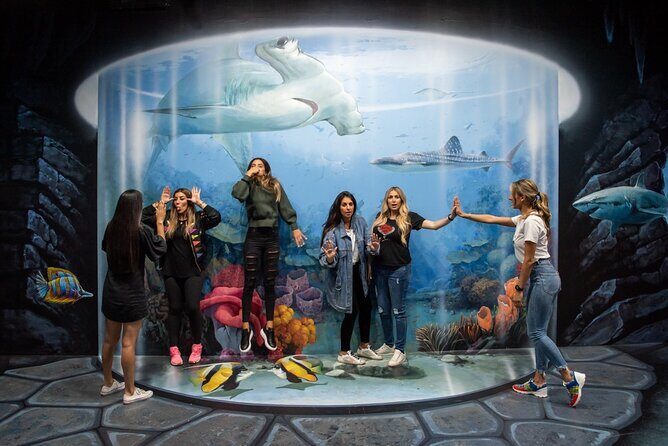
ArtVo is designed so you can enjoy it even if you come with kids or a mixed group. The staff help with posing ideas, and the experience is family-friendly by design.
Still, there are real-world photo limits. Several people note that it is easier if you have a friend to shoot photos. If you are solo, you might find some angles challenging because a self-timer can take a few attempts to get right. The good news is that staff are described as friendly and accommodating, and they can help so you still get your own shots.
For groups, the main issue is simple: time. Popular set pieces can get crowded, and group photos can take longer when everyone wants their turn in the same spot. If you want fewer delays, plan to split up briefly for a few minutes, then regroup when the room clears.
How long should you plan: 30 minutes, 1 hour, or a full 2 hours
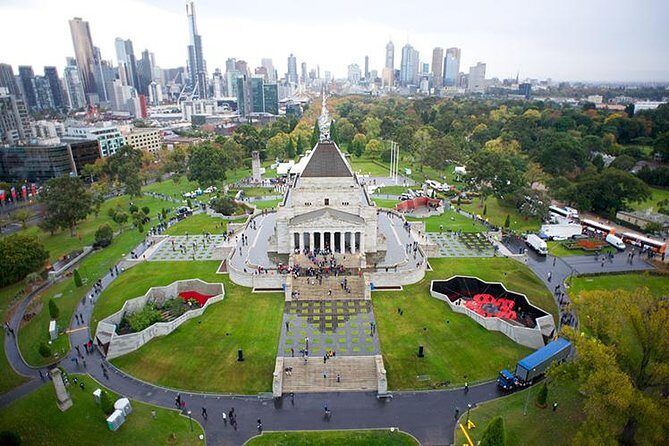
Most visitors settle into about 1–2 hours. That range is believable because ArtVo is not a museum where you need to read every label. It’s an experience where time equals how many photos you want and how picky you are about getting the best illusion alignment.
Here’s a practical way to choose your pacing:
- If you mainly want a few standout photos, you might be done in around 30 minutes to an hour.
- If you want enough time to try multiple scenes and redo favorites, plan closer to 1–2 hours.
- If your group is taking lots of photos and waiting for turns, two hours is the safer call.
One more time-saving trick: you can move back and forth. So if a photo spot is too packed for your liking, you can skip ahead and return without losing your momentum. That flexibility keeps the day fun instead of stressful.
Value and price: is $21.52 worth it?

At $21.52 per person, ArtVo is priced like an experience attraction, not a traditional art museum ticket. So the value depends on what you want from the outing.
If you care about:
- Instagram-ready photos
- stepping into themed scenes
- a lively afternoon with minimal rules
then this can feel like a bargain. The experience is also designed to keep you busy. People describe it as an easy way to spend an afternoon that stays entertaining for the whole family.
If you want:
- quiet time
- deep art interpretation
- a calm, slow walk through galleries
then it may feel like it moves too quickly, and it can get repetitive after you’ve done a few scenes.
My take: ArtVo is worth it when you treat it as a photo experience first and art experience second. If you go in with that mindset, the price feels fair because you get lots of shots, lots of color, and a whole set of playful memories.
What to bring (and what to leave behind): the practical checklist
This is one of those places where what you bring affects how smooth your visit feels. Based on what people run into, here are the real-life tips that make a difference.
Bring
- A fully charged phone battery. You will take a lot of photos and video.
- Comfortable casual clothing. You may crouch, stretch, and contort a bit to match the scene.
- A light bag or small crossbody, if you can. The fewer items you carry, the easier it is to move between photo spots.
Consider leaving
- Bulky bags. Some photo moments have limited space, and you may end up setting items down where you would rather not.
One detail that surprised people: there may not be a convenient place to stash your purse during active photo set-ups. If you want a stress-free experience, travel light and keep essentials on your person or in a small bag you can manage.
Crowds and timing: when to go for smoother photos
ArtVo can get busy. That’s normal for a place that looks great in photos and offers a free-flowing experience where people want their turn in the best spots. The best strategy is simple: try to choose an earlier timeslot if you can, especially if you dislike waiting.
If you arrive during a rush, you do still have options. You can keep moving through the rooms and come back when a popular set piece clears. That flexibility helps your visit stay fun rather than turning into a waiting game.
Who will enjoy ArtVo most?
ArtVo is a great fit for people who like playful activities and don’t mind being a little silly for the camera.
You’ll probably enjoy it if:
- you travel with kids or multiple ages (it’s described as fun for young and young at heart)
- you want a high-photo-output afternoon
- you and your group enjoy themed backdrops and optical illusions
- you want something easy that does not require reading a lot of information
You might want to skip or adjust expectations if:
- you want a quiet art museum experience
- you hate crowds and waiting for photos
- you expect a long, slow route with lots of interpretation
Should you book ArtVo in Melbourne?
Yes, if you want a lively, photo-friendly activity that keeps everyone busy without complicated rules. For $21.52, you are buying time in a colorful, interactive space with staff help, clear photo instructions, and plenty of signature scenes like angel wings, Venice gondola-style moments, and Taj Mahal backdrops.
Book it especially if you’re traveling with family, friends who love taking pictures, or you just want an easy afternoon plan near Docklands that feels like more than a quick stop. Just go in ready to take photos, keep your phone charged, and bring light so you are free to focus on the illusion.
FAQ
How long does the ArtVo experience take?
Most visitors spend about 1 to 2 hours to explore the gallery and themed zones.
Is there a time limit once I enter?
No. There is no stated time limit, and you can take your time exploring and taking photos.
What’s included with my ticket?
Your admission includes an English guide for the intro portion of the experience.
Do I need to buy food or drinks separately?
Food and drinks are not included, so you’ll need to plan on buying them elsewhere.
Is ArtVo suitable for children?
Children must be accompanied by an adult, and the experience is described as fun for families and kids.
Is the dress code formal?
Dress is casual, and comfortable clothing is recommended.
Is it easy to get to using public transport?
Yes. It is near public transportation.
Is free cancellation available?
Yes. You can cancel up to 24 hours in advance for a full refund. If you cancel within 24 hours of the start time, the amount paid is not refunded.
]]>