REVIEW · BIKE TOURS
Electric Bike Tour of Melbourne
Book on Viator →Operated by Blue Tongue Bikes · Bookable on Viator
Electric bikes turn Melbourne into a smooth cruise. This Classic Melbourne City Bike Tour uses pedal-assist to help you cover a lot of ground while still feeling relaxed, with mostly off-road bike paths and frequent short stops. I like how it combines big landmarks with stories you do not usually pick up on your own, and I especially like the small-group feel.
One thing to keep in mind is the history focus. The ride includes heavy context early on, so if you came for more casual sightseeing and less talking at the start, the pacing may feel a bit too lecture-heavy.
In This Review
- Key things you will notice right away
- Electric bikes and Melbourne’s bike paths: the comfort setup
- The timing: 4 hours that feel like a guided crawl (in a good way)
- Southbank: starting on the Yarra and grounding the story
- Shrine of Remembrance: war memorial plus Aboriginal leadership context
- The MCG area: sports capital energy without the stress
- Fitzroy Gardens and Cook’s cottage: a British ship story rebuilt
- Parliament House of Victoria and the gold-rush wealth lesson
- Royal Exhibition Building: why 19th-century exhibitions still matter
- North Fitzroy lunch stop: your money, your choice, your pace
- Chinatown: gold-rush origins in the middle of the CBD
- Hosier Lane: Melbourne’s art lane on bluestone
- Fed Square and the river-city link
- Immigration Museum area: Melbourne through the eyes of newcomers
- What $85.35 buys you, and why it is not just a convenience fee
- Safety, group size, and why the guide makes the difference
- Who this tour fits best (and who might want a different style)
- Final call: should you book this e-bike tour?
- FAQ
- How long is the electric bike tour of Melbourne?
- What is the price per person?
- What is included in the tour price?
- Is lunch included?
- Where does the tour start?
- What time does the tour start?
- How many people are in the group?
- What is the cancellation policy?
- Is the tour mostly on roads?
Key things you will notice right away
- E-bike assist for an easy, low-stress pace even if you are not a regular cyclist
- Mostly off-road route with safe bike paths and parks (not constant traffic dodging)
- Max group size of 10 helps the guide keep everyone together
- Guides (Al, Alan, Marcus, Avalon, Freddie) get praise for clear instructions and group safety
- A lunch stop in Fitzroy/North Fitzroy where you bring your own money
- Quick hits on Melbourne icons like the Shrine, MCG area, Chinatown, Hosier Lane, and Fed Square
Electric bikes and Melbourne’s bike paths: the comfort setup
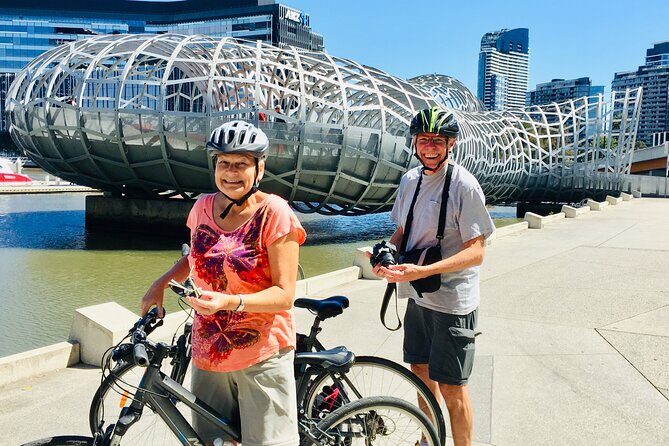
This is one of those Melbourne tours that makes you realize the city was built for discovery. The big selling point is that the ride stays 95% off roads, mostly along bike paths and parks, so you spend less time white-knuckling and more time looking around.
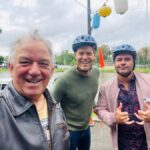
The e-bike part matters even more than you might think. People who had never ridden an e-bike before still found the bikes easy to operate, thanks to clear guidance from the leader (Freddie is specifically mentioned for simple instructions). If you want the sightseeing of a bus tour but the freedom of moving at street level, this format fits.
One practical note: the bikes and helmets are included. That means you are not hunting for gear or trying to figure out a rental setup when you could be cruising toward your first stop.
You can also read our reviews of more cycling tours in Melbourne
The timing: 4 hours that feel like a guided crawl (in a good way)
The tour runs about 4 hours, with lots of short stops to keep the ride comfortable. The itinerary is built around quick photo-and-context moments—think about roughly 5 minutes at each landmark—so you get variety without long stretches where you feel stuck on a single topic.
Still, expect that not every minute is “pedal time.” One rider noted that they biked about 1.5 hours during the overall ride, with the rest going to orientation and stops. That does not mean it is a slow tour, just that the experience is structured around commentary, regrouping, and short walks.
On the plus side, most people found the pace “relaxing” and said the guide did a good job keeping the group together. If you like moving, learning a bit, and then moving again, you will probably enjoy this style.
Southbank: starting on the Yarra and grounding the story
You begin at Southbank, cycling on land connected to the Kulin Nation. The tour starts with a respectful acknowledgment that the land was never ceded, then introduces some of the settler figures who shaped Melbourne’s early growth.
What I like about this start is that it sets expectations right away. You are not just riding past buildings; you are learning the “why” behind the city’s layout and power centers. And since Southbank sits so close to the water and central sights, it is a smart place to get comfortable on the bike early.
Shrine of Remembrance: war memorial plus Aboriginal leadership context
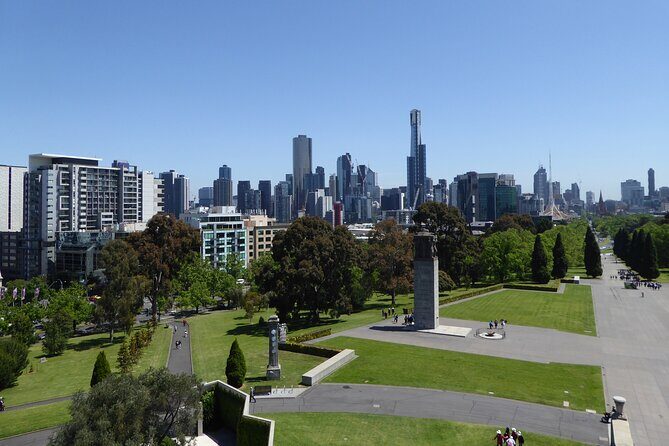
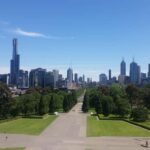
Next up is the Shrine of Remembrance, described as Victoria’s largest and most visited war memorial of national significance. You also hear about William Barrack, an Aboriginal leader, activist, cultural ambassador, educator, and advocate for Aboriginal rights.
This is one of the stops where the tour feels like it has more depth than standard sightseeing. It can be quick, but the aim is clear: you leave with more than a postcard view.
The MCG area: sports capital energy without the stress
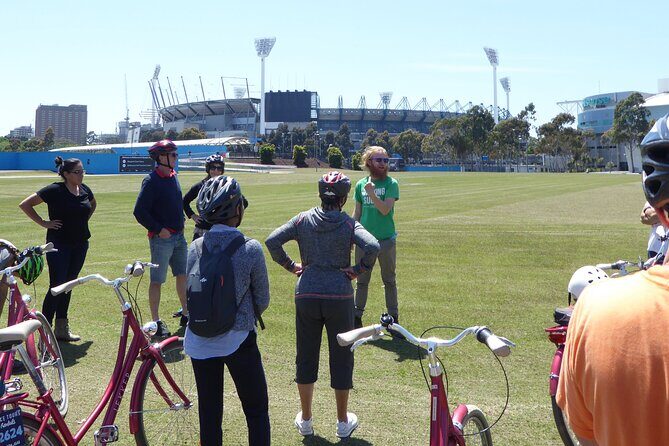
From there you reach the Melbourne Cricket Ground (MCG) area. Even if you are not a hardcore sports fan, you get a sense of why Melbourne calls itself the sporting capital, because this stadium is pure scale.
The practical bonus: you see the energy of the city’s major venues without needing to book tickets or plan a full museum day. The stop is short, so you do not walk away “done,” but you do walk away with a map of what to come back to.

Fitzroy Gardens and Cook’s cottage: a British ship story rebuilt
At Fitzroy Gardens, the tour highlights Cook’s cottage, shipped out from England and rebuilt brick by brick. This is one of those places that looks small once you are standing in the garden, but the story behind it is big: how culture and power traveled, and how places get recreated far from their origin.
The bike tour format works here because you are not confined to one park area for hours. You can enjoy a quick look, learn the background, and then move on before the day gets too hot or too slow.
Parliament House of Victoria and the gold-rush wealth lesson
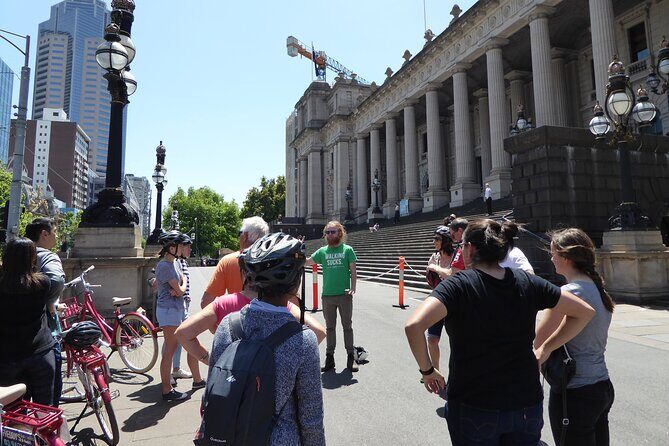
Next is Parliament House of Victoria, introduced as a statement of the wealth Melbourne gained during the gold rush era. This stop is mostly about perspective: you start to see how money and confidence shaped public buildings, not just streets and shops.
One drawback to mention, based on what you might feel during the day: if you are not in a “history mode,” some stops can feel like you are pausing just as you are getting into the sightseeing rhythm. The guide tries to keep things moving, but the content here is meant to land.
Royal Exhibition Building: why 19th-century exhibitions still matter
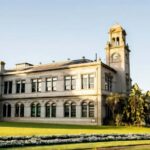
You visit the Royal Exhibition Building, described as a magnificent tribute to international exhibition movements from the 19th century. It is positioned as a place where people still meet to exchange goods, technology, ideas, culture, and values.
This stop helps connect the dots between Melbourne as a city that imports ideas and a city that becomes known for hosting them. And since the stop is short, you get enough of the “big idea” to understand why locals care.
North Fitzroy lunch stop: your money, your choice, your pace
Then comes the part many people look forward to: a lunch break in North Fitzroy. The tour calls out this neighborhood as eclectic, and it includes a stop at a favorite cafe for food. Bring extra cash for lunch, because meals are not included on the tour.
What you should expect: you can eat at your own pace and then rejoin the group. If you like having a structured plan but still want freedom, this works well. If you hate deciding where to eat, use the tour leader’s suggestions and pick something quick.
Chinatown: gold-rush origins in the middle of the CBD
You move into Chinatown, described as the second oldest in the world and established in 1851 in response to the gold rush. This is not just a photo stop. The guide frames it as a result of migration patterns driven by the gold boom.
The e-bike makes this easy because you can arrive without turning it into a full detour. You see the neighborhood quickly, learn the origin, and then keep moving toward the street-art area.
Hosier Lane: Melbourne’s art lane on bluestone
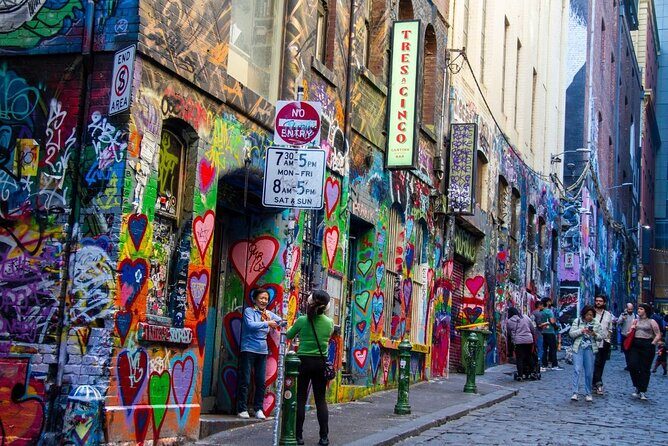
At Hosier Lane, you get the signature Melbourne feel: a bluestone lane filled with street art. It is famous for that constant visual change, so even if you have seen images online, you will still find it different in person.
This is also a nice break from “big landmark” energy. Hosier Lane is small enough for you to slow down and look, but it still fits the tour’s short stop rhythm.
Fed Square and the river-city link
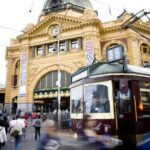
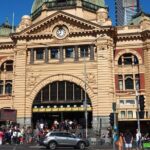
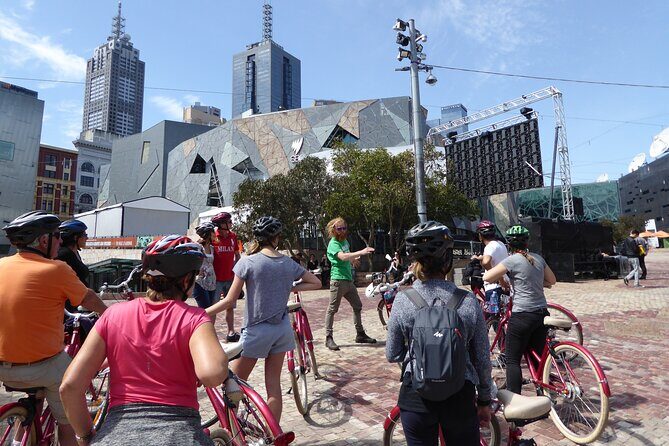
Next is Fed Square, introduced as Melbourne’s first public square and described as connecting Flinders Street to the Yarra River. The stop is meant to show you the modern civic heart of the city—an architectural space where multiple kinds of Melbourne energy intersect.
If you want an easy way to understand Melbourne’s geography, this is a good checkpoint. You get a sense of where the center pulls people in, and where it hands them off toward the river walks.
Immigration Museum area: Melbourne through the eyes of newcomers
The tour ends at an overview point connected to the Immigration Museum, where the focus is on how immigrants shape Melbourne (the tour notes immigrants make up 50% of the population). The idea is to help you read the city like a living result of movement, not just a set of old buildings.
Then you roll back to the starting area. Ending where you began is a small thing, but it keeps the day simple.
What $85.35 buys you, and why it is not just a convenience fee
At $85.35 per person (with a mobile ticket), this is priced like an activity, but you are getting real inclusions. You get a guided bike tour, use of the e-bike, and a helmet. That matters in a city where bike rentals plus a guide can add up fast.
The tour also gives you structure for stops you might not prioritize on your own. You are not just seeing the Shrine, Parliament, and Chinatown; you are learning what each stop represents in Melbourne’s larger story.
Food is not included, and that is the one extra cost you should plan for. The Fitzroy lunch stop is optional in the sense that you can choose what you eat, but you do need money if you want to participate.
Safety, group size, and why the guide makes the difference
This ride caps at 10 travelers, which usually means your guide can manage the group without rushing. Reviews praise how leaders keep everyone together and cycle safely through the city.
Instruction quality is repeatedly mentioned, especially from first-time e-bike riders. That is huge. If you are nervous about a bike, you do not need bravery. You need simple, clear coaching, and that is what guides like Freddie and others are credited for providing.
Also, the route is designed to reduce stress: mostly off-road, with easy-to-navigate segments when you do hit busier areas. Still, use your common sense. Even on bike paths, you are sharing space with pedestrians and other cyclists.
Who this tour fits best (and who might want a different style)
This tour is a strong match if you want a fast orientation to Melbourne and a fun way to cover major sights without sitting in traffic or walking for hours. One reviewer with limited biking experience described it as doable even over 60, which tells you the pacing and e-bike assist do real work.
It also fits people who like the pairing of city landmarks with human stories. The tour includes topics like Aboriginal presence and settler history, plus war history, sport, and the gold-rush era themes. If you enjoy context, you will likely leave feeling like you now understand what you are seeing.
If you hate hearing a lot of history in a short time, this might not be your ideal match. One guest noted the early history could feel like too much, and some people also wished the route included more back-street riding. In other words: it is not a pure street-watching ride. It is a guided city story with biking as the delivery system.
Final call: should you book this e-bike tour?
If you want an efficient, mostly off-road way to get your bearings in Melbourne, I think this is a solid booking. The guide-led stops are short enough to stay fun, and the e-bike support helps a wide range of riders keep up without turning the day into a workout.
Book it if you want a guided overview that includes Aboriginal context and major landmarks like the Shrine, MCG area, Chinatown, Hosier Lane, and Fed Square. Skip it if you are searching for a long, mostly scenic bike ride with minimal talking or you want more time in less-known lanes.
FAQ
How long is the electric bike tour of Melbourne?
The tour runs for about 4 hours (approx.).
What is the price per person?
It costs $85.35 per person.
What is included in the tour price?
You get a bike tour with a guide, use of an e-bike, and use of a helmet.
Is lunch included?
No. Food and drinks are not included unless specified. There is a lunch stop in Fitzroy where you bring extra cash.
Where does the tour start?
The meeting point is 20 Rebecca Walk, Melbourne VIC 3000, Australia.
What time does the tour start?
The start time is 10:00 am.
How many people are in the group?
The maximum group size is 10 travelers.
What is the cancellation policy?
Free cancellation is available. You can cancel up to 24 hours in advance for a full refund.
Is the tour mostly on roads?
No. The tour is described as 95% off roads on safe bike paths and parks.