REVIEW · MCG CRICKET GROUND TOUR
Melbourne: Melbourne Cricket Grounds (MCG) Guided Tour
Book on GetYourGuide →Operated by Melbourne Cricket Ground · Bookable on GetYourGuide
There are few places that feel like a sports museum and a living stadium at once. This MCG guided tour gives you a rare pass to the parts of Melbourne Cricket Ground most people never see, from the MCC Long Room to the player spaces and the chance to walk on the arena.
Two things I really like are how personal it feels—often led by MCC members with real stories—and how the tour moves you through the full match experience, not just a few pretty photos. The tour also packs in major cricket landmarks, including rooms tied to legend and media.
One possible drawback: the route can be subject to availability and can shift, and with multiple groups it can feel a touch rushed near the end. If you’re the type who likes long explanations in one spot, you’ll want to ask questions as you go.
In This Review
- Quick hits: the best parts of the MCG guided tour
- Entering through Gate 3: timing, vouchers, and staying oriented
- The MCC Long Room and MCC Library: where cricket rituals live
- Player changing rooms and the cricketers’ viewing room
- Ron Casey Media Centre: where the story gets told
- Walking the arena turf: that surreal step onto the hallowed ground
- Cricket Victoria Bill Lawry Centre and Ponsford Stand views
- City Terrace skyline views: Melbourne from the stadium’s edge
- Price and value: is $24 a fair deal for 75 minutes?
- The pacing reality: why some tours feel fast
- Who this MCG tour suits best
- Final call: should you book the MCG guided tour?
- FAQ
- Where do I meet for the MCG guided tour?
- How long is the Melbourne Cricket Grounds guided tour?
- What’s included in the tour price?
- Is food or drinks included?
- Is the tour wheelchair accessible?
- What languages are available for the guide?
- What if parts of the route are unavailable on the day?
Quick hits: the best parts of the MCG guided tour

- MCC Long Room access, plus the MCC Library founded in 1873
- A tour of player changing rooms and the cricketers’ viewing room
- Ron Casey Media Centre stops and portraits of Sir Donald Bradman and Sachin Tendulkar
- A real walk on the arena turf
- Views from City Terrace over Melbourne’s skyline
- Time in the Cricket Victoria Bill Lawry Centre and the Ponsford Stand
Entering through Gate 3: timing, vouchers, and staying oriented

Your tour starts inside Gate 3 at the Melbourne Cricket Ground. Plan to arrive with a little buffer so you can check in and get your bearings before your group begins moving. You’ll present your voucher to staff—keep it handy on your phone or printed, whatever your ticket requires.
This is a 75-minute tour, usually offered in the morning and afternoon. That time sounds short until you realize what’s packed inside: you’re not just looking at seating bowls. You’re walking from storied rooms to behind-the-scenes spaces, then out onto the arena itself, all while staying within areas that may be open or limited that day.
One practical note: some parts of the route can change based on availability. On busy days or when the stadium’s operations demand it, your guide may alter the path. I’d treat the tour as a “best access we can do today” experience, not a rigid checklist where every room is guaranteed to appear in exactly the same way.
You can also read our reviews of more guided tours in Melbourne



The MCC Long Room and MCC Library: where cricket rituals live
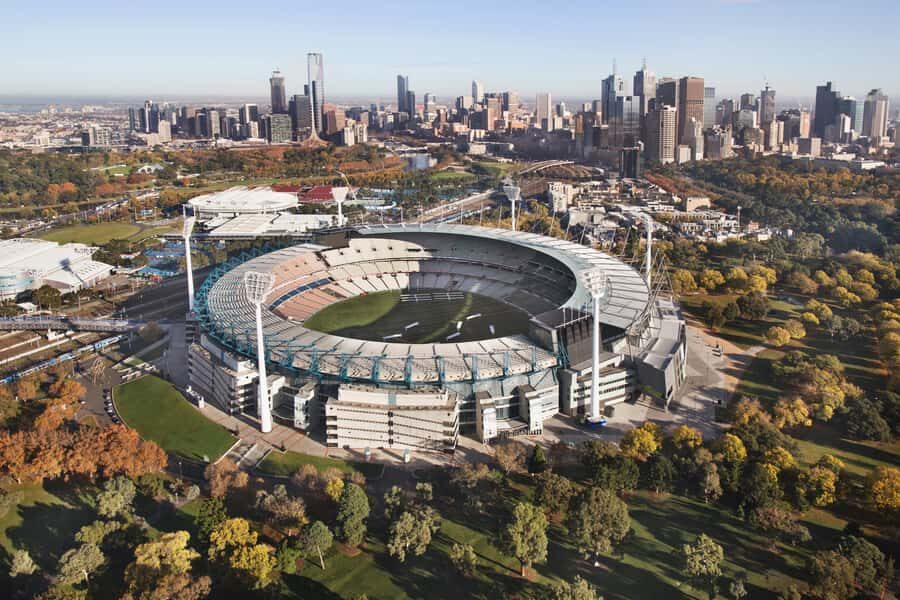
If you love cricket culture, the MCC Long Room is the first big emotional hit. This is one of those spaces where you can feel tradition in the walls: it’s not designed for quick tourism photos. It’s built for ceremony, and the tour helps you understand why that matters.
From there, you’ll spend time at the MCC Library, founded in 1873. You’re not just hearing that date—you’re getting the sense that the club has been collecting cricket life for generations. It’s also a great reminder that the MCG isn’t only about the match day spectacle. It’s about the long chain of players, fans, and decisions that shaped the game.
This section works well even if you don’t consider yourself a stats person. The vibe is part of the value: you’re standing in a place that feels like an institution, not a theme park. And when your guide is an MCC member, you tend to get anecdotes that make the rooms feel less like exhibits and more like real, ongoing club history.
Player changing rooms and the cricketers’ viewing room

Next comes the part that makes most sports fans grin: the player changing rooms. This is where the tour stops being “stadium sightseeing” and becomes “match backstage.” You’ll see the spaces that support preparation, focus, and the last minutes before players go out.
Then you’ll move into the cricketers’ viewing room. This stop helps you connect the dots between what happens on the ground and what happens right before that—where people watch, plan, and check details that never make it to the public concourse.
What’s worth keeping in mind: you’ll likely see these rooms on a guided path that’s designed for groups, not for long lingering. If you’re hoping for extra time with questions, don’t wait. The best moments usually happen when you ask while your guide is standing in the exact spot where the story applies.
Also, some visitors find that the pace is naturally tight because the group has a lot to cover in 75 minutes. If you’re sensitive to noise or you have trouble hearing, try to be near the front or the middle of your group so you can catch the guide’s explanations.
Ron Casey Media Centre: where the story gets told
A standout stop on this tour is the Ron Casey Media Centre. This section gives you the stadium’s other viewpoint: not just the athletes, but the people who help turn events into broadcast and legend.
You’ll also see portraits of major cricket icons, including Sir Donald Bradman and Sachin Tendulkar. This isn’t random decoration. It’s a way to anchor the MCG’s global place in cricket, connecting Melbourne to the bigger cricket map most visitors come from.
If you’re the type who likes sports through a media lens—commentary, analysis, the behind-the-scenes machinery—this stop is your reward. Even if you came for cricket romance, media spaces add another kind of respect: they show how a match becomes part of national memory.
One small tip: keep your phone ready here, but don’t let it steal your attention. The value is the context your guide gives while you’re looking at the room, not after you’ve walked away.
Walking the arena turf: that surreal step onto the hallowed ground

The tour’s biggest physical moment is the chance to walk on the arena itself. This is the part where the stadium stops being a structure and becomes a location with gravity. Standing where play happens can make even non-cricket fans feel the scale.
When you’re on the turf, you start noticing things you’d never spot from the stands: how the space opens up around you, how sightlines shift, and how the stadium’s design shapes movement. It’s also a powerful “I get it now” moment for people who only know MCG through highlights.
It’s also where timing matters. Because the tour is limited to 75 minutes, you may not have a huge amount of time on the ground compared to a casual wander. I like to treat this as a quick check-in with reality: one or two minutes to look around, then get your photos and move on.
If you’re visiting with kids, this is the moment they’ll remember. If you’re visiting with friends who don’t care about cricket, this is the moment you can still sell as an iconic stadium experience.






Cricket Victoria Bill Lawry Centre and Ponsford Stand views
After the arena walk, the tour shifts toward context and scale. You’ll visit the Cricket Victoria Bill Lawry Centre, which helps connect the MCG to the wider cricket ecosystem beyond the boundary line.
Then you’ll head to the Ponsford Stand. This stand is one of the key “this is how the crowd watches” vantage points. Even without a match running, it gives you a sense of how spectators move through the stadium and how noise and energy would carry.
What I find helpful here is how the tour “triangulates” your understanding: you’ve seen the rooms players use, you’ve stood on the turf, and now you’re getting back to the seating geometry. That combo helps you feel the stadium as one system, not a pile of rooms.
If your route allows it, you may also get time for more views from elevated areas. Ask your guide if there’s a best spot for photos at your time stop. They’re the ones who know where it’s easiest to frame the skyline.
City Terrace skyline views: Melbourne from the stadium’s edge
One of the more charming parts of this tour is the City Terrace stop, with views of Melbourne’s skyline. This is a nice reset after the intensity of the player areas and the arena walk.
It also makes your visit feel more grounded in place. The MCG isn’t isolated from the city—it’s wrapped by it. Seeing the skyline while you’re inside a historic sporting venue gives you that rare “two worlds at once” feeling: tradition plus modern Melbourne.
This stop is also where you can catch your breath and take a calmer set of photos. If the earlier segments felt fast, this is often the moment where the tour feels easier to absorb.
As always, expect the route to adapt. Availability can shift which spaces you see and in what order, so keep your camera accessible, and don’t assume you’ll get the same sequence every time.
Price and value: is $24 a fair deal for 75 minutes?
At $24 per person for 75 minutes, this tour is priced like a sports attraction that wants to stay accessible. The real value isn’t only the low cost—it’s that you’re getting guided access to areas most people can’t wander into on their own.
You’re not just buying entry. You’re buying a guided flow through high-impact locations: MCC members’ facilities, player rooms, the media centre, the arena walk, and stadium-view stops. If you’re a cricket fan, that kind of access would normally cost much more in many cities, because backstage areas aren’t casual to operate.
Even if you’re not a die-hard cricket person, the tour still makes sense because it teaches you why the MCG matters culturally. It’s a “how a stadium functions” experience as much as it is a “stand in iconic places” experience.
There’s one tradeoff: because it’s timed and group-based, you won’t get an extended museum-style pace. You’re here for highlights with context, not for a half-day deep research project.
The pacing reality: why some tours feel fast
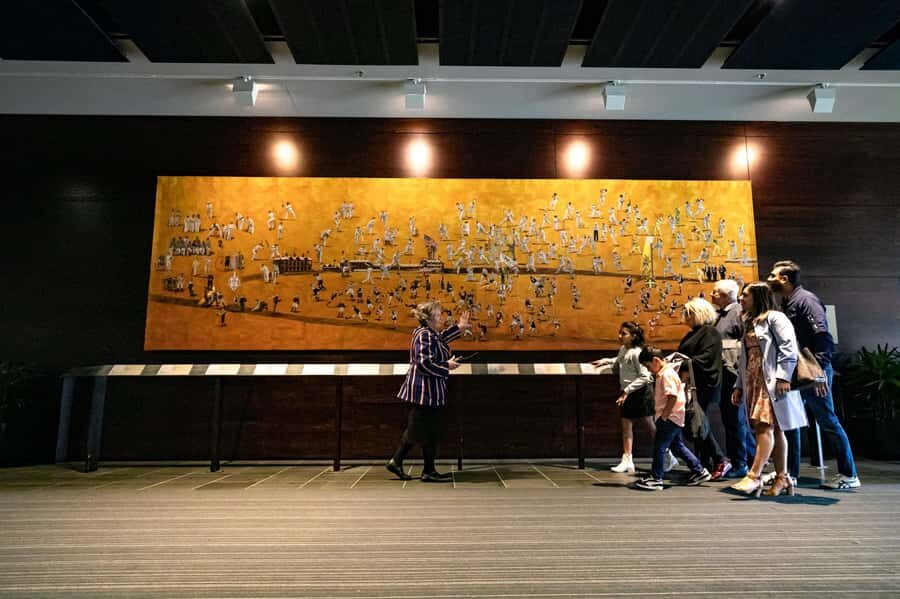
A theme that comes up with this kind of behind-the-scenes access is group coordination. Even when the guide covers a lot, the schedule still has to move. Some groups report that the tour can feel rushed, especially when multiple groups are arriving close together.
You can fix this by doing two simple things: arrive early, and ask questions during each stop rather than saving them for the end. If you’re hoping to slow down at a specific room—especially around the player areas or media centre—tell your guide you have a question before you move on.
Also watch for sound issues. One visitor noted explanations were hard to hear at times. If you’re in the back or the group is large, you might miss details. Staying close to the guide can make a big difference.
Remember: the guide is the key variable. When you’re paired with someone who’s lived the club culture, the tour reads like a story. When the group is tight, you’ll still get the core access, but the “extra” moments can be briefer.
Who this MCG tour suits best
This tour fits best if you want to see the MCG as a working sports institution, not just a big building. You’ll enjoy it most if you like cricket, stadium culture, or sports history told through real spaces.
It’s also a good pick for visitors who love behind-the-scenes experiences in general. Changing rooms, viewing rooms, and media centres give you variety. You’re not stuck with one type of room the whole time.
If you’re traveling with a mix of cricket fans and non-fans, the arena walk and the MCC spaces usually win everyone over. Even if your group disagrees on rules and tactics, the stadium experience still lands because it’s physical and visual.
If you’re looking for a long, independent visit to every MCG corner, this may feel short. This is built for the best highlights in 75 minutes.
Final call: should you book the MCG guided tour?
I’d book this if you want rare access to MCC spaces plus a walk onto the arena. The tour offers strong value for $24 because you’re paying for access and context, not just photos from the public areas.
I’d think twice if you need a slow, unhurried pace or you hate group schedules. The route can shift and the timing can feel quick, especially when the stadium is managing multiple tour groups.
If you’re visiting during a busy period, I’d still lean yes. It’s one of those Melbourne experiences that feels like a proper “only in this place” moment—especially when you step onto the turf and look back at the stands with a whole new understanding of what happens there.
FAQ
Where do I meet for the MCG guided tour?
You start inside Gate 3 at Melbourne Cricket Ground. Present your voucher to staff when you arrive.
How long is the Melbourne Cricket Grounds guided tour?
The tour runs for 75 minutes.
What’s included in the tour price?
The price includes entry to the MCG, a live guide, and the tour itself.
Is food or drinks included?
No. Food and drinks are not included.
Is the tour wheelchair accessible?
Yes, the tour is listed as wheelchair accessible.
What languages are available for the guide?
The live guide is English.
What if parts of the route are unavailable on the day?
Some areas can be subject to availability, and the route may be altered. If limited availability affects the start time, the local partner may contact you to reschedule to a different starting time on the same day, and you’ll need to reply to confirm.