REVIEW · MUSEUMS
Melbourne Sports Experience + Free Australian Sports Museum entry
Book on Viator →Operated by Sporting Capital Tours · Bookable on Viator
Sport and Melbourne go together.
This tour strings Rod Laver Arena, the MCG, and the Australian Sports Museum into one easy walking loop. I like the small-group feel (max 8) and the way you cover several major venues in one session without wasting time hopping around the city. One thing to consider: it’s weather-dependent, and the stops are short enough that you’ll mainly get highlights rather than a long, slow soak at each stadium.
Here’s the real value: you get the stadium sights and a built-in cultural finish at a museum. I especially appreciate that the route starts near Flinders Street and uses the city’s sports-scape along the Yarra River for quick context. If you’re the type who likes to read the signs and hear the stories behind the iconic grounds, you’ll get a lot out of the pacing.
In This Review
- Key Highlights That Make This Tour Worth Your Time
- Why Melbourne’s Sports Precinct Works So Well on Foot
- Fed Square Start: Fast Orientation in the Heart of the City
- Along the Yarra River: The Sports Story Starts Before the Stadiums
- Rod Laver Arena and Melbourne Park: Tennis Precision, Up Close
- Olympic Park and Melbourne’s 1956 Legacy: How Big Events Shape a City
- AAMI Park: Where Rugby and Soccer Fans Feel at Home
- Melbourne Cricket Ground (MCG): The Big One, With Context
- Australian Sports Museum: The Included Ending That Actually Adds Depth
- Price and Value: Is $86.07 a Good Deal?
- Who Should Book This Tour (and Who Might Want Something Else)
- Weather, Walking Comfort, and How to Get the Most Out of 3.5 Hours
- Should You Book the Melbourne Sports Experience?
- FAQ
- How long is the Melbourne Sports Experience tour?
- What is the tour price?
- Is Australian Sports Museum entry included?
- How many people are in the group?
- Where do I meet and where does it end?
- Do I need the ticket printed?
- What if the weather is poor?
- Are children charged?
Key Highlights That Make This Tour Worth Your Time

- Small group up to 8 keeps the walk conversational and the pace human
- Multiple stadium precincts in one circuit saves you hours of planning
- Included Australian Sports Museum entry turns the walk into more than photos
- Yarra River orientation helps you understand why Melbourne’s sport grew where it did
- Short stops at major venues means you see a lot without getting worn out
Why Melbourne’s Sports Precinct Works So Well on Foot
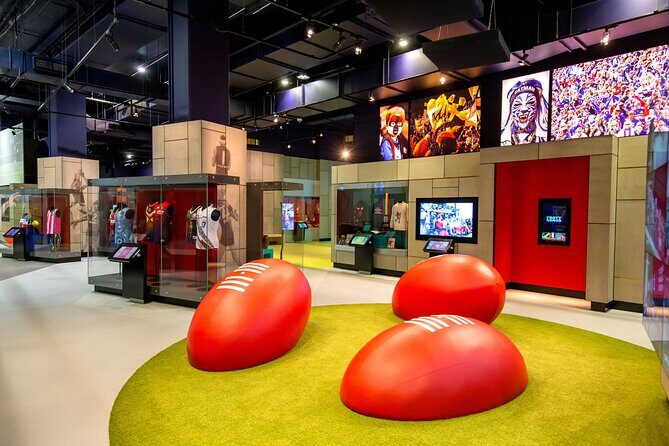
Melbourne’s sport isn’t one single landmark. It’s a whole cluster, stitched together by rivers, streets, and the legacy of big events. That’s why a walking tour here feels efficient: you get the layout in front of you, not just a list of famous names.
This experience is built around quick, focused stops. Each one is timed to give you orientation and a few key talking points, then move you along before the tour drags. If you’ve ever tried to self-tour stadiums and ended up walking circles, you’ll feel the difference right away.
And because the group stays small, you can ask the usual questions that pop up when you see a venue in person, like what it’s known for and how it became the place it is today. The tour’s approach is simple: see the spot, understand the story, then keep walking.
You can also read our reviews of more museum experiences in Melbourne


Fed Square Start: Fast Orientation in the Heart of the City
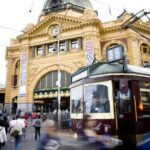
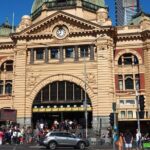
You meet at 1 Birrarung Marr Walk in Melbourne, which puts you close to the action from the start. The meeting point connects you to the wider central area near Flinders Street, so it’s easy to arrive without turning your day into a transit project.
From there, you begin with a brief orientation around the central area opposite the station precinct. It’s a smart opening move because it helps set the “why here?” context before you move into stadium country. You’ll get a sense for how Melbourne uses its central spaces to funnel crowds toward sport.
This first stop is only about 10 minutes, so don’t expect a long lecture. Instead, think of it as getting your bearings so the rest of the walk makes sense as a single story.
Along the Yarra River: The Sports Story Starts Before the Stadiums
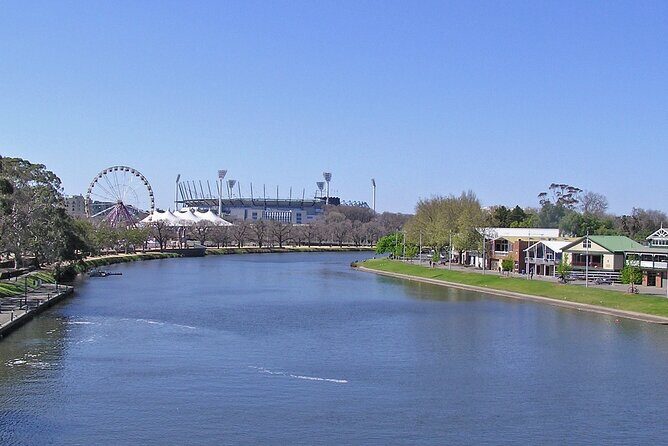
Next comes the walk along the Yarra River, which matters more than people expect. The river is part of the logic of the city, and it also connects to the idea of Melbourne as a place where big public life gathers outdoors and then spills into major venues.
You spend about 10 minutes here, and the focus is on significance to Melbourne’s sporting past. You’re not walking for scenic bragging rights, although the river views are a bonus. You’re walking to understand the geography behind the fame.
Practical tip: if you’re coming in warm weather, the river stretch can be a real relief from traffic noise. If it’s cooler, it can feel breezy, so it’s worth having a light layer handy.
Rod Laver Arena and Melbourne Park: Tennis Precision, Up Close

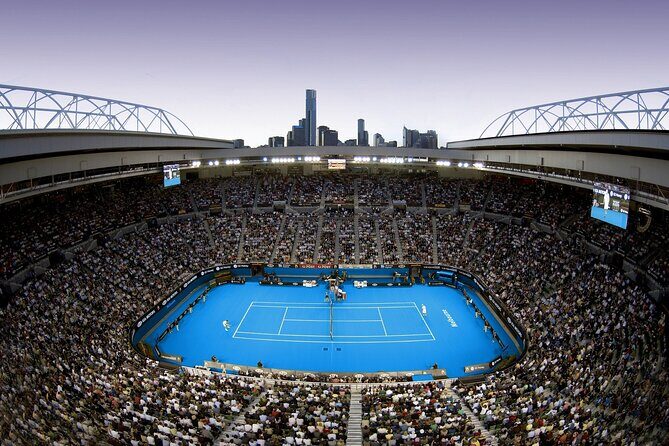
The tour then heads to Rod Laver Arena inside the Melbourne Park complex. This is one of those places where the stadium name alone doesn’t fully explain the scale. When you’re standing near it, you can feel how the venue is designed for big moments.
Expect about 15 minutes here. That time is enough to learn the basics and point out what makes this tennis precinct so central to Melbourne’s identity. You’re also on a tennis complex route, which can be a fun moment if you catch any hints of event activity in the area.
This stop works best if you like sports details that don’t need stats. For example, I like how these talks often focus on what people experience during major matches: crowd energy, venue purpose, and why this precinct became the tennis heart of the city.
If you’re the sort of person who notices signage, seating shapes, and how buildings face crowds, you’ll enjoy this segment.
Olympic Park and Melbourne’s 1956 Legacy: How Big Events Shape a City
From Rod Laver, you move into Melbourne and Olympic Parks, with about 15 minutes devoted to the area’s role in the 1956 Olympic Games. This part is valuable because it connects sport to civic identity, not just to entertainment.
You’re walking through a precinct where international events helped lock in Melbourne’s reputation. Even if you only know a few Olympic facts, the guide’s explanation helps you see why the venues and surrounding areas mattered beyond the actual games.
Here’s what I like about this stop: it’s not just name-checking. You get a reasoned link between past global events and the modern sporting landscape around you. That context makes the later venues, especially the MCG, feel more connected rather than like separate tourist stops.
Time-wise, you won’t linger long. But in 15 minutes, you can get the “big picture” and still keep the walk moving at a comfortable tempo.




AAMI Park: Where Rugby and Soccer Fans Feel at Home
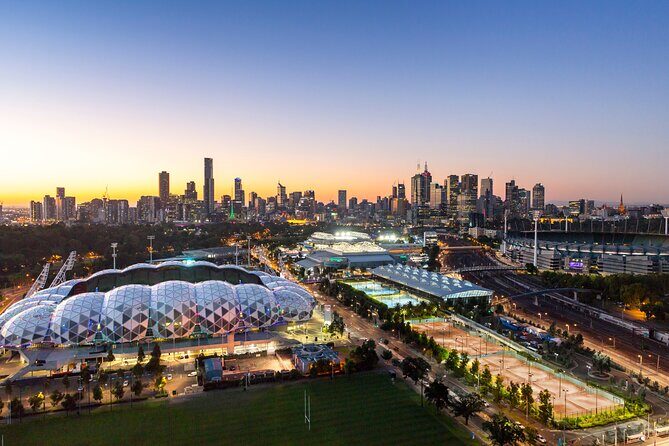
Next is AAMI Park, Melbourne’s main soccer and rugby stadium. This is another 15-minute stop, and it’s designed to broaden your perspective beyond one sport. The stadium precinct isn’t a single-purpose zone, and AAMI Park shows that clearly.
This segment is a good reminder that Melbourne’s sports culture isn’t only about cricket or tennis. If you enjoy comparing how venues feel for different sports, AAMI Park is a nice contrast. Even from outside, you can notice how stadium design supports matchday atmosphere.
The practical value here is pacing. You cover tennis, then Olympics legacy, then soccer/rugby, then the MCG. By the time you arrive at the oval, you’re primed to understand why the city treats sport like a year-round identity.
Melbourne Cricket Ground (MCG): The Big One, With Context
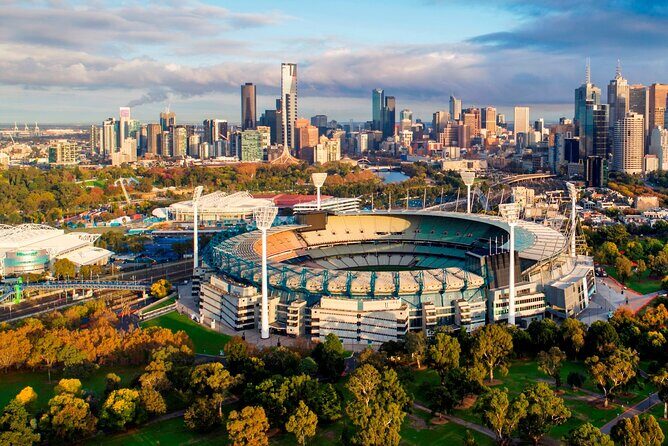
Finally, you reach the Melbourne Cricket Ground (MCG), home of Australian sport. This stop is also about 15 minutes. The MCG can feel overwhelming at first because it’s so famous, so the guide’s role here is to give you a framework for looking.
Don’t worry about expecting a full inside-the-venue tour. This experience is about walking the precinct and building meaning. You’ll get the key takeaways that help the MCG click as more than a picture in a history book.
There’s also an element of luck that makes sports precincts fun. One story I heard from the tour’s orbit involved a local sports-star moment at the MCG during a matchday scene, and it’s a reminder that you’re moving through an active part of Melbourne’s sporting life, not a dead museum set.
When you’re done with the MCG segment, you finish at the sports museum nearby at MCG Gate 3 Brunton Ave.
Australian Sports Museum: The Included Ending That Actually Adds Depth
The best “value add” here is that admission to the Australian Sports Museum is included. Finishing at a museum is smart because it gives your brain somewhere to land after the walk.
A walking tour can leave you with a pile of names. The museum helps you turn those names into a bigger picture of Australian sports culture. You’ll spend time looking at exhibits that connect sports to identity, community, and moments that shaped the way people see sport in this country.
Even better: the museum doesn’t ask you to start from scratch. You’ve just walked past the major stadium context, so the museum feels like the natural “next page,” not a random detour.
If you’re even partly into sporting stories, this is the part that makes the ticket feel like more than a sightseeing circuit.
Price and Value: Is $86.07 a Good Deal?
At $86.07 per person, this tour isn’t a bargain in the cheapest sense. But it does have real structure and included value.
Here’s what you’re paying for:
- A 3.5-hour guided walk covering multiple stadium precincts
- Small-group size (max 8), which usually means less waiting and more chances to ask questions
- Free Australian Sports Museum entry, which you wouldn’t want to pay for separately if you’re already planning to visit
Also, the fact that it’s often booked about 29 days in advance tells you something: this is a popular format. If you wait too long, you may end up choosing a different date than you want.
The trade-off is time. Each venue gets a snapshot, not a long, deep visit. If you want hours inside stadiums, you’ll likely need another plan. But if you want to learn how Melbourne’s sporting world fits together and you like walking with a guide, the pricing feels fair.
Who Should Book This Tour (and Who Might Want Something Else)
This is ideal for:
- sports fans who want an organized way to see the big sites without stitching together public transport
- first-time Melbourne visitors who want a theme day focused on one subject
- people who enjoy learning the story behind landmarks, not just taking photos
You might skip or look for a longer stadium-focused tour if:
- you hate walking and prefer slow, sit-down sightseeing
- you want a full inside look at each stadium rather than short, guided stops
Because the tour is marked as suitable for most travelers and allows service animals, it’s also a practical choice for many people who want an active day without going extreme.
Weather, Walking Comfort, and How to Get the Most Out of 3.5 Hours
This experience requires good weather. That doesn’t mean you can’t go on a cloudy day, but it does mean you should plan your expectations around the day’s conditions. If conditions are poor, you’ll be offered another date or a refund.
Comfort matters here because you’re on your feet for about 3 hours 30 minutes total. Wear shoes you trust on city sidewalks. Bring a light layer if it turns breezy near the river. And if you’re carrying a drink or small snack, keep it easy so you’re not digging through a bag every few minutes.
Also, use the mobile ticket. Having it ready makes your start smoother and helps the group keep moving.
Should You Book the Melbourne Sports Experience?
Yes, if you want a theme-focused day that feels organized, not random. I like how it blends the big stadium names with an included museum, so you leave with more than a photo set.
If you’re a sports fan and you enjoy short, well-paced segments, this small-group format (max 8) is the sweet spot. It’s also a good pick if you’re short on time in Melbourne but still want a real sense of the sporting precinct layout.
If your travel style is slow and you want to spend hours inside venues, you may find the stops a bit brief. But for a clean, efficient introduction to Melbourne’s sport, this one earns a spot on your calendar.
FAQ
How long is the Melbourne Sports Experience tour?
It runs for approximately 3 hours 30 minutes.
What is the tour price?
The price is $86.07 per person.
Is Australian Sports Museum entry included?
Yes. Free entry to the Australian Sports Museum is included.
How many people are in the group?
This tour has a maximum of 8 travelers.
Where do I meet and where does it end?
You start at 1 Birrarung Marr Walk, Melbourne VIC 3000. You end at the Australian Sports Museum at Melbourne Cricket Ground, Gate 3 Brunton Ave, East Melbourne VIC 3002.
Do I need the ticket printed?
No. It’s a mobile ticket.
What if the weather is poor?
This experience requires good weather. If it’s canceled due to poor weather, you’ll be offered a different date or a full refund.
Are children charged?
Infants are free (0–4 years).