REVIEW · MELBOURNE
Melbourne: Tandem Skydive Experience over St. Kilda Beach
Book on Viator →Operated by Skydive Melbourne · Bookable on Viator
One jump. One coastline. One big gulp of air.
This tandem parachute jump over St Kilda Beach is special because you’re not just jumping over Melbourne—you’re dropping toward the water, with Port Phillip Bay in the frame.
I love that you’re strapped to a professional instructor the whole time, so you can focus on the view and the moment instead of figuring anything out. I also love the pacing: a clear safety briefing, a scenic flight up to altitude, then the freefall (up to 60 seconds) and a calm glide under canopy.
One thing to consider: weather can change your day. If conditions are off, the operation may switch dates, and delays happen when you’re waiting for a safe window. Build in buffer time and don’t plan something right after.
In This Review
- Key things to know before you book
- Why St Kilda Beach tandem jump feels different
- From M.O. Moran Reserve to Moorabbin Airport: how the day runs
- Safety briefing and your tandem instructor: the confidence part
- The climb: 15,000 feet over Melbourne and St Kilda
- Freefall up to 220 km/h: what 60 seconds really feels like
- Parachute time: 5 to 7 minutes where you can steer
- Price and value: $343.56 is for the whole jump, not the keepsakes
- Weather and delays: how to plan when the sky won’t cooperate
- Who should do this tandem beach jump in Melbourne
- Should you book this Melbourne St Kilda tandem jump?
- FAQ
- What’s the meeting point for this experience?
- How long does the tandem jump experience take?
- Is pickup available?
- How high do you jump from, and how long is the freefall?
- How long is the parachute part of the experience?
- Are photos and video included in the price?
- What are the age and weight requirements?
- What happens if weather is poor?
Key things to know before you book
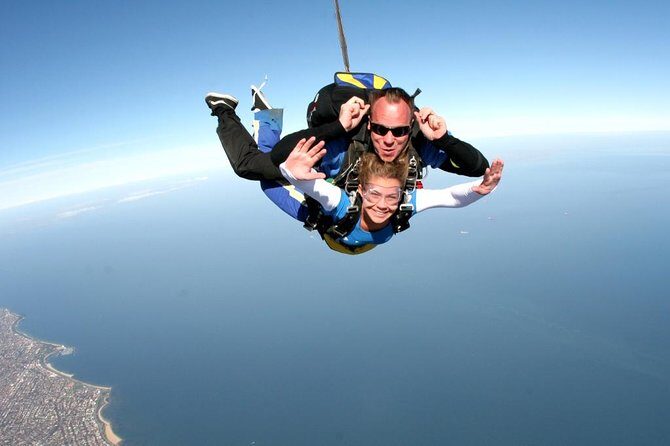
- A true beach jump over St Kilda, with Melbourne’s coastline in view
- Up to 15,000 feet altitude, with freefall up to 60 seconds
- Parachute time lasts 5 to 7 minutes, and you may steer if you want
- Small group size (maximum 20), which helps keep things organized
- Photo and video are extra at the dropzone (A$179 per person)
- Weight and age rules apply, including a surcharge for those at/over 94kg
Why St Kilda Beach tandem jump feels different
Most “big city” sky experiences land you somewhere inland, or at least away from the waterline. This one is built around the coast. You’ll be flying over Melbourne, then out toward St Kilda and Port Phillip Bay as your jump approaches.
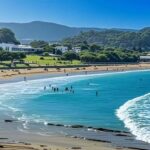
That matters because the visual rhythm changes. You start with patchwork city detail, then it turns into shoreline shapes and water color. When you come out of freefall and the parachute deploys, you’re not looking at a distant dot of land—you’re watching the bay and coastline right under you, close enough to feel real.
And yes, it’s adrenaline. But it’s also a view-first experience. The freefall is intense, but the reason people keep talking about this jump is the way the scenery wraps around you as altitude drops.
You can also read our reviews of more tours and experiences in Melbourne.
From M.O. Moran Reserve to Moorabbin Airport: how the day runs
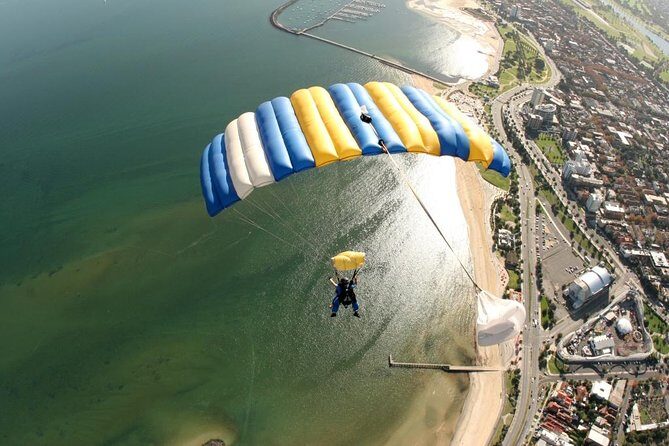
Your day centers on M.O. Moran Reserve in St Kilda (3182) as the meeting point, and the experience ends back there. If you chose pickup, you’ll get transport arranged as part of the service.
Plan on a total time of about 4 hours. That’s the general duration, but real-world timing depends on how smoothly the operation runs and what the weather is doing. One useful tip: if you’re the kind of person who hates waiting, still show up early and accept that this is an outdoor sport. You’re not at a museum with a fixed clock—this is “go when it’s safe.”
Once you’re at the airport, you’ll start with a safety briefing before you head up. Then comes the scenic flight phase, which is part waiting, part anticipation, and part “okay, this is happening.”
Safety briefing and your tandem instructor: the confidence part
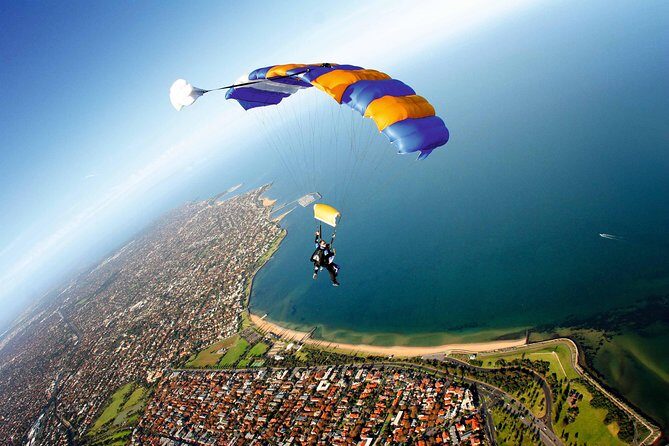
The core promise here is simple: you jump with a tandem instructor attached to you the entire time. That turns the experience into a guided ride, not a self-navigation challenge.
The day begins with training that’s meant to get your body ready for what’s coming:
- how to respond during the jump sequence
- how to manage fear without fighting it
- and what to do after the freefall when the parachute is pulled
Your instructor will prepare you for the countdown and guide your position in the aircraft. From feedback about specific instructors, names like Simon, Cleave, and Lucus come up often in positive ways. If you get someone like that, you’ll probably notice the same pattern: calm instructions, quick reassurance, and lots of practical talk that keeps your brain from spiraling.
One more practical note: you’ll have to be comfortable with the idea that it’s inherently risky. Parachuting carries risk from weather, health conditions, aircraft flight, descent, and landing. The important thing is that the activity is run with professional training and safety procedures—then you accept the adventure.
The climb: 15,000 feet over Melbourne and St Kilda
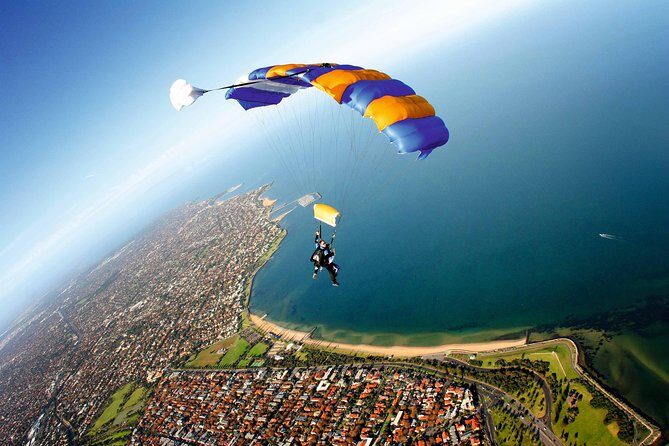
Before the jump, you’ll fly up to as high as 15,000 feet. The experience also references about 14,000 feet in some descriptions, so think of it as “high enough that city details turn into a pattern.”
From the plane, you’ll get the big-picture view. You’ll see Melbourne spreading like blocks, then the coastline draws the eye. As you climb, it stops looking like street traffic and starts looking like geometry.
This is also where anticipation spikes, because you’ll feel the physical shift: the aircraft rises, the air gets colder, and your brain has time to start asking questions. Try not to overthink it. Your job is to listen, breathe, and be ready when it’s your turn.
Also remember: the experience runs on a weather-dependent schedule. If conditions aren’t safe, the day can be changed.
Freefall up to 220 km/h: what 60 seconds really feels like
Here’s the moment most people come for. After you exit the plane, you’ll free-fall reaching speeds of up to 220 km/h for up to 60 seconds.
Sixty seconds sounds short—until you’re inside it. It’s fast, loud, and very physical. Your senses are doing weird math: fear plus excitement, adrenaline plus the sudden urge to check if you’re doing it right.
The good part is that you’re not doing it alone. Your tandem instructor handles the technical side. Your attention can be mostly on the sensation and the view. And the view is not subtle.
As you fall, you’ll drop over the Melbourne area toward Port Phillip Bay, watching the water and coastline stretch out below. It’s the kind of sight that makes your brain go quiet for a second—right after it screams.
If you’re prone to anxiety, it helps to know that nerves are normal. The instructor’s job is to keep you steady. In at least some cases, instructors actively keep riders calm and focused, including by talking you through the moment.

Parachute time: 5 to 7 minutes where you can steer
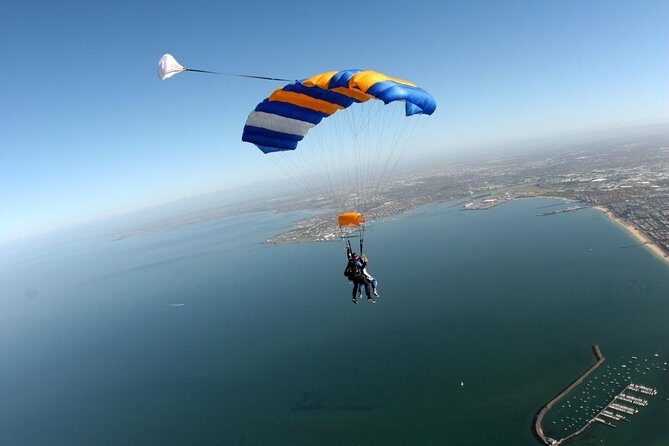
Once the freefall finishes, your instructor will pull the chute. Then you get 5 to 7 minutes of calmer flight under parachute, usually described as more serene—like you’ve switched from roller coaster mode into slow-motion photography.
This phase is where you can really look around:
- Melbourne’s shape from above
- St Kilda’s coastline
- the wide open bay and shoreline details
And here’s a fun twist: if you’re feeling brave, you can be allowed to steer the parachute. That doesn’t mean you’re suddenly in charge of safety. It means you get a chance to influence direction a bit and feel more connected to the ride.
This is also where most people do the mental reset. After the intense drop, the canopy time can feel like a reward. Even if you were nervous going in, the parachute phase is often where you realize you made it through and you get to enjoy the world.
Price and value: $343.56 is for the whole jump, not the keepsakes
At $343.56 per person, you’re paying for far more than a ticket to an airplane ride. Your included package covers:
- Qualified tandem jump training with a professional instructor
- Scenic flight up to 15,000 ft
- Up to 60 seconds freefall
- Parachute time (5 to 7 minutes)
- A commemorative skydive certificate
- Australian Parachuting Levy and admin fee
That’s the value story: you’re not just buying access—you’re buying safety procedures, training, and the jump itself.
What’s extra is the stuff you’ll likely be tempted to buy on the day:
- Video and photo packages are sold at the dropzone for A$179 per person.
My advice: decide before you arrive. If you think you’ll regret not capturing it, budget for the package. If you’re more minimalist, skip it and rely on your own memories. Either way, keep your day’s spending plan clear so the dropzone pitch doesn’t ambush your wallet.
Weather and delays: how to plan when the sky won’t cooperate
This experience requires good weather. If it’s canceled due to poor conditions, you’ll be offered another date or a full refund.
In real operations, weather can also mean delays rather than total cancellation. One person reported a long delay that affected plans, so here’s the practical move: treat this like a half-day event you should keep free. Don’t book dinner with a hard reservation right after pickup time.
If you’re in winter, also expect cold. One rider mentioned it was freezing, which makes sense because you’re at altitude with wind and a short time window. Bring warm layers where possible and be ready to dress for a chilly outdoor wait, not just for the flight.
Who should do this tandem beach jump in Melbourne
This is a strong fit if:
- you want the big adrenaline moment with a professional guide attached
- you care about scenery and not just the thrill
- you like a straightforward experience without complicated steps
It’s also suited to first-timers. The minimum age is 16, with approval required, and under 18 needs to be accompanied by a parent or guardian. Most people can participate, but weight limits apply: maximum is 242 lbs / 110 kg on application, and there’s a surcharge for 207 lbs / 94 kg or more.
A key caution: it’s not recommended for pregnant women. Also, you must advise passenger heights at booking, because the system needs those details.
If you’re scared of heights, you should still know this is partly about learning to manage nerves. The jump is intense, but you’re supported the whole way.
Should you book this Melbourne St Kilda tandem jump?
I’d book it if you want one memory that feels bigger than Melbourne itself, and you’re excited by the idea of dropping over St Kilda toward the bay. The combo of guided tandem handling, the long-enough parachute flight, and the “beach + city + water” view makes this more than a generic adrenaline checklist.
I would hesitate if you:
- hate uncertainty and can’t tolerate schedule changes
- are sensitive to cold winter waiting times
- aren’t comfortable with the idea that parachuting has real risk
If you’re on the fence, think like this: you’re paying for a full, supervised jump with a scenic flight, not a quick thrill. With the right mindset—and a bit of patience for weather—you’ll likely walk away saying it was worth the wait.
FAQ
What’s the meeting point for this experience?
You meet at M.O. Moran Reserve, St Kilda VIC 3182, and the activity ends back at the same meeting point.
How long does the tandem jump experience take?
The total duration is about 4 hours.
Is pickup available?
Pickup is offered, though you may want to confirm your pickup details ahead of time.
How high do you jump from, and how long is the freefall?
You jump from up to 15,000 feet (the descriptions also mention around 14,000 feet). Freefall is up to 60 seconds.
How long is the parachute part of the experience?
After the chute is pulled, you’ll glide under parachute for 5 to 7 minutes.
Are photos and video included in the price?
No. Video and photo packages are not included and are sold at the dropzone for A$179 per person.
What are the age and weight requirements?
Minimum age is 16 years (subject to approval). Under 18 must be accompanied by a parent or guardian. Maximum weight is 242 lbs / 110 kg on application, and a surcharge applies at 207 lbs / 94 kg or more.
What happens if weather is poor?
This experience requires good weather. If it’s canceled due to poor weather, you’ll be offered an alternative date or a full refund.