REVIEW · 2-DAY EXPERIENCES
From Melbourne: 2-Day Great Ocean Road & Grampians Escape
Book on GetYourGuide →Operated by Autopia Tours · Bookable on GetYourGuide
A long drive, a big view, then more nature. This Great Ocean Road to Grampians escape packs the headline coastal sights (12 Apostles and Loch Ard Gorge), plus a full next-morning jump into Grampians National Park for lookouts, walks, and Aboriginal culture. I especially like how the days break up long road time with chances to spot native wildlife and step off the bus for short walks and real stops, not just drive-bys.
One thing to consider: the schedule is packed. Day 1 can feel busy with many viewpoints, and the return day includes a later afternoon push back to Melbourne, so you’ll want to be okay with early starts and some time-on-the-bus days.
In This Review
- Key highlights you’ll feel most
- Day 1 from Melbourne: a morning start with built-in scenery
- From Memorial Arch to Apollo Bay: classic stops with time to breathe
- Otways rainforest: the walk that gives you a break from the road
- Shipwreck Coast icons: 12 Apostles and Loch Ard Gorge
- Getting into the Grampians: overnight in Halls Gap
- Day 2 morning: wildlife-first energy in Halls Gap
- Borkoa, the Balconies, and the big views over Victoria
- Mackenzie Falls: 250 stairs, so come ready
- Brambuk Cultural Centre (Gariwerd): Aboriginal culture as part of the day
- Lunch in Halls Gap, then the long return to Melbourne
- Price and value: what $407 buys you (and where you’ll spend extra)
- Comfort and group dynamics: when the bus matters
- Who should book this tour—and who should skip it
- What to pack for wind, sun, and stairs
- Should you book this 2-day Great Ocean Road and Grampians Escape?
- FAQ
- Where do I meet for the tour in Melbourne?
- What’s included in the price?
- What meals are not included?
- How much walking is involved?
- Is it suitable for young children or wheelchair users?
- Are pets allowed on the tour?
- What should I bring with me?
Key highlights you’ll feel most
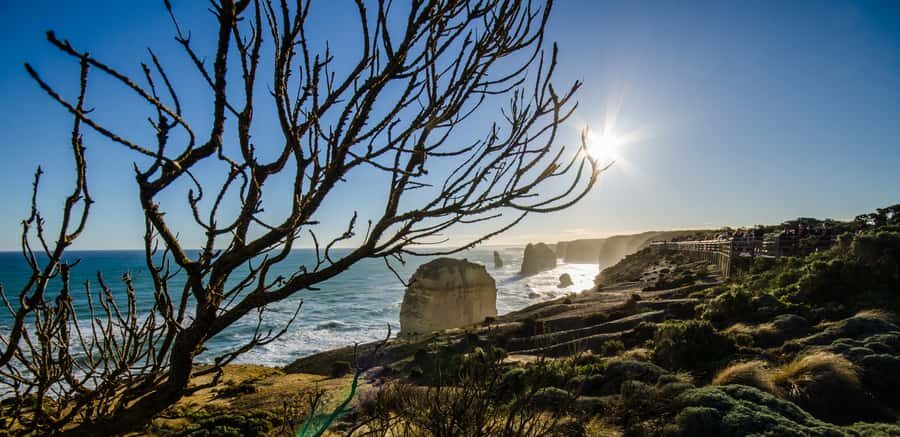
- World-class coastal stops with 12 Apostles, Loch Ard Gorge, and the old London Bridge remains
- Otways rainforest walk that cools you down after the coast and gives you a proper stretch
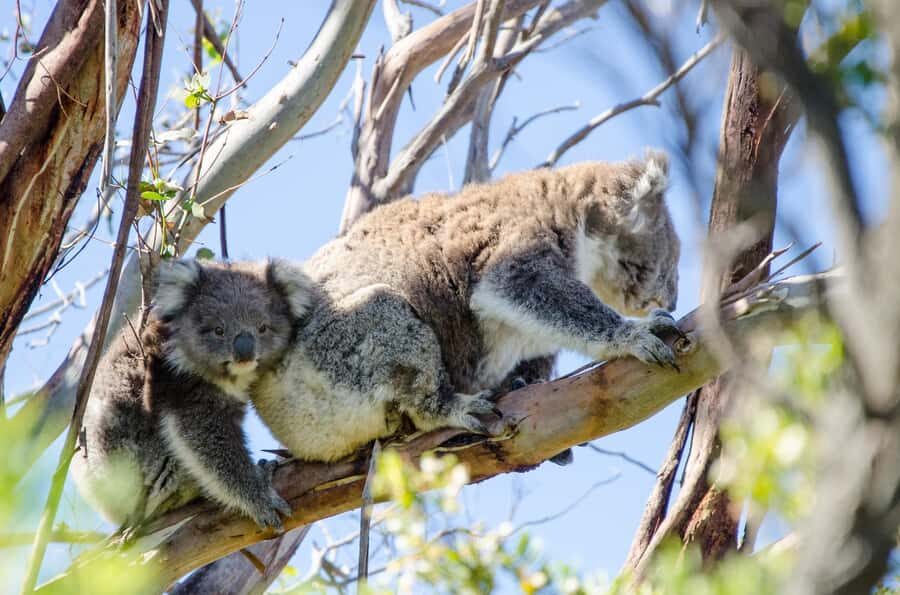
- Wildlife spotting moments planned into the drive, including koalas when conditions line up
- Grampians lookouts and waterfall access, including the big stair descent at Mackenzie Falls
- Brambuk Cultural Centre (Gariwerd) that adds Aboriginal culture to the nature focus
- One night in Halls Gap, which makes the early-morning Grampians start possible
Day 1 from Melbourne: a morning start with built-in scenery
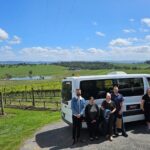
Your trip kicks off early. You meet at the Immigration Museum at 7:35am (corner of Flinders St and Market St), and you’re straight onto the road with a guide giving commentary as you go. The vibe here is practical: you’re not just being taken “from A to B.” You’re being guided along the Great Ocean Road with enough context to make the stops feel earned.
One detail I like is the way the route nods to the road’s origins. Construction began in 1919, and your drive follows the line of those early builders, so even the first stretch feels like part of the bigger story of Victoria’s coastal development. The Westgate Bridge is your warm-up act: busy city energy for a moment, then it shifts into the coastal rhythm.
You can also read our reviews of more tours and experiences in Melbourne
From Memorial Arch to Apollo Bay: classic stops with time to breathe
Soon after you join the Great Ocean Road, there’s a short morning break for tea—useful, because you’ll be in a vehicle for hours across both days. Then comes a photo moment at Memorial Arch, also known as the Great Ocean Road sign. It’s quick, but it’s the kind of stop that gives you bearings and sets the tone.
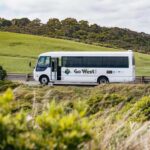
After that, you’ll wind along through coastal townships. This is where your guide’s job really matters. The best version of this tour isn’t only about locations—it’s about spotting what you’d miss driving yourself. The guide helps you look for wild koalas and native birds among the trees. Even when koalas don’t show up, the guidance helps you scan properly, and that changes the experience from scenery-watching to wildlife-watching.
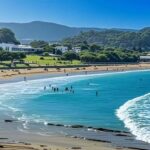
Lunch lands in Apollo Bay, with time to relax on the main beach. If you’re the kind of traveler who likes to recharge without rushing, this is a good setup. You can keep it simple with a walk and a break, or lean into the local treat option (ice-cream is always a popular call here).
Otways rainforest: the walk that gives you a break from the road
After lunch, the route leaves the coastline and heads into the Otway rainforest. This is one of the tour’s smartest moves. Coastal weather can be changeable and windy, and rainforest air can feel cooler and calmer. You don’t just pass through—you get a guided bush walk (about 2 kilometers total across the tour).
The walk helps you slow down. You’ll learn how to notice the forest differently—light levels, plant textures, and bird sounds. Even if you’re not a “hike person,” the scale is manageable. It’s built for getting your legs moving without turning the day into a fitness test.
Shipwreck Coast icons: 12 Apostles and Loch Ard Gorge
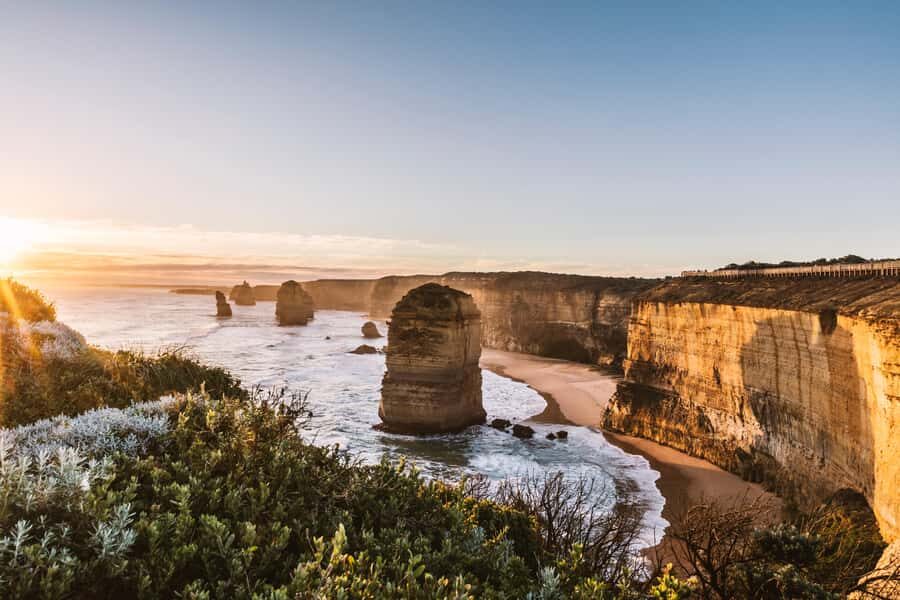
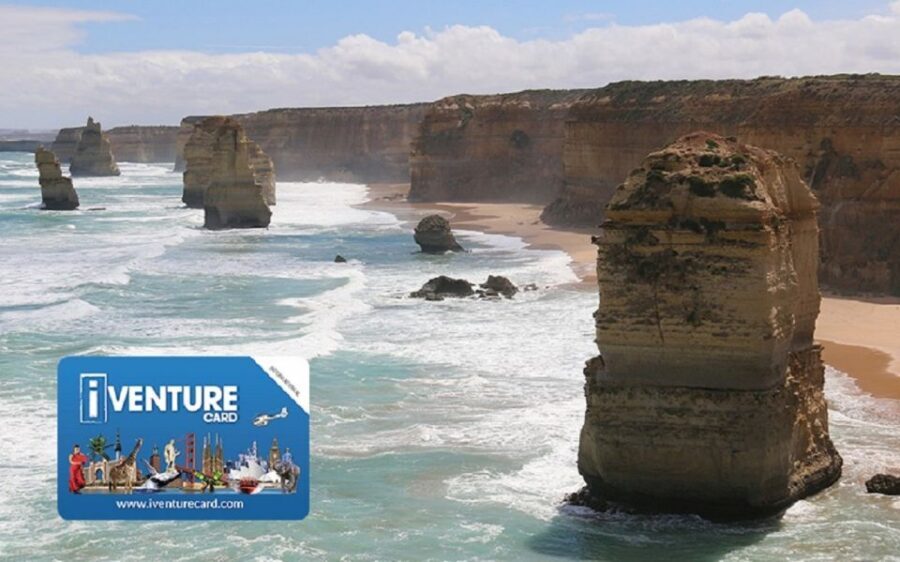
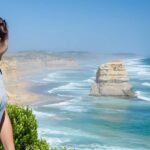
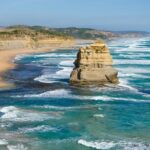
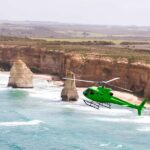
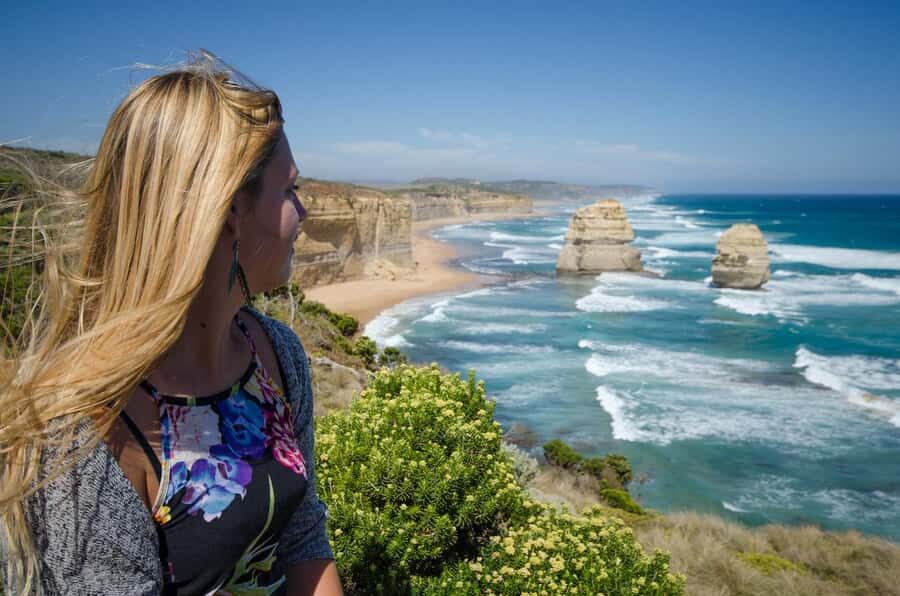
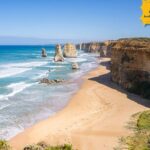
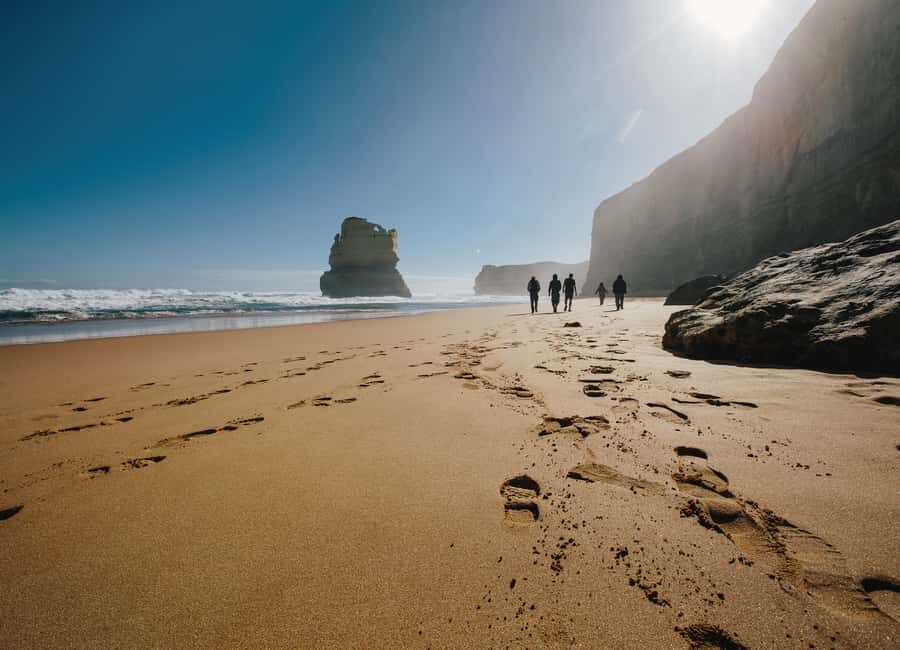
Then the ocean returns, and with it the Shipwreck Coast scenery. This is the part most people come for, and it delivers. You’ll see the limestone stacks at 12 Apostles, rugged coastline formed through long erosion, and views that look dramatic even on less-than-perfect weather.
Next comes Loch Ard Gorge—a remote, isolated-feeling beach gorge carved over more than a century of erosion. This is one of those places where the geography is the story. From viewpoints you get the big picture, and stepping down toward the gorge adds a stronger sense of scale.
You’ll also catch London Bridge—not the full structure you imagine from the name, but the remnants. It’s a good reminder that coastal “icons” are always moving targets. The sea keeps working, and the coast keeps changing. That context helps you enjoy it more than just taking photos.
Getting into the Grampians: overnight in Halls Gap
By late day you drive into the heart of Grampians National Park and sleep in Halls Gap. This overnight stop is where the tour becomes more than a day trip. Staying inside the region makes the next morning feel different—you’re not repeating the long drive right away, and you’re positioned for early viewing.
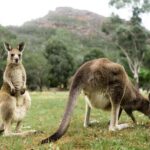
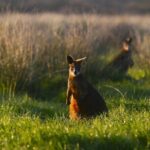
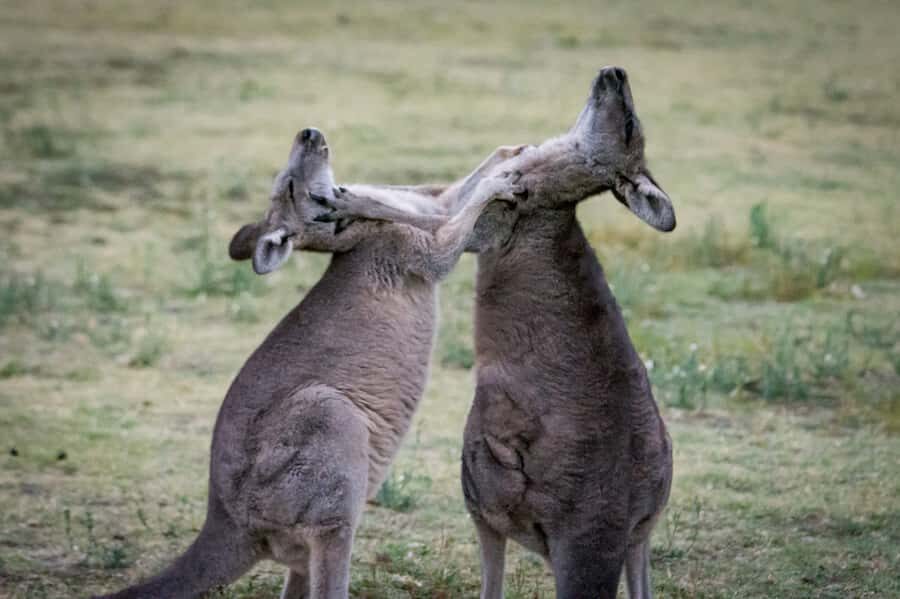
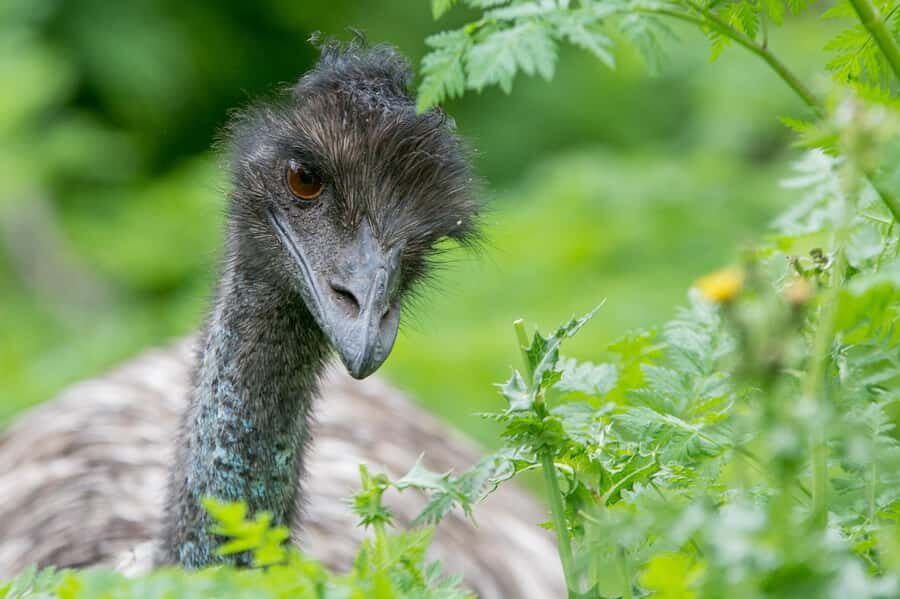
Also, Halls Gap is a natural base for spotting wildlife around town. The next day starts with breakfast and the morning sounds—kookaburras, magpies, and currawongs—plus the very real chance of kangaroos grazing nearby.
On some departures, the driving can be handled by different staff across the full loop. For example, past departures have had drivers such as Craig on the early road sections and Jordan on the later return stretch, which can help keep the experience smooth.
Day 2 morning: wildlife-first energy in Halls Gap
Day 2 begins with (B) breakfast in Halls Gap. The start can be early, and that’s not an accident. Morning in the Grampians is when animals feel most active and when the park looks its best before the day heats up.
You’ll have time to take it in. If you wake up early, you can often see kangaroos grazing, and the birdsong is part of the atmosphere. It’s one of those quiet moments that makes the earlier wake-up feel justified.
Breakfast at the accommodation is included, and it gives you the fuel you’ll need for the morning viewpoints and the stair descent later.
Borkoa, the Balconies, and the big views over Victoria
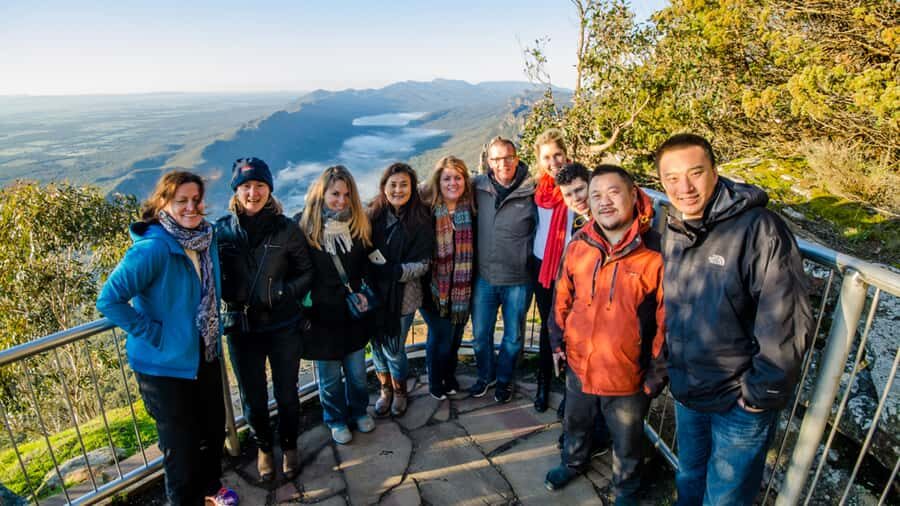
Once you’re fueled, you head into the mountain ranges forming the Grampians. The tour is built around panoramic viewpoints where the park’s shape becomes obvious. You’ll start with a stop at Borkoa, with big-range views out over the western plains of Victoria and back toward your overnight area.
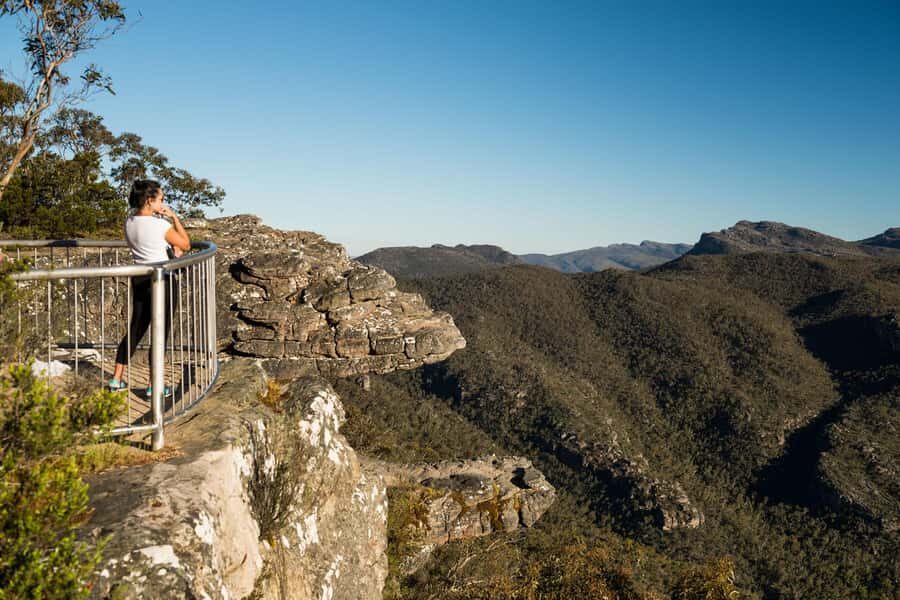
Then it’s onward to the Balconies. Here, you look over the Victoria Valley and even toward the park’s southern reach. These stops matter because they explain why this region is so beloved: the viewpoints show how the Grampians rise from the plains like a geological wall, not just a random set of hills.
This is also where the tour’s “short stop, big payoff” pacing works. Each lookout gives you a different angle. You’re not stuck at one place too long.
Mackenzie Falls: 250 stairs, so come ready
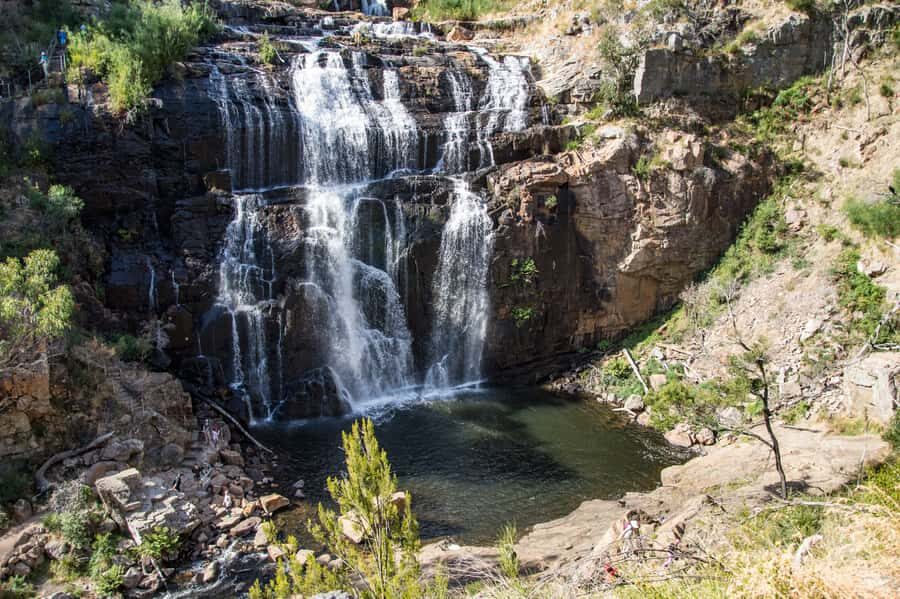
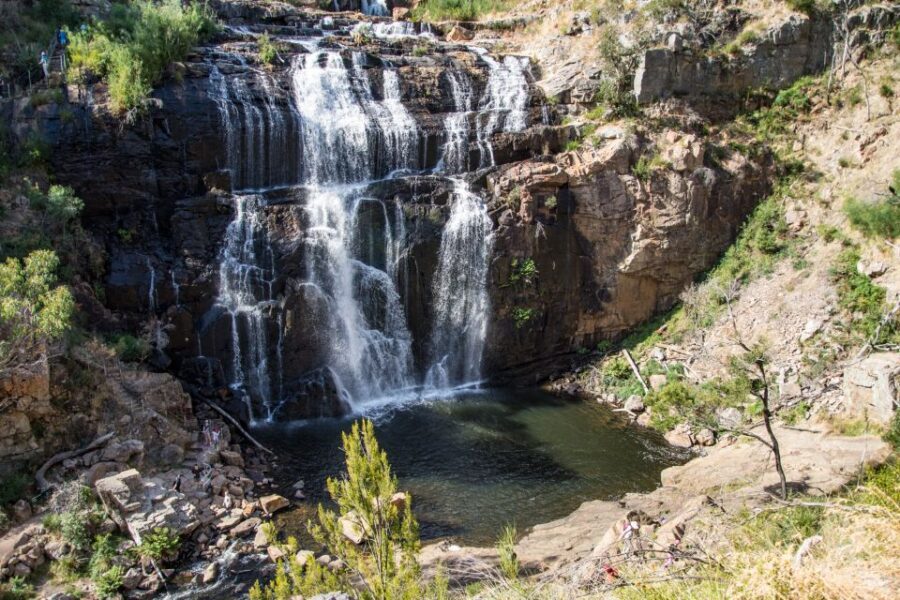
After the viewpoints, you’ll head to Mackenzie Falls, a geological standout. The access involves walking down a series of over 250 stairs to the base of the falls.
This is the main physical challenge on Day 2. If you have solid shoes and steady legs, you’ll be fine. If stairs stress you out, plan for a slow pace and don’t rush your way down. The reward is strong: the waterfall feels more “there” once you’re closer, rather than only looking from above.
The good news is you’re not hiking all day. The falls are a focal point, and the rest of the schedule stays relatively structured around them.
Brambuk Cultural Centre (Gariwerd): Aboriginal culture as part of the day
After Mackenzie Falls, you’ll shift from geology to culture at the Brambuk Cultural Centre. This is where the tour adds Aboriginal perspectives connected to the Grampians (Gariwerd).
You’ll learn about the area’s Aboriginal culture before heading for lunch back in Halls Gap. Even if you think you’re signing up mainly for nature, this stop is important. It keeps the trip from being a set of photos, and it gives you a better framework for what you’re seeing in the park.
Lunch in Halls Gap, then the long return to Melbourne
After lunch, the journey back to Melbourne begins. The plan is a late afternoon arrival. On a past departure, the return wrapped up around 3:45pm, so you may have a similar end-of-day timing.
This is where your expectations should match the reality of the route: you’re leaving a remote national park region, and you’re doing it by road. Plan for a travel-day feeling on the way back. If you want quiet time, pack something for the bus ride: music, a downloaded podcast, or a book.
Price and value: what $407 buys you (and where you’ll spend extra)
At $407 per person for 2 days, the value depends on what you’d otherwise do. This tour isn’t only sightseeing; it includes key cost areas that add up fast on your own:
- 1-night accommodation in Halls Gap
- National park entry fees
- Meals included: 1 breakfast, plus 1 lunch and 1 dinner (as indicated for the relevant date range)
- Guided bush walks (about 2 kilometers total)
- Wildlife spotting support and expert driver commentary
That package is the heart of the value. If you tried to self-drive, you’d pay for accommodation anyway, plus park entry and fuel/time. The guided format also saves you from doing the route-planning math on a tight schedule.
Where you should budget extra: meals not specified in the package, plus personal expenses. If you snack or buy lunch outside the included one, that’s on you.
Comfort and group dynamics: when the bus matters
Your experience can be affected by transport comfort. Some departures have had issues like an uncomfortable or not-clean bus, and the guide experience can vary too. In one case, a guide seemed less ready to pull over for wildlife, and the focus leaned more toward beaches than spotting opportunities.
That doesn’t mean your trip will go that way. But it does mean it’s smart to go in with realistic expectations: you’re traveling by bus, and you may feel the ride in your back and legs. Bring water, hydrate regularly, and consider a layer for cooler moments.
Who should book this tour—and who should skip it
This trip fits best if you want a guided two-day loop that links two big nature regions. You don’t need to be a hardcore hiker, but you should be comfortable with:
- short walks (around 2 kilometers total across the day)
- and the stairs at Mackenzie Falls
It also suits you if wildlife spotting is a priority. The itinerary specifically aims for moments that improve your odds—koalas, kangaroos, and native birds—plus you get guidance on where to look.
You should consider skipping if:
- you need full accessibility for wheelchair use (this tour is not suitable for wheelchair users)
- you’re traveling with very young children (not suitable for infants or children 5 and under)
- you want a slow, unstructured nature day (this schedule is organized and has a lot of stops)
What to pack for wind, sun, and stairs
The weather can shift quickly along the coast and on the mountain viewpoints, so pack for both comfort and movement. The essentials list is spot-on for this itinerary:
- comfortable shoes (non-slip helps for steps and damp spots)
- warm clothing and a windbreaker
- sunglasses and sun hat
- sunscreen
- camera and sunscreen protection
- daypack for water and layers
- towel and flashlight are listed as recommended, so plan to follow the tour’s packing prompts
If you’re prone to cold, bring an extra layer even in warmer months. Coastal wind can catch you off guard.
Should you book this 2-day Great Ocean Road and Grampians Escape?
If you want one ticket that connects iconic coastline with Grampians waterfalls, lookouts, and culture, this tour is a strong option. It’s also a good choice if you value the logistics handled for you: accommodation, park fees, and timed stops so you don’t have to drive back-to-back days.
I’d book it if you’re comfortable with early mornings, short walks, and the day-2 stair descent at Mackenzie Falls. I’d pass if you’re sensitive to bus comfort or if you’re hoping for a relaxed pace with minimal driving.
FAQ
Where do I meet for the tour in Melbourne?
You meet at the Immigration Museum, 400 Flinders St, at the corner of Market St in Melbourne at 7:35am. Your guide and bus will be waiting on Market St on the east side of the museum.
What’s included in the price?
The tour includes 1-night accommodation in Halls Gap, national park entry fees, guided bush walks (about 2 kilometers total), wildlife sightings, and an expert driver with commentary. It also includes 1 breakfast, 1 lunch, and 1 dinner (for the date range stated).
What meals are not included?
Only the meals that are clearly indicated as included are covered. Meals not indicated are not included, so you may need to plan for additional food on top of the set breakfast/lunch/dinner.
How much walking is involved?
You’ll do guided bush walks totaling about 2 kilometers. Day 2 also includes walking down over 250 stairs to the base of Mackenzie Falls.
Is it suitable for young children or wheelchair users?
It’s not suitable for infants or children 5 years old and under, and it’s not suitable for wheelchair users. Children aged 6–17 must stay in private accommodation and be accompanied by a legal guardian or adult.
Are pets allowed on the tour?
No. Pets are not allowed.
What should I bring with me?
Bring comfortable shoes, warm clothing, a windbreaker, sunglasses and a sun hat, a towel, camera, sunscreen, toiletries, a flashlight, and a daypack.