REVIEW · MELBOURNE WALKING TOURS
Badass Women of Melbourne Walking Tour
Book on Viator →Operated by She Shapes History · Bookable on Viator
Women built Melbourne long before the headlines. This walking tour follows badass women through the streets and landmarks you already know, but with stories that change how you read the city. Hidden among Parliament House, the Princess Theatre, Chinatown, and Little Lon, it stays focused on people and impact, not just architecture. I love the small-group size (up to 16), which makes it easier to hear every detail and ask questions.
A big plus for me is the way the walk uses real places you can actually step into. Two early stops include the Queen Victoria Women’s Centre and Parliament House of Victoria, and both are listed with free admission tickets. In the same spirit, guides like Alison, Catherine, and Zoe come through in the stories with humor and a warm, inclusive approach.
One consideration: this is still a city walk. You’ll be on your feet for around two hours (about 2.5 km is mentioned), so pack comfortable shoes and plan for light walking throughout.
In This Review
- Key things to know before you go
- Women who shaped Melbourne: a people-first walk that changes your city map
- Starting at Queen Victoria Women’s Centre (210 Lonsdale St) on a 10:00 am schedule
- Parliament House of Victoria: why power matters in women’s stories
- Princess Theatre, Chinatown, and Little Lon: following the story through laneways
- Small group dynamics with guides like Alison, Catherine, and Zoe
- Timing, distance, and what to wear for an easy 2-hour city walk
- Pricing at $50.21 per person: where the value really comes from
- Practical prep: tickets, confirmation, and who this walk suits best
- Should you book the Badass Women of Melbourne Walking Tour?
- FAQ
- Where does the tour start and end?
- What time does the tour start?
- How long is the walking tour?
- How much does the tour cost?
- Do I need a printed ticket?
- Is the tour suitable for people who can walk?
- Is it refundable if I need to cancel?
Key things to know before you go
- A women-first storyline across central Melbourne that connects Parliament, theatre, Chinatown, and Little Lon
- Free-entry stops early on at Queen Victoria Women’s Centre and Parliament House of Victoria
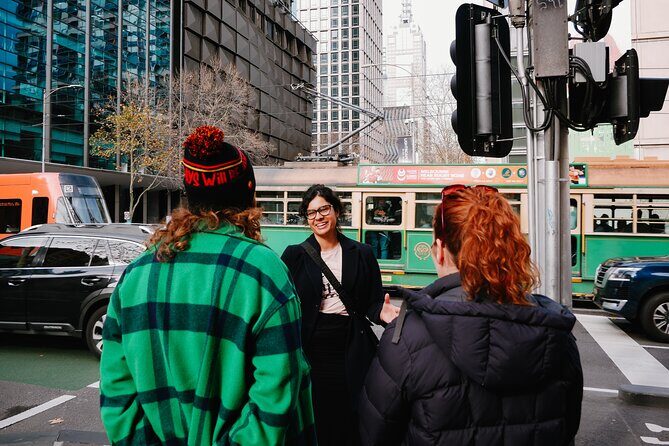
- A small group (up to 16), which keeps the tour easy to follow and question-friendly
- Guides named for their on-walk energy (Alison, Catherine, and Zoe), including humor and inclusiveness
- A 2-hour format with a clear end point at Melbourne Town Hall, about a 10-minute walk from the start
Women who shaped Melbourne: a people-first walk that changes your city map
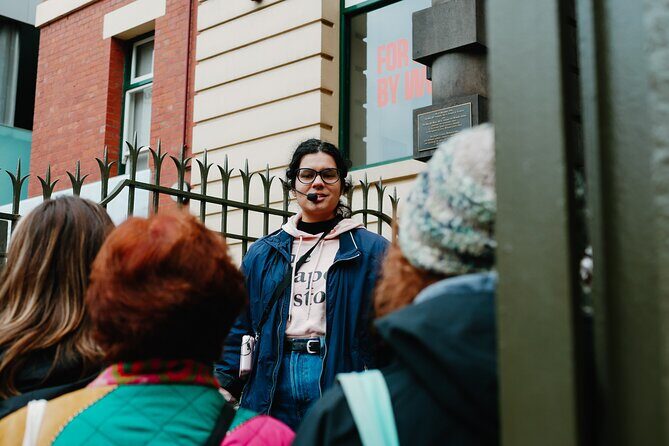
The best thing about this tour is how it forces a rethink. Melbourne looks the same on the street map, but the meaning shifts when you hear who was fighting, building, organizing, and creating along the way. The walk is built around women who shaped hospitals, movements, music and performance, and cultural life—often without getting named the way they should have been.
You’ll hear stories of artists, agitators, entrepreneurs, and everyday rebels. That mix matters. If you only learn about famous political figures, you miss how change actually happens. Social shifts get powered by the people who write, sing, teach, protest, run businesses, and keep showing up. That’s the angle here: Melbourne’s story as a chain of choices made by women who refused to stay in the background.
Another smart feature is the way the tour ties those stories to places you can point to. Parliament House isn’t treated like a prop. It’s framed as a site of power and pressure—exactly the kind of setting where women had to push back, speak up, and demand space. The same goes for the Princess Theatre area and the laneways tied to Chinatown and Little Lon. Instead of treating these as backdrops, the tour uses them as living context for the people behind the change.
If you like your history human-scale—someone’s decision, someone’s risk, someone’s consequences—you’ll likely enjoy this. If you prefer purely chronological history or only the biggest monuments, you may find the emphasis on personal stories means you spend less time on architectural analysis.
You can also read our reviews of more walking tours in Melbourne

Starting at Queen Victoria Women’s Centre (210 Lonsdale St) on a 10:00 am schedule
The tour begins at Queen Victoria Women’s Centre, 210 Lonsdale St. This is a strong opener for the simple reason that it sets the tone right away: you’re not starting with politics and then “finding” women later. You’re starting with a women’s space and then watching those stories expand into the broader city.
The meeting stop is also listed with free admission and a short visit window (about 15 minutes). That first chunk is ideal for getting oriented. You’ll likely catch the tour’s rhythm early: short walks, clear storytelling, and the feeling that each stop connects to the next.
Because the tour is about two hours, that first 15 minutes matters. It helps you settle into the pacing before you start moving through the denser central-city cluster of sights. You’ll also be in a spot that’s easy to reach by public transport, which is handy in Melbourne where routes can change based on the day.
One more practical detail that makes a difference: the experience uses a mobile ticket, so you’re not juggling paper. That’s one less thing to slow you down at the start.
If you’re going with kids, this opening section is also a good entry point. One person noted how well the stories worked for their children, and starting with a women’s centre is often less abstract than beginning with big government buildings.
Parliament House of Victoria: why power matters in women’s stories
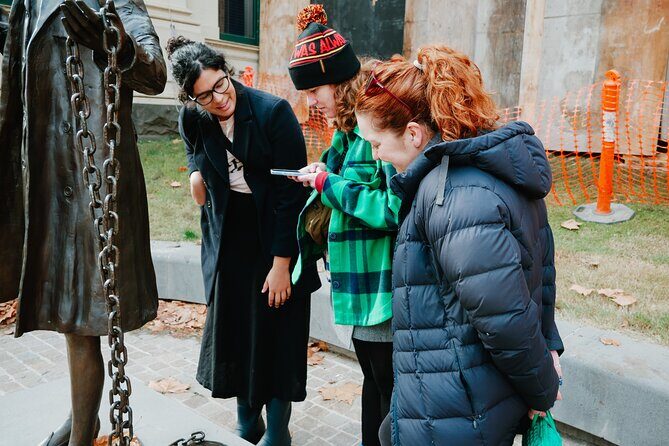
After the first stop, you move to Parliament House of Victoria for another listed visit of about 15 minutes, again with free admission ticket included. This is where the tour’s theme really clicks: women’s history isn’t only about cultural achievements. It’s also about policy, institutions, and the struggle to be heard in rooms where decisions get made.
For me, this stop works because it’s not just “look at the building.” It’s framed as the context for activism and change. Even if you already know Melbourne’s political geography, the tour adds a human layer: who pushed for services, who argued for rights, and how public decisions affected everyday lives.
There’s also a subtle benefit for first-timers. Parliament House is a central anchor. Starting your women-focused storyline here gives you a mental grid for the rest of the walk. Once you understand how the tour links activism to real civic spaces, it becomes easier to follow the story in the next areas—especially when you move away from the grand public buildings and into laneway territory.
If you’re the type who likes to take photos, this is one of your better photo moments because it’s recognizable and the framing is meaningful. If you’re not into photos, still show up for the facts and the perspective. This stop is designed to shift how you think about who had influence and how they gained it.
Princess Theatre, Chinatown, and Little Lon: following the story through laneways
The tour doesn’t stay only in the most obvious sights. It weaves through central Melbourne and includes areas that can feel different just a few streets apart—especially around the Princess Theatre area, Chinatown, and Little Lon.
This part is where the “hidden among” promise becomes real. Instead of treating the walk like a checklist, the guide connects each neighborhood feel to what was happening culturally and socially. The Princess Theatre connection is a strong match for the tour’s focus on soundtracks of the city and cultural transformation. Theatre isn’t just entertainment; it reflects what people are willing to say out loud—and what they’re trying to change.
Chinatown and Little Lon bring another layer. You’ll likely notice how the story of women intersects with migration, work, community life, and the gritty realities of city living. Places like these help you understand that women’s impact isn’t only found in official records. It’s also carried through social networks, small businesses, cultural expression, and informal support systems.
One practical thing to remember: this isn’t a long “out and back” trek through remote areas. It’s a central walk, so you’ll spend more time absorbing stories and less time thinking about logistics like finding parking. The payoff is that you get to see how Melbourne reads at street level—where the meaning of a place can shift based on who used it and what they were trying to achieve.
If you’re a curious walker who likes to look up and notice small details, this section rewards that style. The tour tends to make you think, not just look. That’s the difference between a standard sightseeing stroll and something that sticks.
Small group dynamics with guides like Alison, Catherine, and Zoe
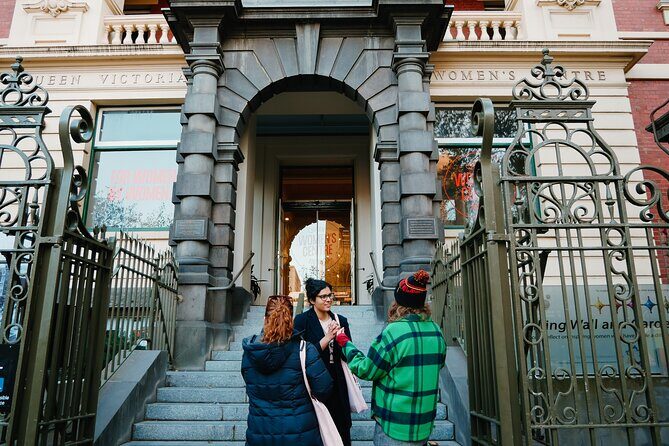
This experience caps at 16 people, and that size is a big deal. In a larger group, stories can become a blur. Here, the guide can keep an eye on the room, and you’re less likely to get stuck at the back missing key points.
The energy also matters. Multiple guides are highlighted by name in the feedback—Alison, Catherine, and Zoe—and they’re praised for different flavors of delivery: one with high energy, one who adds friendliness and humor, and one who’s described as warm and inclusive. You don’t need to know who you’ll get ahead of time to benefit from the format. The core idea is that your guide is expected to help you hear the stories clearly, and that makes the walk feel like a guided conversation rather than a lecture.
Another reason the small-group format works: you’ll be moving through streets where sound can carry weirdly. Laneways can make it harder to catch words. A smaller group helps the guide project, pause for questions, and keep you together.
The tour also has a maximum group size, which usually means you won’t feel rushed at each stop. With about 2 hours total, you’re getting a concentrated experience without the all-day commitment.
If you like tours where you can ask something and actually get an answer, this one is built for that. If you hate back-and-forth and want silence, you might find the storytelling style less your thing—but the way the experience is described suggests it’s meant to be engaging, not stiff.



Timing, distance, and what to wear for an easy 2-hour city walk
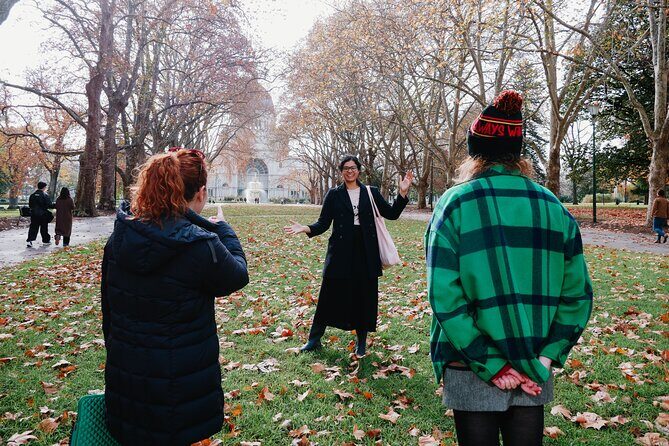
The tour runs for about 2 hours and starts at 10:00 am. A schedule like that is perfect for day plans. You can do this in the morning, then still have a full afternoon for museums, cafés, or a second walk.
In terms of walking, one of the notes you can use is that it’s described as an easy walk covering about 2.5 km over the two hours. That makes it approachable for many people, especially if you’re used to city walking.
What you should wear is simple:
- Comfortable shoes you trust for Melbourne sidewalks
- A light layer, because weather can turn fast
- Water, especially in warmer months
The experience also requires good weather. If conditions are poor, you’ll be offered a different date or a full refund. That’s the right kind of setup for a walking tour, because rain and strong wind can genuinely affect the experience.
And if you’re planning around transit, the tour is noted as near public transportation, which helps you arrive without stress.
Pricing at $50.21 per person: where the value really comes from
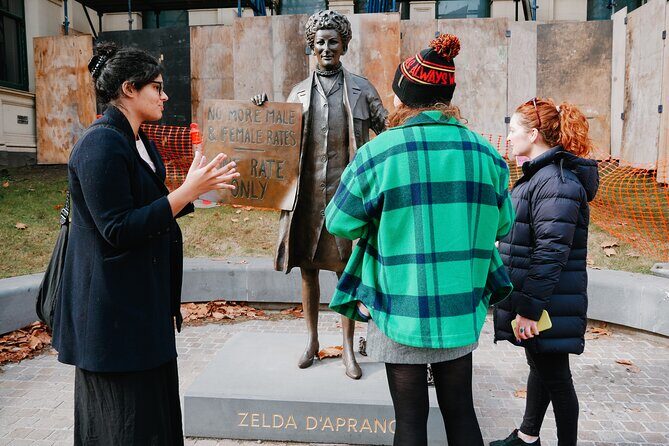
At $50.21 per person, the price isn’t “cheap,” but it’s also not high for a guided, story-based walking tour in central Melbourne. Here’s why it can be good value:
- You’re paying for interpretation, not just movement. A big part of what you’re getting is the way the guide links women’s impact to specific places, so the walk becomes a learning experience you can carry after you leave.
- Free admissions are included for key stops. Queen Victoria Women’s Centre and Parliament House are listed with free admission tickets, so part of what you’d otherwise pay to enter buildings is handled in the tour.
- You’re getting a small-group format (up to 16), which usually costs more than mass tours but often improves how much you actually hear.
Also, the walk is booked about 10 days in advance on average, which suggests it’s popular and planning ahead helps you avoid last-minute disappointment.
If you’re a traveler who likes stories that change how you see the city, this price can feel fair. If you only want general sightseeing with minimal context, you might decide it’s not worth it. But the whole point here is to leave with a new lens on Melbourne—grounded in real people and real spaces.
Practical prep: tickets, confirmation, and who this walk suits best
You should plan around a few straightforward details:
- You’ll receive confirmation at booking.
- You’ll use a mobile ticket.
- Service animals are allowed.
- The experience says most people can participate, and the walk is described as easy with an estimated 2.5 km.
If you’re traveling with friends and want shared “aha” moments, this format works well because the stories keep coming. The guide doesn’t just mention names; it connects them to what changed in the city and how that change rippled through daily life.
Because it’s only around two hours, it’s also a good choice if you want something meaningful without committing to a full half-day excursion. It’s a strong match for first-timers who want the city’s context early.
One more thing to keep in mind: the end point is Melbourne Town Hall, with a note that it’s about a 10-minute walk from where the tour begins. That makes the wrap-up convenient. You can easily continue exploring nearby without having to retrace your steps for ages.
Should you book the Badass Women of Melbourne Walking Tour?
Book it if:
- You want a women-first viewpoint that connects activism, culture, and daily life to central Melbourne places.
- You like tours with storytelling energy and guides people name positively (Alison, Catherine, Zoe, Catherine).
- You’ll enjoy a walk that’s short enough to fit a busy schedule, but structured enough to feel like you learned something real.
Skip it or think twice if:
- You only want landmark facts and photo stops.
- You need something very sedentary, since it’s a two-hour on-your-feet experience with about 2.5 km of walking.
- You’re going during a time when weather is likely to be bad, since the tour requires good conditions.
For most people who like their city learning tied to real streets, this is a solid choice. It’s the kind of tour that can give you a better mental map of Melbourne, not just a list of sights.
FAQ
Where does the tour start and end?
It starts at Queen Victoria Women’s Centre, 210 Lonsdale St, Melbourne. It ends at Melbourne Town Hall on Swanston St.
What time does the tour start?
The start time listed is 10:00 am.
How long is the walking tour?
The duration is approximately 2 hours.
How much does the tour cost?
The price is $50.21 per person.
Do I need a printed ticket?
No. The tour uses a mobile ticket.
Is the tour suitable for people who can walk?
It states that most people can participate, and the walk is described as an easy city walk.
Is it refundable if I need to cancel?
This experience is non-refundable and cannot be changed for any reason. If it’s canceled due to poor weather, you’ll be offered a different date or a full refund.