REVIEW · HISTORICAL TOURS
Ultimate Melbourne Walking Tour: History, Laneways & Culture
Book on Viator →Operated by Depot Australia · Bookable on Viator
Melbourne hits different when you walk. This 3-hour introduction strings together the city’s biggest icons and its best side streets, and it does it with a maximum of 12 people plus coffee and a complimentary drink built in. You get a local guide who connects the dots between colonial wealth, modern culture, and the graffiti that makes Melbourne famous.
The only catch: it’s an active walking tour, so you’ll want comfortable shoes and to stay near your guide to catch every story. Most stops are quick, which is great for first-timers, but it also means a few favorites will demand a return visit.
In This Review
- Key highlights at a glance
- Why this Melbourne walking tour is such a smart first day
- Gordon Reserve and Hotel Windsor views: starting with context
- Old Treasury Building and Collins Street: Gold Rush wealth you can actually see
- Laneways and street art: Duckboard Place, AC/DC Lane, and Hosier Lane options
- Federation Square to Flinders Street Station: modern culture, then the classic landmark
- Degraves Street coffee moment: why this stop feels like Melbourne
- Block Arcade, ACDC Lane, Little Collins Street, Royal Arcade: Melbourne’s indoor street life
- Bourke Street Mall and State Library Victoria: shopping hustle meets storytelling
- Yarra River and Old Melbourne Gaol: the walk slows down, then turns darker
- Chinatown and Captain Melville: food energy, then a final toast
- Price and value: what $92.52 really covers
- How to get the most from the 3-hour walk
- Who this tour suits best (and who might want something else)
- Should you book this Ultimate Melbourne Walking Tour?
- FAQ
- How long is the Ultimate Melbourne Walking Tour?
- Where does the tour start and what time does it begin?
- Where does the tour end?
- How much does it cost?
- What’s included with the tour?
- Is the group size small?
- Are there any age limits for children?
- Can I visit the highest tower mentioned on the route?
Key highlights at a glance
- Start by the Hotel Windsor views at Gordon Reserve, then roll right into Old Melbourne’s power streets
- Street art focus with laneway stops like Duckboard Place and AC/DC Lane, plus Hosier Lane depending on the day
- Coffee culture on Degraves Street, with a complimentary hot drink from a renowned local café
- Classic Melbourne architecture without the maze, from Block Arcade to Royal Arcade’s mythical Gog and Magog
- A proper finish at Captain Melville, where you can add a beer, wine, cider, or soft drink to the walk
Why this Melbourne walking tour is such a smart first day

If you’ve got only a couple of days in Melbourne, this is the kind of tour that helps you stop guessing. You’ll cover a lot of ground on foot, but it never feels like a checklist. The route links the political and financial heart of the city to the laneway scenes that give Melbourne its personality.
I like that it’s designed as a relaxed walk rather than a bus ride with constant traffic noise. You’ll also get a free map and guided recommendations at the end, which is the part people forget to plan for. Knowing where to go next is half the value of an introduction tour.
One more practical benefit: you’re outside for most of it, so you’re not stuck behind glass or screen glare. You’ll get real street-level context—how buildings sit, where people gather, and why these laneways feel like their own separate world.
You can also read our reviews of more walking tours in Melbourne

Gordon Reserve and Hotel Windsor views: starting with context
You begin at 108 Spring St (East Melbourne), right across from Hotel Windsor, at Gordon Reserve. The first stop is short, but it matters. From here, you get distant views toward the seat of Victorian state government, plus that classic colonial architecture vibe.
This is a good warm-up because it sets the tone: Melbourne didn’t become Melbourne by luck. Wealth, government, and public design shaped the city early—and the tour keeps pointing back to that.
Also, your timing helps. You start at 11:00 am, which generally makes it easier to enjoy outdoor stops without racing the day. If you’re prone to photo-late regret, this start time gives you a buffer.
Old Treasury Building and Collins Street: Gold Rush wealth you can actually see
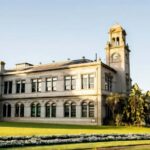
Next up is the Old Treasury Building. This is where the city’s Gold Rush era becomes more than a line in a guidebook. You’ll look at the Gold Rush architecture that helped Melbourne earn its reputation as one of the richest cities in the world at the time.
Right after that, the tour shifts to Collins Street, Melbourne’s premium shopping and financial district. It’s a quick stop, but it’s timed well. You’ll see historic buildings at close range and understand why so much of the city’s old grandeur is packed into a relatively small, walkable corridor.
What I like here: you don’t just look at fancy façades. Your guide ties the buildings to the story of how Melbourne grew, so it feels grounded instead of decorative.
Laneways and street art: Duckboard Place, AC/DC Lane, and Hosier Lane options

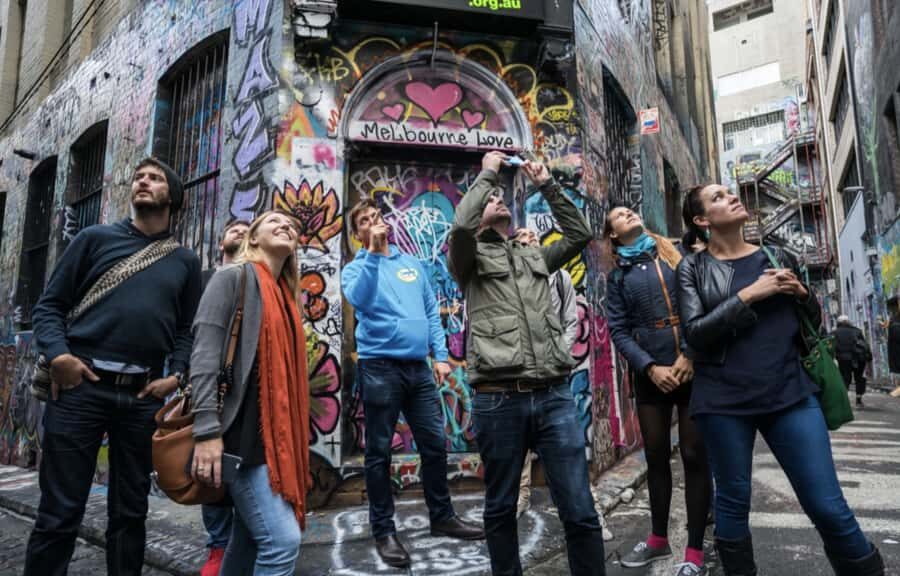
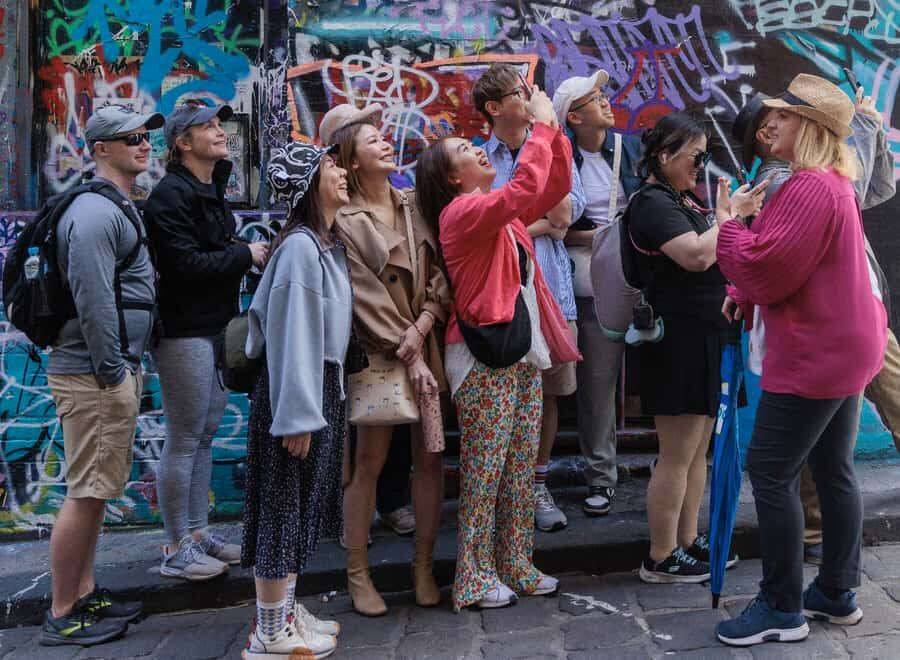
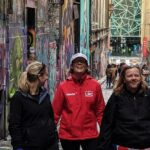
Then you hit the laneways, the reason many people come to Melbourne in the first place. One of the tour’s best traits is the specificity. You’re not just told to visit street art. You’re taken through places like Duckboard Place and AC/DC Lane, where you can see murals and graffiti that change over time.
Depending on the day, the route may also include Hosier Lane, which is Melbourne’s best-known street art destination. Even if you don’t catch that specific lane, you still get the point: Melbourne treats walls like open-air canvases, and the art becomes part of everyday city life.
A practical note: laneways are narrow and busy. Keep your phone handy for photos, but don’t walk with your head down the whole time. Your guide usually points out details you’d miss—like layers of older work and the way different artists use different wall textures.
Federation Square to Flinders Street Station: modern culture, then the classic landmark
From the laneways, the tour moves to Fed Square (Federation Square). This is Melbourne’s main cultural square, known for its iconic modern architecture. It’s a good reset after the street art, because it shows how the city also invests in contemporary public spaces.
Then comes a pair that hits hard visually: the Melbourne Cricket Ground (MCG) from a distance, and then Flinders Street Station. The MCG stop is brief, but you’ll talk about this “temple” of Australian sport and the surrounding sporting precinct. It’s one of those Melbourne realities you can’t fully understand until you’ve seen how the stadium anchors the area.
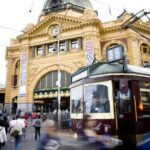
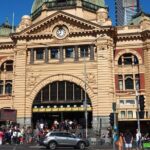
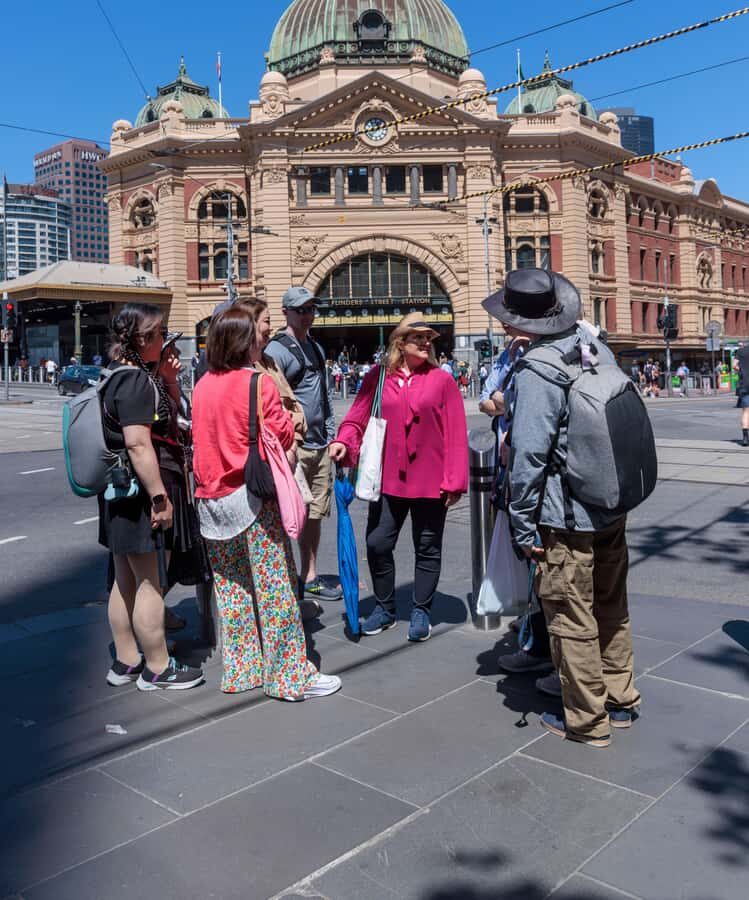
Flinders Street Station is Melbourne’s most recognizable landmark for a reason. Even from outside, it gives you that instant sense of place. It also helps you later, because it’s a navigation anchor for the rest of your trip.
You can also read our reviews of more historical tours in Melbourne
Degraves Street coffee moment: why this stop feels like Melbourne
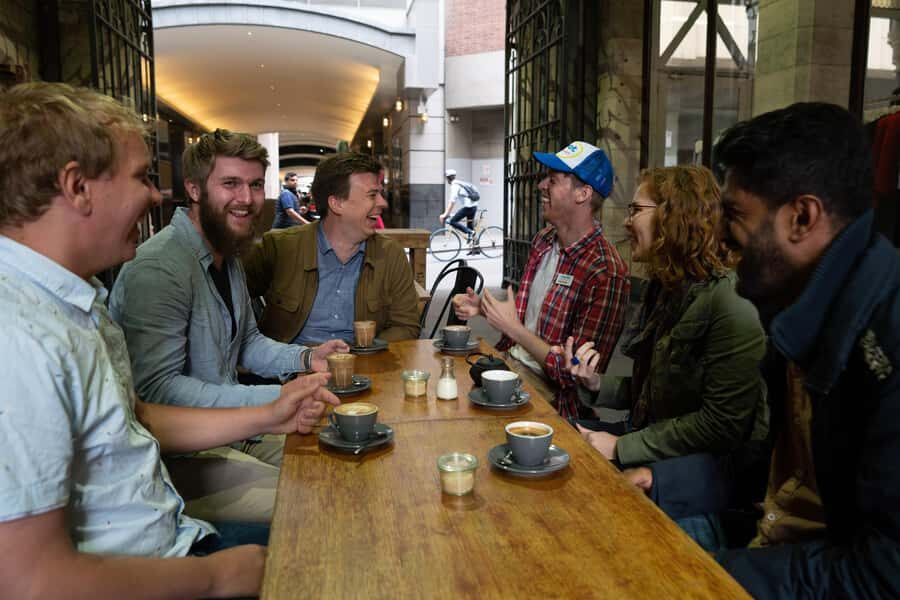
A standout on this walk is Degraves Street, famous for laneway café culture and that European-style dining feel. This is where Melbourne’s coffee obsession becomes practical, not just a punchline.
You’ll enjoy a complimentary hot drink at a renowned local café. It can be a flat white, long black, or hot chocolate, depending on what’s available. If you’ve been running on airport coffee, this one hits.
More than the drink, the value is timing. You’re not stopping randomly. You’re in the middle of the city’s high-energy pedestrian lanes, which makes the break feel like you’re in the flow instead of waiting around.
If you want one tip: use the coffee break to ask your guide what to do next. This tour is set up to give you recommendations, and the guide will usually tailor suggestions to what you’re into.
Block Arcade, ACDC Lane, Little Collins Street, Royal Arcade: Melbourne’s indoor street life
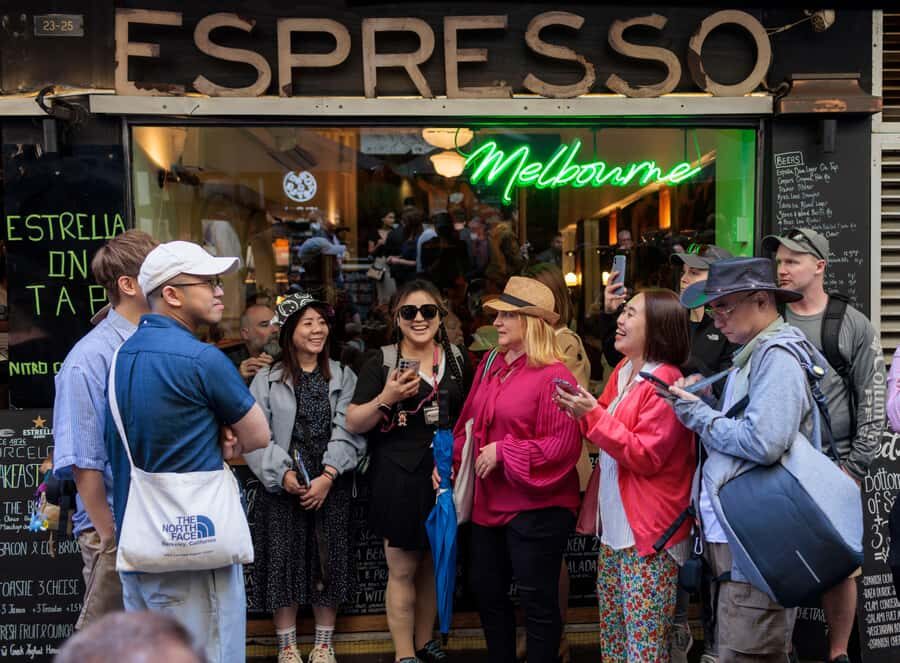
After Degraves Street, the tour leans into Melbourne’s shopping arcades and nearby laneway pockets.
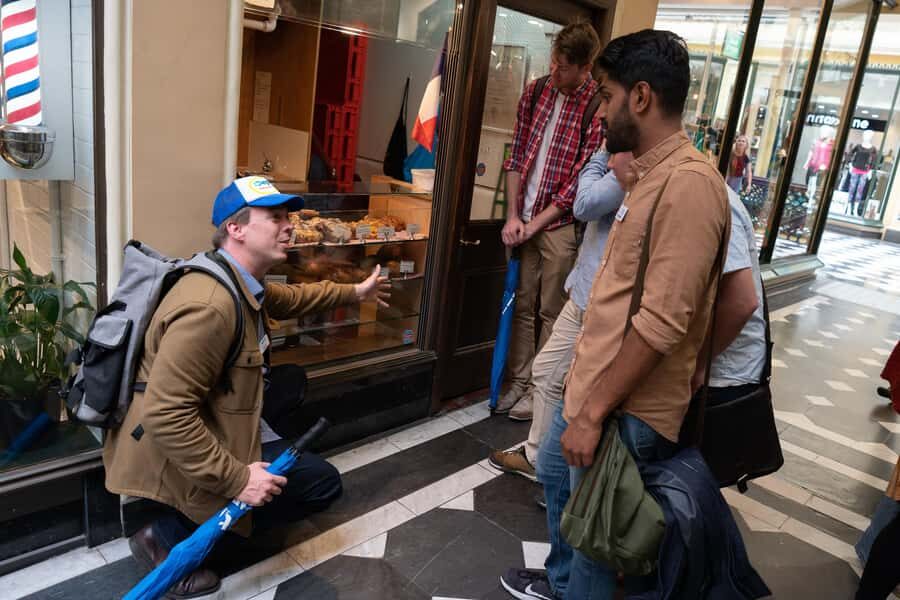
You’ll visit The Block Arcade, with its historic Victorian architecture and mosaic floors. These arcades don’t just shelter shoppers—they shape how the city moves. They’re like corridors that keep the pace of walking while giving you a break from weather.
Then you loop back through the creative energy with AC/DC Lane again, this time more focused on the rock-and-roll murals. The tone shifts slightly in different sections, but you’ll start to recognize the pattern: this is an outdoor gallery network spread across the CBD.
Next is Little Collins Street, known for hidden bars and boutique laneways. It’s short, but it’s useful. You’re shown where the “evening Melbourne” vibe starts, so you know what to look for later when you want something less obvious.
Finally, you’ll get Royal Arcade. It’s described as Australia’s oldest arcade, and you’ll hear about the famous Gog and Magog mythical figures. This stop is quick, but it’s memorable because it mixes myth, craftsmanship, and everyday shopping in one place.
Bourke Street Mall and State Library Victoria: shopping hustle meets storytelling
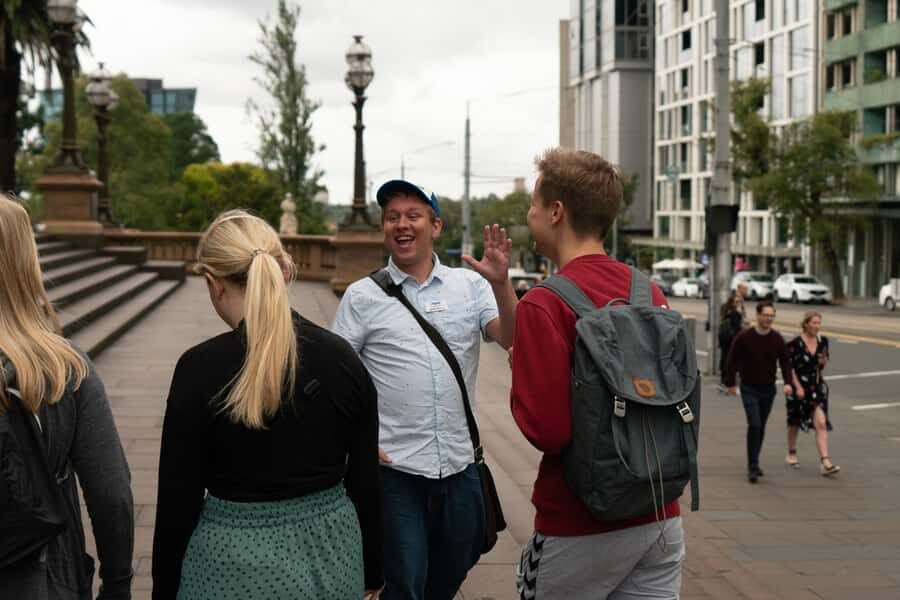
Next, you’ll walk through Bourke Street Mall, Melbourne’s primary shopping precinct and a pedestrian mall that keeps the central-city energy going.
Right after that, you’ll reach State Library Victoria. This is a heritage building and the state’s premier research library, and your guide will share Ned Kelly’s legendary story connected to the library.
This combination works well for me because it balances two kinds of Melbourne identity:
- public culture and learning
- popular history and folklore
If you’re only going to do one museum-type thing on your trip, it helps to know where the narrative anchors are. This stop gives you a clue trail you can follow later.
Yarra River and Old Melbourne Gaol: the walk slows down, then turns darker
Then you’ll head toward the Yarra River, where you get a short walk along the riverbanks. It’s five minutes, but it’s a mental breath. The river gives you a softer edge to the city after the hard lines of arcades and lanes.
After that, it’s time for Old Melbourne Gaol—a bluestone prison that operated from 1845 to 1929. This is one of the most sobering stops on the route. Even with a short visit, your guide’s storytelling helps you understand how the justice system and colonial-era society shaped the city.
If you like history that’s physical, not abstract, you’ll probably want to spend longer here on your own after the tour ends.
Chinatown and Captain Melville: food energy, then a final toast
Next comes Chinatown, described as the world’s oldest continuously operating Chinatown. This is another stop where the quick timing is a strength: you get the cultural signposts and can immediately imagine where you’ll eat. The focus here is on authentic restaurant options, so you can use it as a launch point for a meal later.
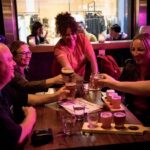
Finally, the tour ends at Captain Melville on 34 Franklin St, where you’ll enjoy a complimentary drink. You can choose house beer, wine, cider, or a soft drink. This is the right kind of finish: a historic pub setting that turns the walk into a shared experience rather than just a series of photo stops.
Price and value: what $92.52 really covers
At $92.52 per person for about three hours, the price is easiest to justify when you look at what’s included and how much you’re walking.
You’re paying for:
- a professional local English-speaking guide who brings the stories between stops
- coffee (flat white, long black, or hot chocolate)
- an alcoholic beverage or soft drink at the end
- a free map plus guided recommendations
- access to outdoor viewpoints and major stops across the CBD
If you were to do these pieces on your own, you’d still need a good plan to avoid backtracking across the city. This tour handles the route logic for you and keeps the pacing workable with a small group—maximum 12 travelers.
The reviews also lean hard on guide energy and story delivery. Names like Emily, Mike, Beau, Deneille, Bo, Hugo, and Ian show up in feedback as examples of guides who make the city feel alive. Even when you don’t get the exact same personality in your group, the format seems built around strong interpretation, not just reading facts.
How to get the most from the 3-hour walk
A few small choices can make a big difference:
- Wear shoes you can move in. The route is built for walking, and you’ll cross laneways and pedestrian streets throughout the CBD.
- Stay close when the group forms up. In past experiences, people noted that you only hear everything if you’re near the guide.
- Use the coffee stop strategically. Ask your guide where to go next based on what you liked so far—street art, architecture, sports, or history.
- Pick one or two favorites to repeat. Quick stops mean you’ll spot things worth revisiting, especially at Old Melbourne Gaol and the laneways.
If the weather is bad, you’ll still likely do the whole route because it’s designed as an outdoor-and-arcade mix. Bring a light layer if you tend to get cold in cities near the river.
Who this tour suits best (and who might want something else)
This is ideal if you:
- are in Melbourne for the first time and want a structured introduction
- love street art and want it connected to the rest of the city
- care about architecture but don’t want to research each building on your own
- want coffee culture and a relaxed pace without planning stops yourself
You might want a different option if you:
- hate walking in busy laneways and shopping streets
- want longer time inside museums or for deep reading at each stop
That said, for most people, the short stops are a feature. They keep you moving from one theme to the next—Gold Rush → culture → art → sport → history → food.
Should you book this Ultimate Melbourne Walking Tour?
If you want a reliable first-day plan that mixes iconic sights with Melbourne’s side streets, I’d book it. The included coffee and end-of-tour drink turn the walk into something you’ll remember, not just something you checked off.
Do it especially if you like guided storytelling. This tour’s whole point is that you learn why these places matter, not only where they are. And if you end the tour with a map and recommendations, you’ll be set up to enjoy the rest of your trip on your own.
If you’re on the fence, pick your priorities: street art, architecture, and a smooth CBD overview are this tour’s strengths. If that’s your vibe, you’ll get good value out of every block you cover.
FAQ
How long is the Ultimate Melbourne Walking Tour?
It runs for about 3 hours.
Where does the tour start and what time does it begin?
The meeting point is 108 Spring St, East Melbourne, and the start time is 11:00 am.
Where does the tour end?
The tour ends at 34 Franklin St, at Captain Melville Bar.
How much does it cost?
The price is $92.52 per person.
What’s included with the tour?
You get complimentary Melbourne coffee (flat white, long black, or hot chocolate), a complimentary alcoholic beverage (house beer, wine, or cider) or soft drink, a professional local English-speaking guide, a free Melbourne map, and guided recommendations.
Is the group size small?
Yes. The tour has a maximum of 12 travelers.
Are there any age limits for children?
Children must be accompanied by an adult.
Can I visit the highest tower mentioned on the route?
If you want to go to the top, you can let the guide know and they can arrange a special rate.