REVIEW · MELBOURNE WALKING TOURS
English Melbourne Walking Tour
Book on Viator →Operated by Free Tour Melbourne · Bookable on Viator
Melbourne tells its story block by block. This 2-hour walk threads through the historic CBD and famous lanes, then finishes with an easy win at Queen Victoria Market, so you’re not stuck without a plan afterward. Expect alleyway stories, big architectural landmarks, and a guide-led pace that keeps things moving but not frantic.
I really like two things about this tour: the fun, light-hearted guide style that still lands plenty of facts, and the tight route of major sights plus the in-between details that many first-timers miss. Names like Frank, Toby, and Sam come up with guides tied to this experience, and the common theme is a loud, clear delivery and lots of on-the-spot answering when you ask questions.
One drawback to consider: with 2 hours and short stop times, you’ll get a strong overview, not a long, slow museum-style visit. If you want to linger inside every building, you’ll need to plan a few follow-up stops on your own.
In This Review
- Key things I’d mark on your map before you go
- A 2-hour Melbourne CBD loop that starts at Federation Square
- The guide experience: humor, clear voice, and real answers
- Stop 1: Federation Square—your orientation point for the whole CBD
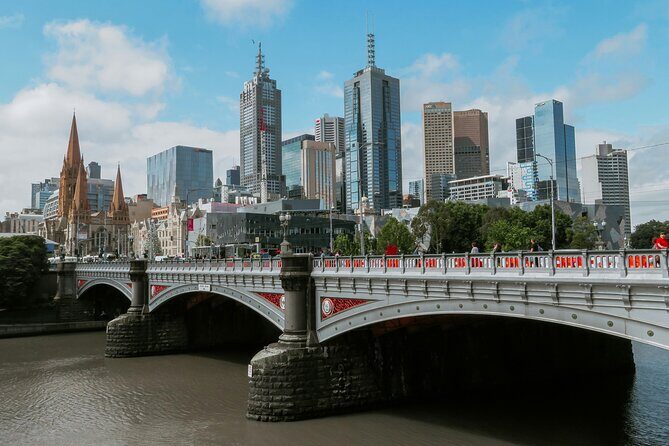
- Stop 2: St Paul’s Cathedral—free time inside, not just photos
- Stop 3: Flinders Street Station—Melbourne’s best-known landmark explained fast
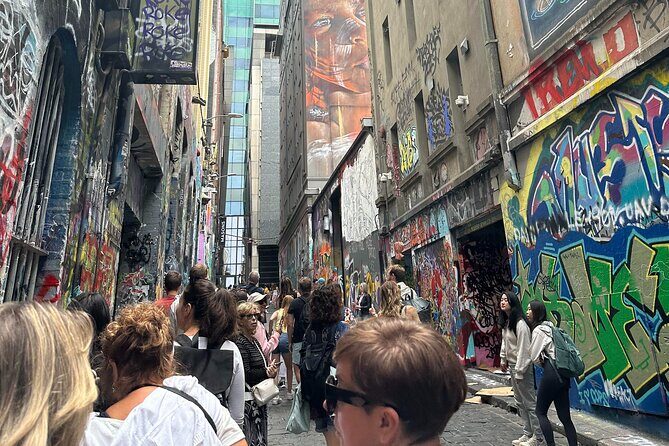
- Stop 4: Hosier Lane—graffiti as storytelling, plus hidden details
- Stop 5: Degraves Street—an easy walk with history underfoot
- Stops 6 and 7: The Block Arcade and Royal Arcade—old shopping under glass
- Stop 8: Bourke Street Mall—Melbourne’s central shopping artery
- Stop 9: Chinatown—past and present in one neighborhood
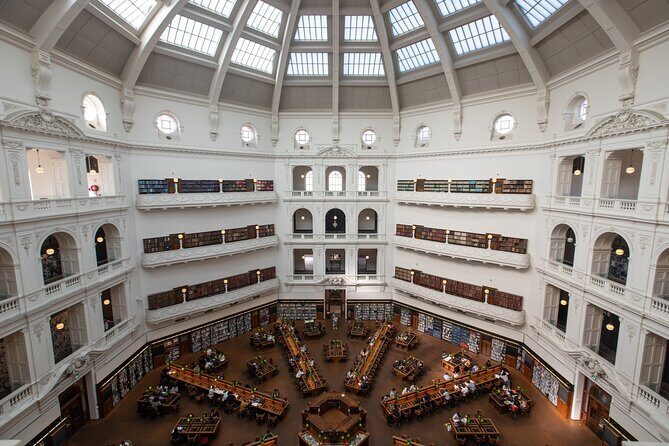
- Stop 10: State Library Victoria—save time by spotting what’s unmissable
- Stop 11: Old Melbourne Gaol—spooky stories with a purpose
- Stop 12: Melbourne City Baths—an old building still doing its job
- Stop 13: Queen Victoria Market—end with a plan and real food potential
- Price and value: what $17.93 gets you (and what it doesn’t)
- Who should book this tour?
- Should you book this Melbourne walking tour?
- FAQ
- What time does the English Melbourne Walking Tour start?
- Where do I meet the guide?
- How long is the tour?
- Does the tour include a mobile ticket?
- Where does the tour end?
- Are service animals allowed?
Key things I’d mark on your map before you go
- Federation Square meets you with an orange umbrella at the top of the stairs.
- A 2-hour, max-20 group keeps it friendly but still lively.
- Free admission tickets are built into the route, with extra brief self time inside St Paul’s Cathedral.
- Hosier Lane and Degraves Street bring the street-level flavor, not just the postcard stops.
- Arcades in the middle of the CBD help you notice Melbourne’s design and shopping culture in a new way.
- Queen Victoria Market is the finish line, which makes it easy to grab food right after.
A 2-hour Melbourne CBD loop that starts at Federation Square
This tour is designed like a quick orientation to Melbourne’s core, starting at Federation Square and ending at Queen Victoria Market. Meeting time is set for 11:00 am, and the tour runs for about 2 hours, with each stop kept to a short, readable chunk so you can actually cover a lot on foot.
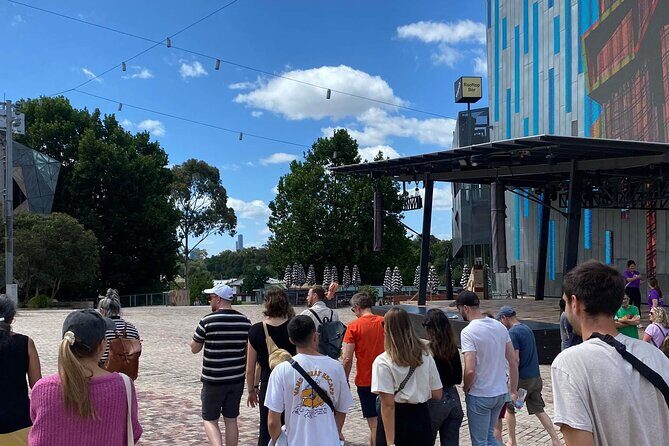
The starting point is practical: 2 Swanston St puts you near major transit lines and central sidewalks. From there, your cue is very specific—look for the orange umbrella at the top of the stairs at Federation Square—which is a small detail, but it matters when you’re trying to avoid wandering the plaza at the start.
You’ll also move with a group that stays fairly tight: the tour caps at 20 travelers. That’s a sweet spot for walking tours—big enough to feel social, small enough that you’re not fighting to hear.
You can also read our reviews of more walking tours in Melbourne


The guide experience: humor, clear voice, and real answers
The best walking tours don’t just list facts. They connect them, and they keep the energy up so the city feels understandable instead of overwhelming.
This one gets praised for light-hearted storytelling with plenty of humor, while still packing in history and culture. Guides associated with the experience—like Frank, Toby, and Sam—are repeatedly described as engaging, funny, and good at projecting their voice so you don’t have to strain in busy streets.
The other practical win is how the tour handles questions. If you’re the type who wonders why a lane looks the way it does, or what a certain building is really for, you’ll likely find time to ask—and get answers that are tied back to what you’re seeing right then.
Stop 1: Federation Square—your orientation point for the whole CBD
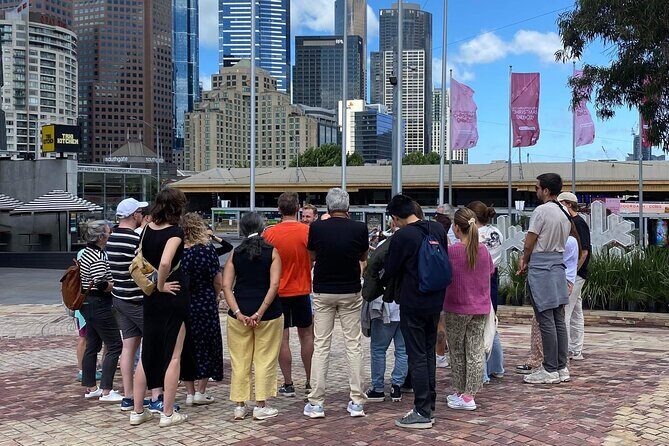
Federation Square isn’t just a convenient meeting place. It’s one of the best launching pads for understanding Melbourne’s center: modern public space right where the historic layers start overlapping.
At the start, you’ll meet your guide at the top of the stairs and get ready to walk. Since you’re starting from a well-known landmark, you can also easily re-orient if you’re using this tour as your first-day plan. And if you decide you want to take a longer look later, Federation Square gives you a simple way to come back.
Stop 2: St Paul’s Cathedral—free time inside, not just photos
St Paul’s Cathedral is where the tour shifts gears from city energy to a calmer, more architectural focus. You’ll get an overview of the cathedral’s history and the surrounding context, then you’ll have a brief 3–4 minute self-guided exploration of the interior.
That short interior window is smart for two reasons. First, it’s enough time to notice details you can’t see from the outside. Second, it prevents the common problem of a walking tour turning into a long queue or a slow stop that drains the rest of your schedule.
If you’re the kind of traveler who loves quiet moments during a day of sightseeing, this is one of the better pauses. Just remember the interior time is brief, so set your attention on what you can actually see in a few minutes.
Stop 3: Flinders Street Station—Melbourne’s best-known landmark explained fast
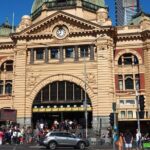
Flinders Street Station is one of those places that looks instantly familiar. The tour uses that familiarity to do something useful: explain what makes the station such a cornerstone of Melbourne’s identity.
You’ll get a focused talk—about the history of this landmark—then move on quickly. You’re not expected to spend the whole stop taking photos and waiting for the perfect shot. Instead, it’s a “learn it, then look again” moment.
If you’re new to Melbourne, this stop helps you understand why locals treat this area as more than just transport. It’s a symbol of the city’s modern pulse, sitting in the middle of older layers.




Stop 4: Hosier Lane—graffiti as storytelling, plus hidden details
Hosier Lane is where the tour becomes more street-level and more personal. Yes, you’ll see the famous graffiti wall visuals—but the point isn’t just to stare at art. Your guide explains what you’re looking at and points out hidden, interesting aspects of the lane.
This is one of the best stops if you like “how did this place become itself?” stories. Melbourne’s laneways often feel like they have a second personality after you walk past the main streets. Hosier Lane is a concentrated dose of that idea.
One note: graffiti changes over time, so don’t expect every wall to look exactly the same. Still, the explanation helps you read the lane like a living cultural space rather than a static photo background.
Stop 5: Degraves Street—an easy walk with history underfoot
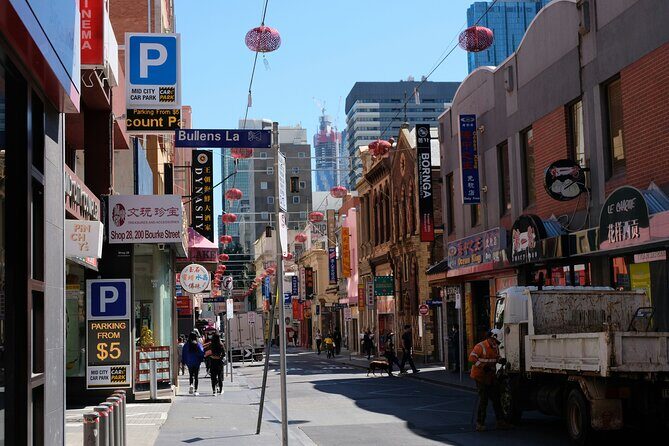
Right after Hosier Lane, Degraves Street keeps the momentum and adds a different flavor. You’ll see the street’s busy, European-style feel (the kind of place where cafés and foot traffic take over), and your guide also points out hidden history beneath what’s visible today.
This stop is short, but that’s the point. It gives you a sense of place fast: how the CBD feels in motion, and how the story of the area shaped the way people use it now.
If you’re building a day plan, Degraves is also a smart place to remember for later. It’s the kind of street you’ll want to return to once you’ve got the tour context.
Stops 6 and 7: The Block Arcade and Royal Arcade—old shopping under glass
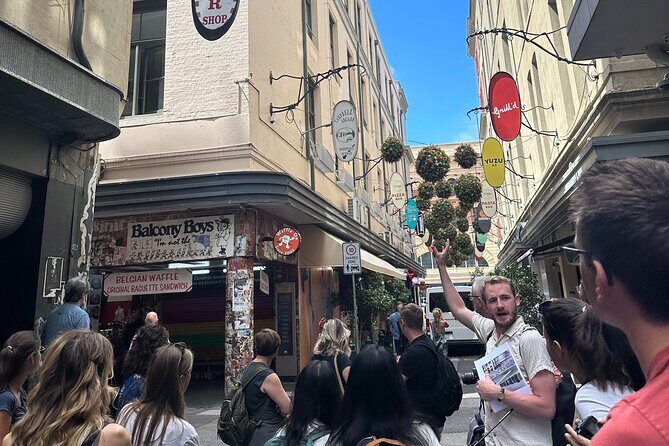
The tour then slows you down for a different kind of Melbourne: arcades. First comes Block Arcade, described as one of Australia’s oldest arcades, followed by Royal Arcade, which is noted as Australia’s oldest.
These arcades are more than shopping corridors. They’re a window into Melbourne’s early commercial design and how people wanted city life to feel at street level—covered, detailed, and built for wandering.
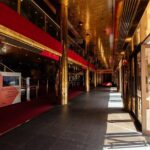
The practical trick here is to look up and around. Even when you’re only there for a few minutes, the architecture does the work. Your guide helps you notice the wacky, unique details that make these arcades more than just “places with stores.”
If your travel style includes photography, this is where you’ll get lots of angles. If you don’t usually stop for shopping, you may still enjoy arcades as architecture—like a mini walking museum.
Stop 8: Bourke Street Mall—Melbourne’s central shopping artery
Next is Bourke Street Mall, positioned as the center of Melbourne and a major shopping strip. The tour explains why that matters, turning a common tourist idea (shopping street) into something you can understand in a bigger city context.
This is a good stop for learning how Melbourne organizes its pedestrian life. When you walk from arcade to mall to market, you start to see how people move and where the city concentrates attention.
The tour keeps it moving, but it gives you enough background to make the mall feel intentional rather than random. That’s the value of the guide: they help you interpret what you’re already seeing.
Stop 9: Chinatown—past and present in one neighborhood
Chinatown gives the tour a historical and community focus. You’ll get an explanation of Chinatown’s significance in Melbourne, plus the relevance to Melbourne’s Chinese population from the past through to today.
This stop is important because it balances the CBD’s dominant European architecture story with a neighborhood narrative that’s still active. Even if you’re not planning a meal right now, learning what the area represents helps you understand why it looks and feels the way it does.
If you’re the type who likes to visit areas with meaning (not just shopping lists), Chinatown is a strong payoff stop.
Stop 10: State Library Victoria—save time by spotting what’s unmissable
State Library Victoria is treated like a must-see, and the tour gives you an overview of what to look for when you return. The stop is short, but it’s designed to steer you toward what’s worth your attention if you want to explore later.
This is a smart approach if you don’t want to spend your whole day inside. Libraries can be intimidating because they’re quiet and huge—but a good guide helps you know where to focus so your follow-up visit feels efficient.
Stop 11: Old Melbourne Gaol—spooky stories with a purpose
Old Melbourne Gaol brings atmosphere and mystery. The tour frames it as a site with a haunted past and a history tied to intrigue.
Even if you’re not into ghost stories, this stop tends to work because it connects built environment to human behavior and past justice systems. It helps Melbourne feel like more than streets and buildings—it’s also lived stories.
Because the stop time is brief, treat it as the starting point. You’re getting the theme, not a full dramatic performance.
Stop 12: Melbourne City Baths—an old building still doing its job
Melbourne City Baths adds a beautiful change of scenery. You’ll see an old building surrounded by the modern bustle of the CBD, and your guide explains the history that connects it to today.
This stop is underrated in many walking itineraries because it’s not as instantly famous as stations or markets. But it’s one of the best chances to notice how Melbourne reuses or continues the function of historic spaces.
It’s also a nice reset before the final stretch—less sprint energy, more architecture appreciation.
Stop 13: Queen Victoria Market—end with a plan and real food potential
The tour finishes at Queen Victoria Market at the corner of Elizabeth Street and Victoria Street. That ending matters because it’s not an abrupt goodbye into the streets—it’s a built-in place to keep your day going.
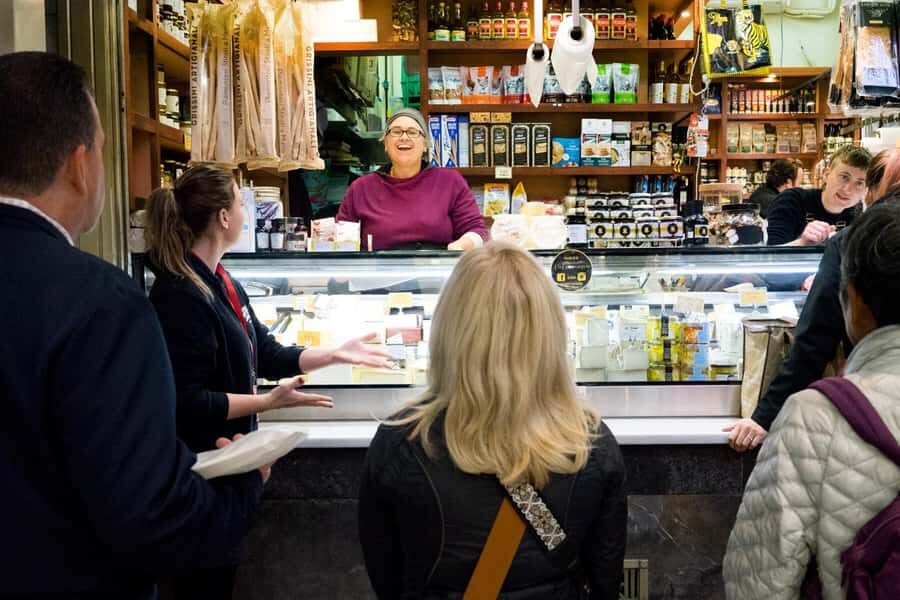
Queen Victoria Market is a major landmark, and it’s also a logical spot to eat after two hours of walking. Even if you don’t want a full sit-down meal, it’s a great place to grab something simple and keep exploring at your own pace.
If you’re planning your first day, this finish works well because you’re likely still curious and still hungry—so you’ll actually use the time instead of heading back to the hotel too early.
Price and value: what $17.93 gets you (and what it doesn’t)
At $17.93 per person, this tour sits in the “budget-friendly but not flimsy” category. The biggest reason it feels like value is the amount of ground it covers in about 2 hours, connecting major landmarks to the laneways, arcades, and neighborhood stories that give Melbourne its personality.
You’ll also have free admission tickets associated with the stops, which reduces the usual walking-tour friction where you constantly wonder what’s included versus what costs extra. The route isn’t just free-talk; it’s built around real places.
One extra detail about how the pricing works: the experience can be booked through multiple platforms, and the listed cost is set at an average tip-per-person amount from pay-as-you-feel-style bookings. In plain terms, you’re paying in the middle ground, and that helps support the locally run operation.
What the price doesn’t promise is deep time at any single attraction. This is a “get the story and the layout” tour. If you want longer time inside buildings, plan to come back later with confidence.
Finally, if you like flexible plans, free cancellation is available if you cancel far enough in advance of the start time.
Who should book this tour?
This is a strong choice for:
- First-time visitors who want a clear CBD overview without renting a bike or buying transit passes for every stop.
- Travelers who like walking tours that feel fun and story-driven rather than a strict recitation.
- People who want a mix of big landmarks (cathedral, station) and street-level culture (graffiti lane, laneway streets).
- Anyone who wants a convenient ending at a place with food and more wandering built in.
It may be less ideal if:
- You hate walking in busy central streets and prefer slower pacing with fewer stops.
- You’re hoping for long interior time at multiple venues.
- You need lots of wheelchair-ready space for a lot of stops; the tour notes you can participate for most travelers, but it’s still a city-center walking route.
Should you book this Melbourne walking tour?
Yes—if you want a smart first pass at Melbourne’s CBD, you’ll get a lot for $17.93. The combination of Federation Square → arcades → Chinatown → library → market makes it easy to orient yourself, and the guide style described across guides tied to the experience is consistently engaging, funny, and clear.
Book it early in your trip. Use it to learn the city’s logic, then return later for the places you want to see longer.
FAQ
What time does the English Melbourne Walking Tour start?
The tour starts at 11:00 am.
Where do I meet the guide?
The meeting point is at Federation Square. Look for the orange umbrella at the top of the stairs.
How long is the tour?
The tour lasts about 2 hours.
Does the tour include a mobile ticket?
Yes, it uses a mobile ticket.
Where does the tour end?
The tour ends at Queen Victoria Market at the corner of Elizabeth Street and Victoria Street.
Are service animals allowed?
Yes, service animals are allowed.