REVIEW · MELBOURNE WALKING TOURS
Fitzroy True Crime Walking Tour
Book on Viator →Operated by Melbourne Historical Crime Tours · Bookable on Viator
Fitzroy used to run on fear. This Fitzroy true crime walking tour turns early-1900s Melbourne into something you can walk through, led by local historian and author Michael Shelford. I like that you’re not stuck with vague rumors; you get a guided retelling of real crimes while you pass places tied to brothels and gang activity, plus a booklet with historic photos. One heads-up: the stories are dark, so if true crime is a hard no for you, this may feel too intense.
Practical and easy to fit in, the tour runs about 2 hours and keeps the group small (max 22), which helps if you want to ask questions. You start near Melbourne Museum in Carlton and finish on Gertrude Street in Fitzroy, and you’ll use a mobile ticket.
In This Review
- Key things to know before you go
- Fitzroy’s shady reputation, now with modern swagger
- Where you start and where you finish on Gertrude Street
- Michael Shelford is the engine of this tour
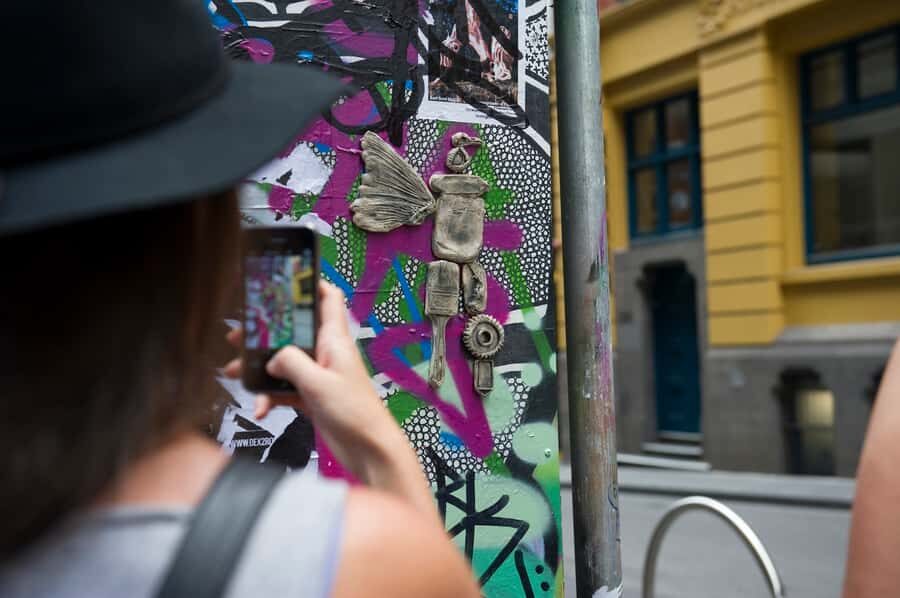
- The walk itself: laneways, former brothels, and gang hotspots
- How the historic photo booklet changes what you see
- Squizzy Taylor and the kind of detail you remember
- Walking duration, group size, and your comfort level
- Price and value: is $35.86 worth it?
- Tips so you get the best experience
- Who should book this Fitzroy true crime walk?
- Should you book it?
- FAQ
- How long is the Fitzroy True Crime Walking Tour?
- What does the tour cost?
- Where do I meet for the tour?
- Where does the tour end?
- Is the ticket mobile?
- Who guides the experience?
- How many people are in each group?
- Are children allowed?
- Are service animals allowed?
- What happens if it’s canceled due to weather or you need to cancel?
Key things to know before you go
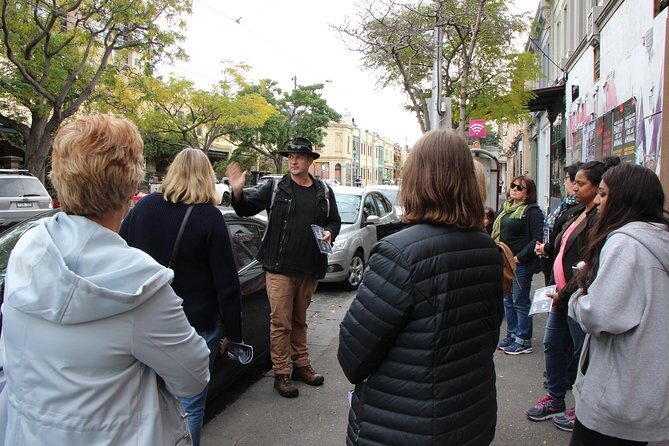
- Michael Shelford’s local-author storytelling makes the cases feel grounded in the streets, not a classroom
- Historic photo booklet helps you picture the past as you walk past surviving buildings and laneways
- Tight route within Fitzroy keeps the walking manageable, so it’s not a punishing trek
- Brothel, gang, and crime-site stops give you a clearer picture of how the neighborhood worked back then
- Small group size (up to 22) makes it easier to stay engaged during the full 2 hours
- It’s a short tram ride from Melbourne’s CBD, so you can combine this with other sights easily
Fitzroy’s shady reputation, now with modern swagger
Fitzroy is one of those Melbourne neighborhoods where the present looks confident and stylish, while the past sits in the brickwork and street layout. On this tour, you’ll be shown how that same area once functioned like a magnet for theft, violence, gang rivalry, and all the “working life” that crime created around it.
What I like about approaching Fitzroy through true crime is that it doesn’t just list famous names. You see why the district drew people in: the old street pattern, the laneway feel, and the way certain corners and venues became known for particular kinds of activity. It’s basically a neighborhood map, but the legend is crime.
And yes, it can be a bit grim. You’re dealing with murder, criminals, and exploitation. If you’re bringing kids, the tour does allow children as long as they’re with an adult, but you’ll want to judge whether your group can handle that topic level.
You can also read our reviews of more walking tours in Melbourne


Where you start and where you finish on Gertrude Street
The tour starts at Melbourne Museum, 11 Nicholson St, Carlton. That’s a handy pick because it puts you near a familiar landmark and makes getting there by tram pretty straightforward if you’re coming from Melbourne’s CBD.
You end at 148 Gertrude St, Fitzroy, at the corner of Gertrude and Napier St. Ending in Fitzroy matters. You’re not herded back to the museum right away. Once you finish, you’re in the middle of the action—perfect for grabbing a coffee or doing a little self-guided strolling in the surrounding streets.
One more small but useful detail: the tour uses a mobile ticket. That means you’re not juggling paper tickets while you’re trying to follow directions and meet on time.
Michael Shelford is the engine of this tour
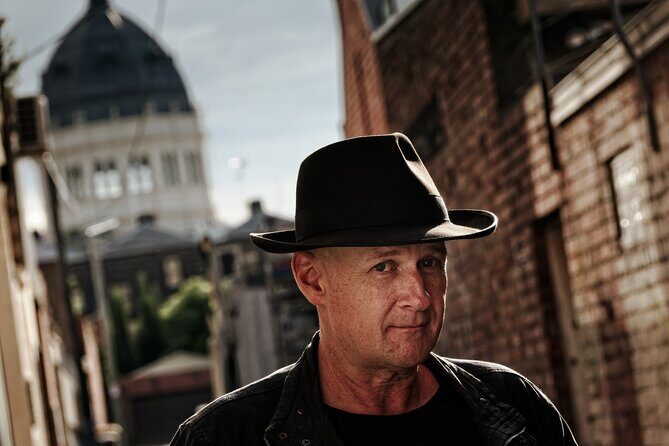
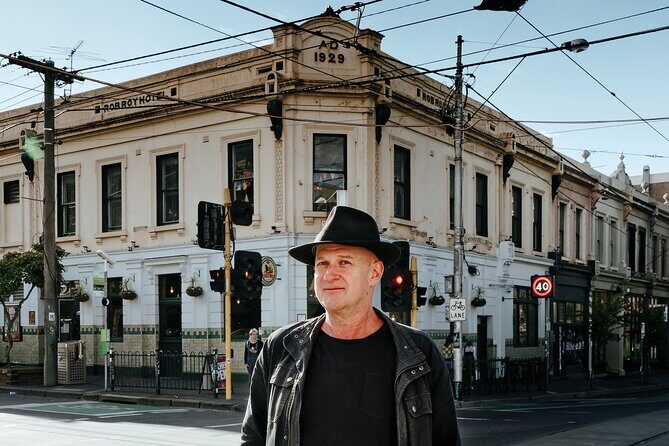
The experience rises or falls on storytelling, and here the guide is local historian and author Michael Shelford. I like that he doesn’t speak like he’s reading notes. The vibe is more like a practiced narrative: you get names, timelines, and the sense that these weren’t abstract crimes. They happened in a real neighborhood with real people who made choices under pressure.
What you’ll notice quickly is how good the tour is at keeping your attention for the full 2 hours. The route is tight, the stories flow, and when conversations turn to big moments—like the account surrounding Squizzy Taylor’s death—you get specifics that keep it from becoming repetitive.
There’s also a practical payoff to the storytelling. You come away with a stronger mental map of Fitzroy and the people connected to it. Even as the suburb has changed into a trendy place, the past is still legible if you know what to look for.
The walk itself: laneways, former brothels, and gang hotspots
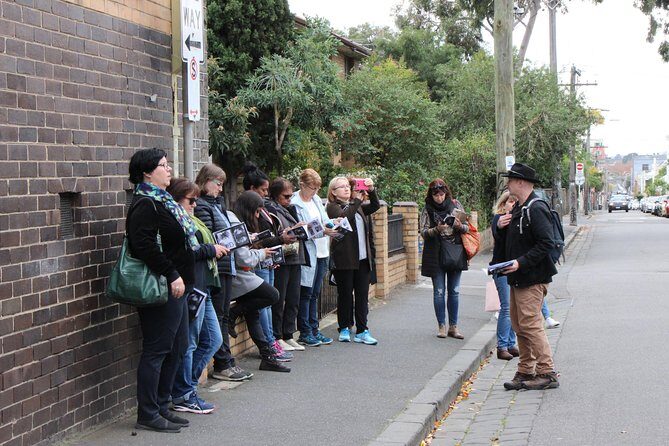
This is a walking tour focused on one compact area: Fitzroy. The “stops” aren’t a bunch of far-flung landmarks. Instead, you move through historic buildings and laneway corridors where you can imagine what the streets were used for.
Expect chapters that cover:
- places tied to one-time brothels,
- gang hot spots and rivalries,
- and sites connected to shocking crimes.
That “one area, many story layers” approach is valuable. It helps you understand how crime wasn’t only about one event. It was a system—tied to housing, side streets, local hangouts, and the constant tension between criminals and police.
I also appreciate how manageable the walking feels. Some tours on similar themes can turn into a long physical grind. Here, the pacing is relaxed enough that it works for a wider range of ages. You’re not punished with endless blocks; you’re mostly stopping, listening, and looking.
How the historic photo booklet changes what you see
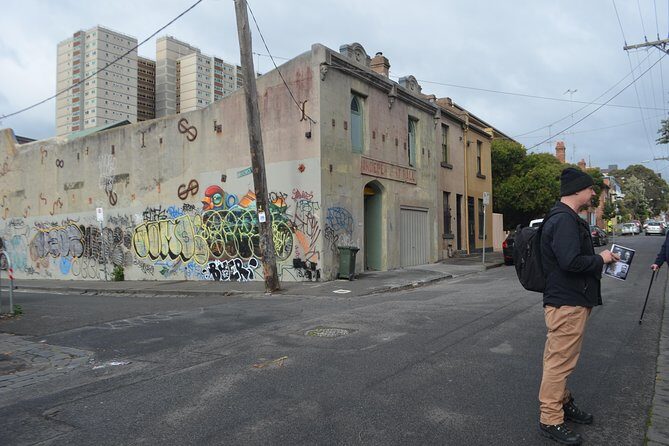
You won’t just hear the stories. You’ll also get a booklet with historic photos that brings key moments to life. In a neighborhood tour like this, photos are more than decoration. They help you connect the old world to what’s still visible now.
I find this kind of tool especially helpful because buildings and streets don’t label themselves as crime sites. Without context, you might wonder what’s important. With the photos, you can start comparing: where a building used to be, what an area looked like in its working years, and how everyday life and criminal activity overlapped.
It’s also a way to slow down. When you’re standing in front of a place that survived, the booklet makes it easier to build a mental picture without needing to memorize a long list of dates.


Squizzy Taylor and the kind of detail you remember
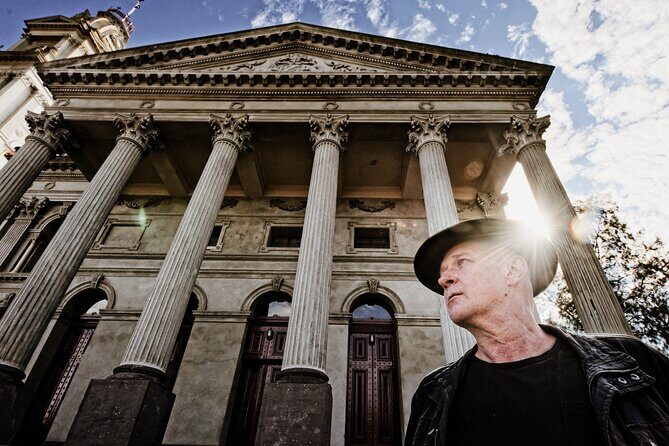
One of the most compelling moments comes through the tour’s handling of the story around Squizzy Taylor’s death. I won’t spoil the account itself, but I will say this: when the guide connects a major criminal story to the immediate reality of the neighborhood, it clicks. The facts stop being “a name from a book” and become a piece of street-level history.
This is also where the tour’s tone matters. The guide’s narration style tends to be vivid without turning into pure sensationalism. The goal is understanding—why it happened, what it meant locally, and how the neighborhood responded.
You’ll also get those small but memorable trivia-style payoffs tied to Melbourne culture. For instance, one review highlights learning why The Tote has its name. That kind of detail is fun on its own, but it also reinforces the point: Fitzroy’s crime past isn’t sealed in a museum. It leaks into modern identity and the stories locals still tell.
Walking duration, group size, and your comfort level
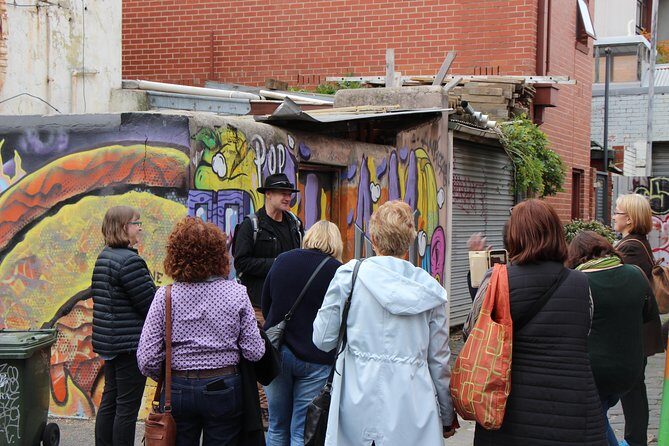
Plan for around 2 hours total time. That’s long enough to build a real sense of place, but short enough that you won’t feel like you’ve disappeared for half a day.
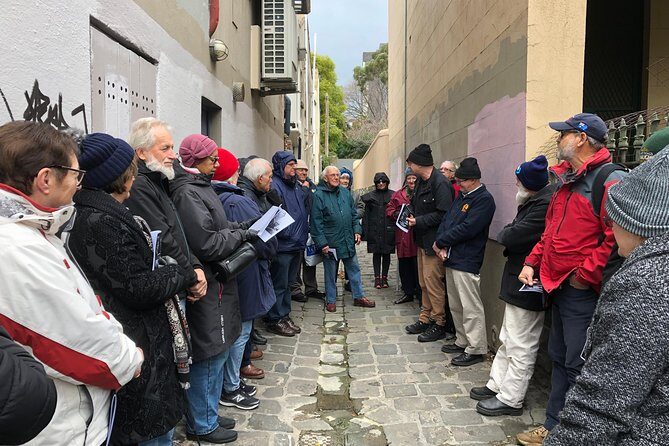
The group size caps at 22 travelers. For me, that’s ideal. You get enough people for energy, but not so many that questions get swallowed. It also makes it easier for the guide to keep everyone oriented as you move along the route.
Good shoes help, but the tour isn’t marketed as an all-day endurance event. It’s more about street-view attention than nonstop strolling. If you’re visiting with older teens, you’ll likely find the format works well—especially if they enjoy crime stories and local history.
For families: children must be accompanied by an adult. Also, the content is about crimes and exploitation. If you’re deciding whether to bring kids, I’d treat it like a “know your audience” situation rather than assuming all ages will find it light.
And because it’s a walking tour, you should dress for the weather. The experience is described as requiring good weather. If the tour is canceled due to poor weather, you’ll be offered a different date or a full refund.
Price and value: is $35.86 worth it?
At $35.86 per person for about 2 hours, this isn’t a bargain tour. It’s also not priced like a premium museum ticket. The value comes from three things:
- You’re paying for a specialist guide (local historian and author Michael Shelford), not a generic host.
- You get both storytelling and visual context through the historic photo booklet.
- You’re walking through a real, compact neighborhood where the narrative stays attached to what you can see.
If you love true crime, local history, or just understanding why neighborhoods look the way they do, the price feels fair. If you’re expecting major sights at every corner—think famous monuments—this may feel more like a “place-based story walk” than a sightseeing circuit.
A good way to decide: if you enjoy learning how real people lived and how society functioned in tense times, you’ll get more out of it. If you want only cheerful cultural history, you might feel the tone is too dark for your taste.
Tips so you get the best experience
Here are a few practical moves that make this kind of tour better:
- Wear comfortable walking shoes and plan for standing. You’ll spend time listening and looking at buildings and laneways.
- Bring a layer. Even in mild weather, a walk around older streets can feel cooler than you expect.
- Come with curiosity, not background homework. The guide covers the real stories with enough context to follow along, including the big-name crime threads.
- If you’re sensitive to violent or exploitative subject matter, decide ahead of time what you’re comfortable hearing.
- After the tour, use the finish point on Gertrude Street to keep the momentum going. You’re in a good location for casual downtime.
Who should book this Fitzroy true crime walk?
I’d book this if you want:
- a guided look at Fitzroy’s early-1900s crime district through real cases,
- a route you can manage physically,
- and a guide who can turn neighborhood history into a story that stays with you.
It’s especially good for people who:
- enjoy true crime but prefer the respectful, historical framing,
- like local authors and subject-matter guides,
- and want a compact activity that’s easy to tack onto a Melbourne day.
You might skip it if:
- you want light, feel-good sightseeing,
- you dislike true crime content,
- or you’d rather spend your limited time on famous landmark tours.
Should you book it?
If you’re in Melbourne and you like your city stories with street-level detail, this is a smart booking. For $35.86, you get a focused 2-hour walk, a small group, and Michael Shelford’s narrative skill—plus the historic photo booklet that makes the past readable. The only real caution is the subject matter: it’s crime, including grim parts, so match it to your comfort level.
If that tone works for you, you’ll finish with more than memories. You’ll have a map of Fitzroy in your head—and a new way to look at the streets.
FAQ
How long is the Fitzroy True Crime Walking Tour?
It runs for about 2 hours.
What does the tour cost?
The price is $35.86 per person.
Where do I meet for the tour?
You start at Melbourne Museum, 11 Nicholson St, Carlton VIC 3053.
Where does the tour end?
The tour ends at 148 Gertrude St, Fitzroy VIC 3065, at the corner of Gertrude and Napier St.
Is the ticket mobile?
Yes, the tour uses a mobile ticket.
Who guides the experience?
The tour is led by local historian and author Michael Shelford.
How many people are in each group?
The tour has a maximum of 22 travelers.
Are children allowed?
Children must be accompanied by an adult.
Are service animals allowed?
Yes, service animals are allowed.
What happens if it’s canceled due to weather or you need to cancel?
The experience requires good weather. If it’s canceled due to poor weather, you’ll be offered a different date or a full refund. You can cancel up to 24 hours in advance for a full refund.